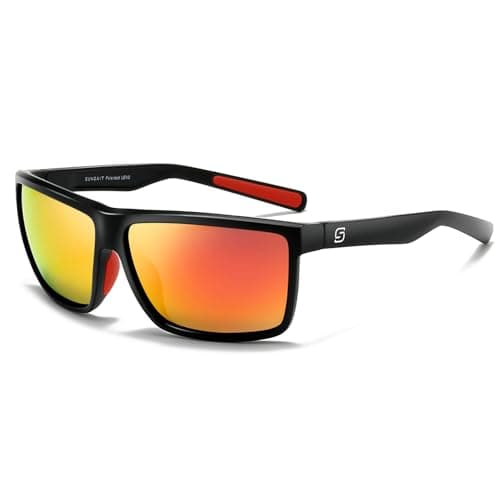
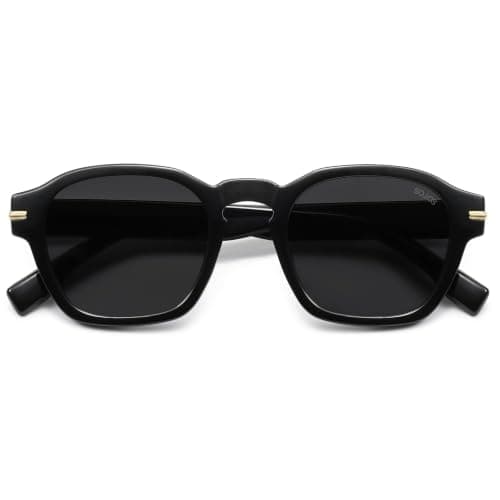
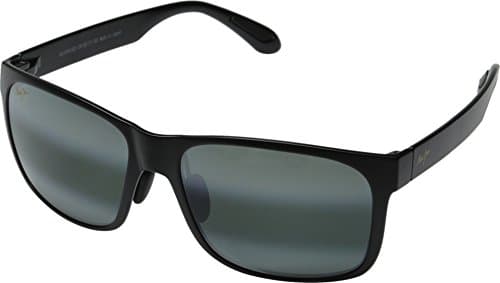
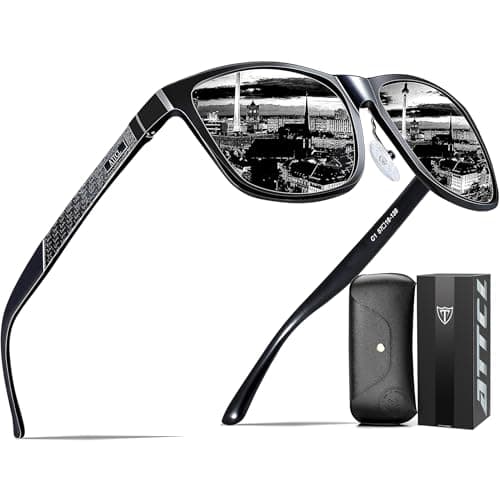
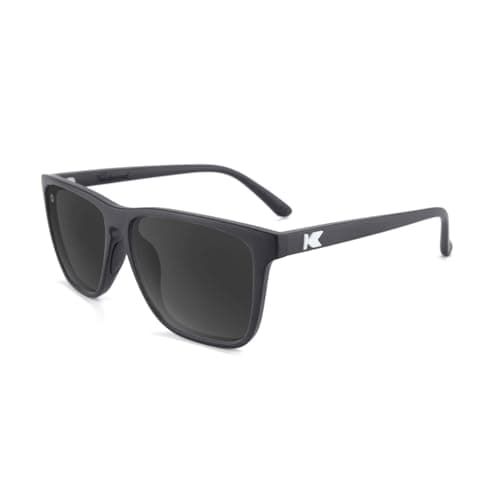
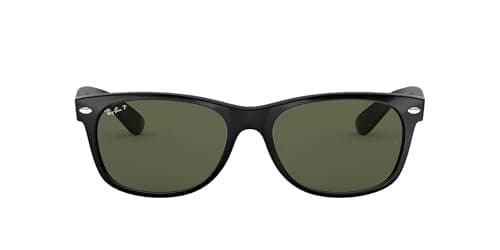
If your face is round — soft jawline, cheeks the widest point, roughly as wide as it is long — buy an angular frame. Squares, rectangles and geometric shapes counterweight soft features; round and small oval frames repeat them. The polarized Ray-Ban New Wayfarer is the safest single answer, and there is a good version of that shape at every price on this page.
Face-shape advice is one of the few places in eyewear where a simple rule genuinely holds up. Frames read as a strong horizontal or angular line across the middle of your face, and that line either contrasts with your features or echoes them. Contrast reads as balance; echo reads as exaggeration. That is why a round face in round frames looks softer still, and why the same face in a square frame suddenly looks structured. It is not a fashion opinion, it is just geometry.
How to tell if your face is actually round
People misdiagnose this constantly, usually calling a full face round when it is really square or oval. Three quick checks in a mirror:
- Width versus length.A round face is roughly as wide as it is long. If your face is noticeably longer than it is wide, you are oval or oblong, and the rules loosen a lot — oval faces suit almost anything.
- Widest point. On a round face, the widest point is the cheekbones, and the width tapers gently both up and down. If the widest point is your jaw and the jawline is defined, you are square, and the advice reverses.
- Jawline. A round face has a soft, curved jaw with no hard corner at the angle of the jaw. A visible corner means square.
If you are round, the goal is to introduce straight lines and definite corners. If you turn out to be square, do the opposite — softer, rounder frames balance a strong jaw, and the round shapes we point women toward in the women's roundup are the ones to look at.
The shapes that work
Square and rectangular. The default answer. A defined top line and squared corners create the contrast a round face is missing, and a slightly wider-than-tall rectangle also makes the face read as longer. The Wayfarer shape is the archetype and has been for seventy years for exactly this reason.
Geometric and hexagonal.The modern version of the same idea — angles everywhere, often in a slightly smaller lens. Works well if a full Wayfarer feels heavy on your face.
Wayfarer-style with an upswept top line. The slight upward angle at the outer corners lifts the eye line, which is flattering on softer features and adds a second angular cue.
Light sport wraps, carefully.A wrap has a strong horizontal line and adds structure, which suits a round face — but a big shield can overwhelm a shorter face. Choose a lighter wrap rather than a tall cycling shield unless you are actually riding.
The shapes to avoid
Small round frames. The classic mistake. A round lens on a round face echoes the curve and makes the face read wider, and a small round lens compounds it by shrinking the proportion of the face the frame covers.
Frames narrower than your face.Any frame that stops short of your face's widest point draws a line that emphasizes the width outside it. Frame width should meet or slightly exceed face width. This one rule fixes more bad-looking pairs than any shape advice.
Very low-set, deep lenses. A lens that extends far down the cheek shortens the face visually, which is the opposite of what a round face wants.
What still matters more than shape
None of this overrides the two specs that make a pair of sunglasses worth owning. Every pick on this page is UV400 — the American Optometric Association recommends lenses that block 100% of UVA and UVB, and that protection is unrelated to price or shape. And every pick here is polarized, which removes the reflected glare off roads and water that a plain tint only dims. A beautifully balanced frame with a bad lens is still a bad pair of sunglasses; get the geometry right within the set of pairs that already clear those two bars, which is exactly how we built this list.
Buying for a round face, step by step
1. Measure the width before anything else
Frame width should match or slightly exceed the widest part of your face. Most listings publish total frame width in millimeters — compare it against a pair you already own that fits.
2. Pick a square, rectangle or geometric shape
Straight top line, defined corners, slightly wider than tall. This single choice does most of the work.
3. Keep the lens depth moderate
A lens that runs deep down the cheek visually shortens the face. Moderate depth keeps proportions balanced.
4. Then check the lens, not the look
UV400 and polarized are the specs that determine whether the pair is worth wearing. Get those first and choose the shape within them.