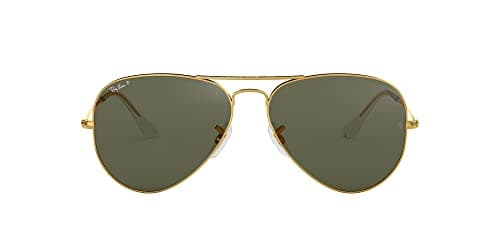
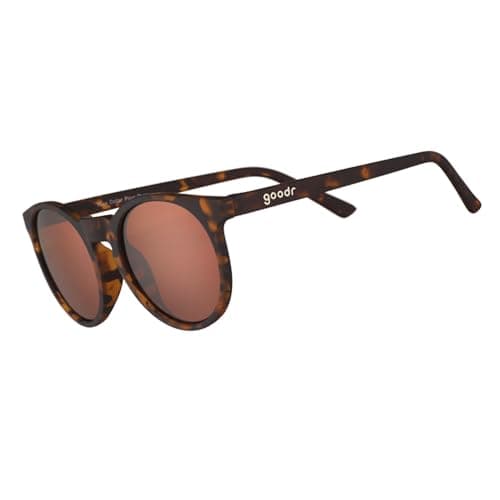
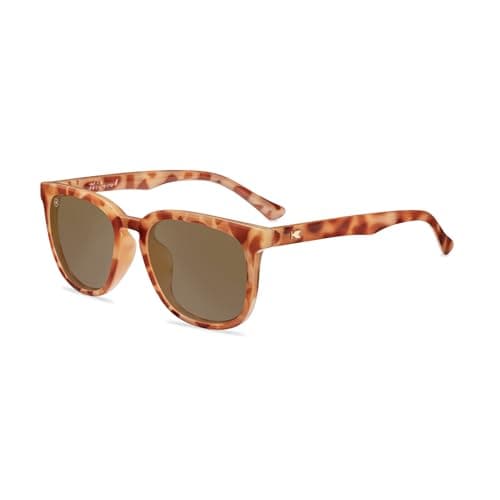
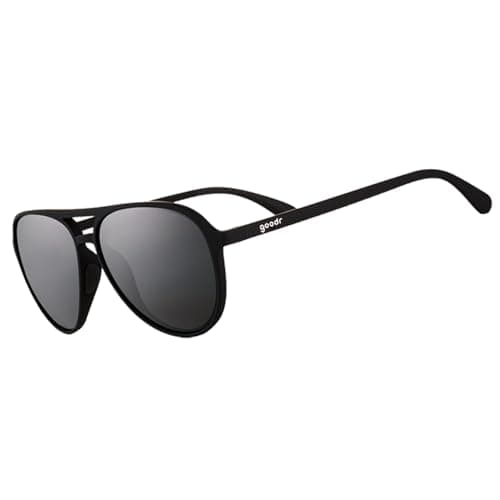
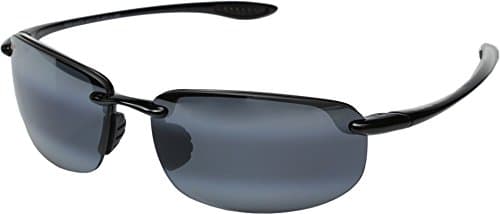
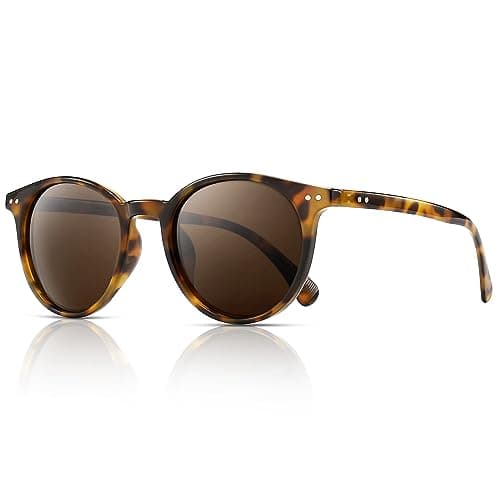
If your face is square — a defined jawline with a visible corner, roughly as wide at the jaw as at the cheekbones and forehead — buy a frame with curves. Rounds, ovals, aviators and rounded-square shapes soften strong angles; hard rectangles and sharp geometrics repeat them. The classic polarized aviator is the safest single answer, and there is a version of that geometry at every price here.
Face-shape advice works because a frame draws a strong line across the middle of your face, and that line either contrasts with your features or echoes them. Contrast reads as balance. So the rule for a square face is the exact inverse of the rule for a round face: where a round face wants angles introduced, a square face wants them softened.
How to tell if your face is actually square
People confuse square with round and with oblong constantly. Three checks in a mirror:
- The jaw corner. This is the decisive one. A square face has a visible angle where the jawline turns up toward the ear. A round face has a continuous curve with no corner.
- Width consistency. On a square face, forehead, cheekbones and jaw are close to the same width, giving the face a broadly rectangular outline. If the cheekbones are clearly the widest point and it tapers away above and below, you are round or oval.
- Length versus width. Square is roughly as long as it is wide. Noticeably longer than wide with a defined jaw is oblong or rectangular, where the advice is similar but you also want to avoid frames that add length.
If it turns out you are oval, good news — almost everything suits you, and the oval guide explains why.
The shapes that work
Round and oval frames. The direct counterweight. A curved lens line against an angular jaw is the single most reliable softening move available, and it is why round frames read as flattering on faces that hard rectangles overpower.
Aviators.The teardrop is the practical version of the same idea — curved bottom edge, softly angled top, and a shape that has flattered strong-featured faces for generations. It is also one of the few genuinely unisex shapes.
Rounded squares. If a full round feels like too much of a departure, a square frame with softened corners keeps the familiar silhouette while taking the hard edge off. This is the compromise most people actually end up buying.
Frames that sit slightly higher. A frame with a higher temple line draws attention upward and away from the jaw, which supports the same effect.
The shapes to avoid
Hard rectangles and sharp geometrics.Straight top line, square corners, strong horizontal emphasis — all of it doubles down on the angles you already have rather than balancing them.
Very wide, boxy frames.These emphasize the width of an already broad face. Aim for frames that match your face width rather than exceeding it noticeably — which is the reverse of the round-face guidance.
Heavy, thick-rimmed squares. A thick square rim adds visual weight exactly where a square face does not need it.
What still matters more than shape
Two specs decide whether a pair is worth owning at all, and neither is geometry. Every pick here is UV400 — the American Optometric Association recommends lenses blocking 100% of UVA and UVB, and that protection is unrelated to price or style. And every pick here is polarized, which removes reflected glare off roads and water rather than merely dimming it. A perfectly balanced frame with a bad lens is still a bad pair of sunglasses; choose the shape from within the set that already clears both bars.
And whatever the shape, size decides comfort. A frame that leaves temple marks is too small; one that rocks when you shake your head is too big. Our sizing guide has the actual measurements to check.
Buying for a square face, step by step
1. Look for a curve
Round, oval, aviator or rounded-square. Any curved lens line does more for balance than any brand decision.
2. Match, do not exceed, your face width
Unlike a round face, a square face is not helped by an oversized frame — it emphasizes existing width. Match the widest point rather than going wider.
3. Keep the rim light
Thin or moderate rims soften; heavy thick frames add visual weight to an already strong outline.
4. Then check the lens
UV400 and polarized are what make the pair worth wearing. Pick the shape within that set.