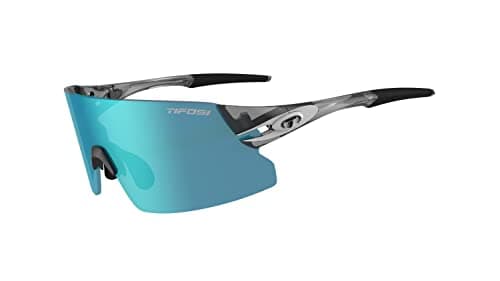
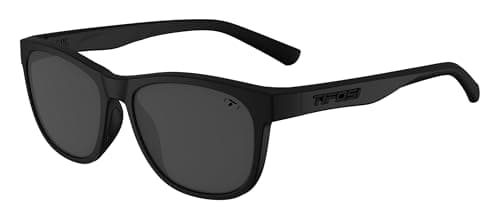
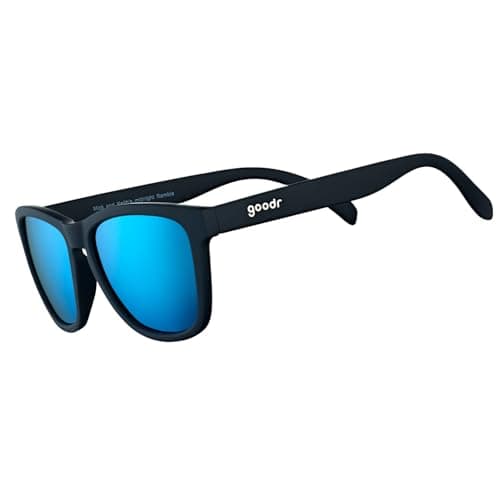
Buy goodr if you run on roads, want one lens you never think about, and value a price where losing a pair is a shrug. Buy Tifosi if you ride, run trails, or go out in changing light — the interchangeable lens sets, the bigger coverage and the better frames are worth the modest step up. For a runner who only runs in bright daylight, goodr is genuinely hard to beat.
These two dominate the value end of sport eyewear and they got there by solving different problems. goodr identified the single failure mode of cheap sunglasses in sport — they slide — and built a grip coating that fixes it, then kept everything else as simple and cheap as possible. Tifosi built genuine sport eyewear: Grilamid frames, vented lenses, adjustable components, multi-lens kits, at prices that still undercut the premium brands by a wide margin.
| Factor | goodr | Tifosi |
|---|
| Grip when you sweat | The best at this price — a coating that tacks up as it dampens | Hydrophilic pads that do the same job well |
| Lens options | One fixed polarized lens per pair | Interchangeable sets on sport models; Fototec photochromic available |
| Coverage | Lifestyle-ish shapes; modest side coverage | Genuine sport shields with large fields of view |
| Frame quality | Simple, light, cheap | Grilamid, vented, adjustable on some models |
| Polarization | Standard on the main line | Deliberately non-polarized on many sport lenses |
| Best for | Road running, walking, everyday sport | Cycling, trail, changing light, wider faces |
The grip question is closer than it used to be
goodr's reputation rests on the coating, and it deserves it — the arms and bridge get tackier as your face heats and dampens, which is the opposite of how ordinary smooth plastic behaves. That is the whole reason the brand became a run-club default.
What is less widely understood is that Tifosi's hydrophilic grip pads do the same thing, and do it well. The difference is that goodr applies the idea to a cheap everyday-shaped frame while Tifosi applies it to proper sport frames. If grip is your only requirement, goodr wins on price. If you also want coverage, lens options or a frame that survives being sat on, the grip is a tie and the rest is not. The physics of why frames slide is in how to stop sunglasses slipping.
Lens options are Tifosi's real advantage
This is the decisive difference for anyone who exercises outside a narrow window of bright daylight. goodr sells one fixed polarized lens per pair. Tifosi's sport models ship with multiple lenses — a bright tint, an all-condition tint and usually a clear or low-light option — and the brand also offers Fototec photochromic lenses that adapt on their own.
A dawn run, a ride that finishes after sunset, a trail under heavy tree cover: a single dark lens is wrong for part of all of those. That is not a small edge, and it is why we rank Tifosi highly in the cycling roundupand why the photochromic argument matters — see best photochromic sunglasses.
Polarized versus non-polarized: they disagree on purpose
goodr's main line is polarized. Many Tifosi sport lenses deliberately are not. Both choices are defensible and they reveal who each brand is designing for.
Polarization removes reflected glare, which is great on wet roads and around water — a genuine benefit for a road runner. It also dims LCD screens and can mask the sheen that tells you a corner is wet, which is why cyclists are usually better served without it. If you run with no devices in your eyeline, take goodr's polarized lens happily. If you ride with a head unit, Tifosi's non-polarized default is the correct engineering choice, as we argue in are polarized lenses good for cycling.
Coverage and fit
Tifosi wins clearly on coverage. A sport shield seals out the side light and wind that a flatter lifestyle-shaped frame lets straight in, which matters at speed on a bike and on an exposed trail. Tifosi also publishes size variants — the Swank XL exists precisely because the standard size pinches wider faces — while goodr's shapes are essentially fixed, with the smaller round as the alternative for narrower faces.
Neither brand adjusts much, so fit is a buy-the-right-size problem rather than a tune-it-afterwards one. The measurements to check are in how to choose sunglasses size.
Durability and price
Tifosi frames are Grilamid-class nylon and hold up well; the hinges and lens coatings age first, particularly if the pair lives loose in a jersey pocket. goodr frames are simpler and cheaper, and the coatings are budget-grade — a season or two of hard use is a fair expectation.
The price gap is real but modest, and it is worth framing honestly: Tifosi typically costs more than goodr and dramatically less than the premium sport brands. If you are choosing between these two, you are already in the value tier and the extra outlay for lens options is usually the better spend — unless simplicity and replaceability are what you actually want, in which case goodr is the right call and not a compromise.
The verdict
Road runner, bright daylight, hates fussing: goodr. The grip is the feature that matters and the price makes replacement painless.
Cyclist, trail runner, or anyone in changing light: Tifosi. Coverage and interchangeable lenses are worth the step up, and the non-polarized sport lenses are the right tool on a bike.
Wider face: Tifosi, for the size variants. Narrower face: goodr's smaller round. Full fields in the running roundup and cycling roundup.
Deciding in four questions
1. Does your light change?
Dawn starts, dusk finishes, tree cover → Tifosi, for the lens set or the photochromic option. Bright daylight only → goodr.
2. Do you ride with a computer?
Yes → Tifosi's non-polarized sport lenses. Polarization dims a head unit and hides wet-road sheen.
3. How much coverage do you need?
Speed, wind and trail debris argue for a proper shield. Road running in town does not.
4. What size is your face?
Wider faces are better served by Tifosi's XL variants; narrower faces by goodr's smaller round.