What DUCO actually is
DUCO is one of a handful of brands that turned the budget end of the sunglasses market from "disposable tint in a brittle frame" into something genuinely worth owning. The pitch is narrow and consistent: real polarization, UV400, and frame materials — aluminum-magnesium alloy, TR90 nylon — that you would normally have to pay several times as much to get. There is no lens technology story, no lab, no heritage. There is a competent product at a price that makes the mid-market look silly, sold in enormous volume through Amazon.
That is a legitimate business and we should be honest about how unglamorous it is. DUCO is not trying to out-engineer Costa or Maui Jim. It is trying to give you 80% of what a $120 pair does for about a quarter of the money, and across three fairly different product lines it mostly succeeds.
What DUCO gets right
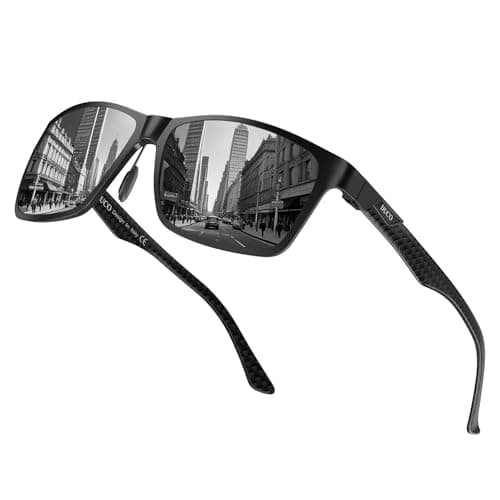
The frames punch above the price.The aluminum-magnesium everyday frames are the standout. Metal at this price is unusual, and it changes how the pair feels in the hand and on the face — more substantial, better balanced, less obviously cheap than the molded plastic that dominates the tier. Spring hinges are common across the line, which matters because hinges are where budget frames usually fail first.
The polarization is real.This is not a given at these prices, and it is the thing worth verifying on any budget pair. DUCO's standard lenses pass the LCD-screen test: look at a phone through one lens and rotate the glasses, and the screen darkens sharply. That means you are getting genuine reflected-glare removal on wet roads and water, not just a dimmer view. Our polarization test guide walks through the checks.
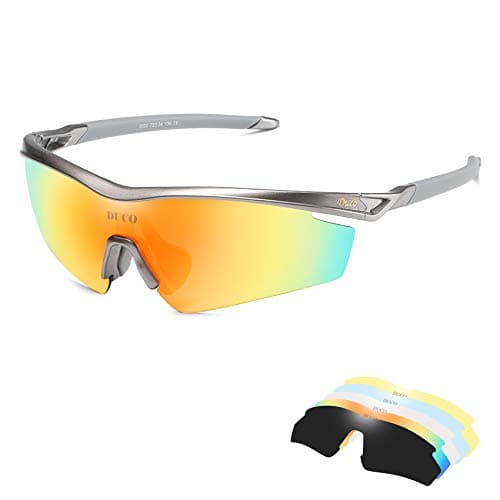
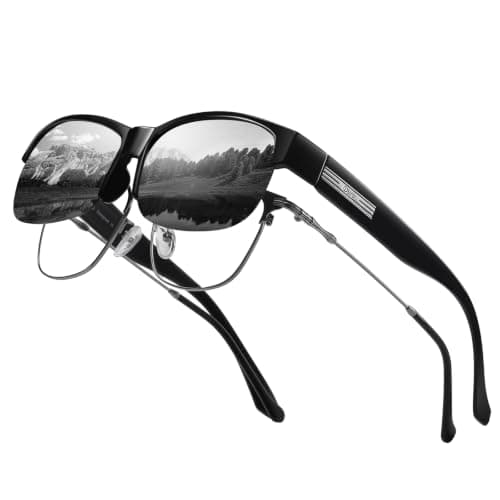
The range covers three real needs.Most budget brands make one thing. DUCO makes an everyday metal frame, a sport wrap with an interchangeable lens set, and a proper fit-over for people who wear prescription glasses — and the fit-over is genuinely one of the better ones in a category full of bad products. That breadth means the brand can be the right answer for three quite different buyers, which is unusual at this price.
- UV400 across the line, which is the specification that actually protects your eyes.
- Metal and TR90 frames rather than the generic brittle plastic of the tier below.
- Spring hinges on many models, addressing the most common budget failure point.
- A fit-over line, which almost no budget sunglasses brand bothers with.
Where the budget shows
Lens coatings.This is the honest ceiling. DUCO lenses are optically fine in the center and pick up fine scratches faster than a premium lens does. Treat a pair as a two-season proposition under hard use, keep the pouch, and rinse before you wipe — the method in our cleaning guide genuinely extends the life of a budget coating more than it does an expensive one.
Edge clarity. Look through the outer third of the lens and there is a slight softness that a Maui Jim or an Oakley does not have. Irrelevant sitting on a beach, noticeable when you are moving quickly and using your peripheral vision.
No contrast tuning. DUCO does not do what Costa's 580 or Oakley's Prizm do — filter specific wavelengths to lift a fish out of water or separate a green from a fairway. If you sight-fish or read greens, that absence is the whole reason to spend more, and our fishing roundup makes the case.
Metal frames do not forgive. The aluminum-magnesium frames feel great and do not flex. Sit on a pair and it stays bent. If you are hard on sunglasses, the TR90 sport models are the more sensible DUCO.
The interchangeable-lens sport model, honestly
DUCO's sport frame ships with a set of lenses, which is a genuinely useful idea borrowed from much more expensive brands: light changes during a ride or a run, and a single fixed tint is wrong at least once per session. At this price a lens set is remarkable value.
One thing to check before you rely on it: interchangeable kits at this price typically pair one polarized lens with several plain tinted spares, so confirm which lens in the box is the polarized one rather than assuming all of them are. Swapping is also fiddlier than on a premium sport frame — the retention is less confident, and you will be careful about it. Neither is a dealbreaker; both are worth knowing.
The fit-over line deserves more attention than it gets
Fit-over sunglasses have a poor reputation earned by giveaway products, and DUCO's are noticeably better than the category average: polarized, close-fitting enough not to look like safety equipment, and with side panels that block the light that leaks in when you perch normal sunglasses over prescription frames. If you wear glasses, this is a genuinely good $28 solution to a problem opticians usually answer with a $250 one. Measure your frames first — the whole process is in our fit-over guide.
DUCO versus the rest of the budget field
Against goodr, DUCO wins on frame material and loses on grip — goodr's coating is the better answer for a sweaty run, while DUCO's metal frames are the better everyday and driving object. Against Knockaround, DUCO feels more grown-up and Knockaround survives more abuse. Against the true bottom of the market, DUCO is a clear step up in materials for a few dollars more, which is the easiest upgrade decision in this whole category. The head-to-head between the two biggest budget names is in goodr vs Knockaround.
Are DUCO sunglasses worth it?
Yes, with a clear scope. For driving, everyday wear, and as a first genuinely polarized pair, DUCO is one of the best value purchases in eyewear — you get the two specs that matter and a frame that does not feel like a compromise. It is not the pair to buy if you sight-fish, if you need lens coatings to survive a decade, or if peripheral optical clarity at speed matters to you. Buy it as a very good cheap pair, which is exactly what it is, and put the saved money somewhere it does more work. Our cheap polarized guide puts DUCO next to its rivals.