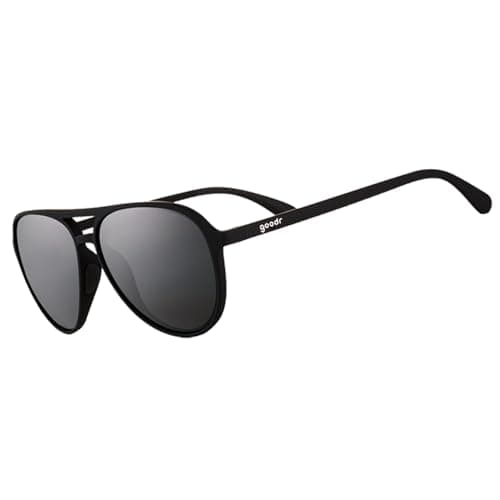
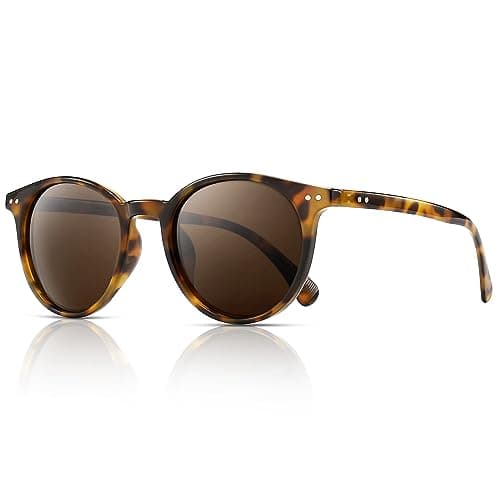
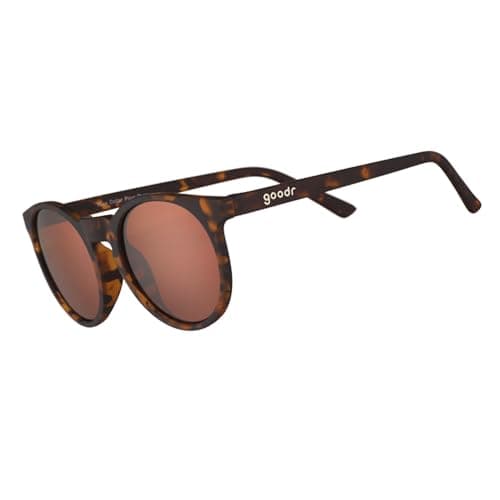
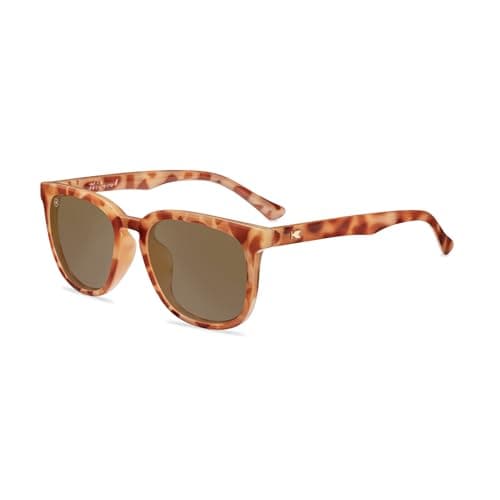
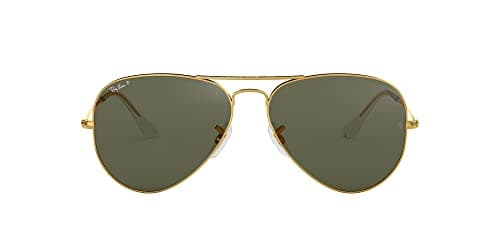
Buy a frame that is widest at or below the middle of the lens and light across the top — an aviator, a soft round, or anything rimless or thin-rimmed. The Ray-Ban Aviator is the reference shape because the teardrop tapers exactly where a heart-shaped face needs it; the goodr Aviator does the same geometry for a fraction of the money and stays on when you sweat. Skip heavy browlines and hard-cornered square frames: both add width at the widest part of your face.
A heart-shaped face has a broad forehead and cheekbone line that narrows to a defined, often pointed chin. It is one of the easier faces to buy for once you understand the single principle behind every recommendation, and one of the easiest to buy badly for if you follow whatever is on the front table of a shop.
1. The principle: move weight downward
Frame advice sounds arbitrary until you notice that all of it is the same trick: a frame is a strong horizontal line across the middle of your face, and where you put the visual weight of that line changes the apparent proportions above and below it.
A heart-shaped face already carries its width at the top. Add a heavy, dark, straight-edged frame across the brow and you emphasize it, and the chin below looks narrower by comparison. Choose a frame whose weight sits low — a lens that tapers wider as it descends, a thin or absent top rim, a rounded lower edge — and the eye reads the face as more even.
This is also why the same shape advice keeps recurring across face-shape guides in different combinations: the mechanism is constant and only the direction changes. Compare with round face (add angles), square face (add curves) and oval face (almost anything works).
2. Why the aviator is the default answer
The aviator is not recommended here out of habit. Its teardrop lens is narrow at the top corner near the brow and swells outward and downward toward the cheek, which is precisely the weight distribution a heart-shaped face wants. The double-bar top is thin metal rather than a heavy slab, so it does not build a shelf across your forehead.
The metal original also has one practical advantage no plastic frame gives you: adjustable nose pads. A heart-shaped face often pairs with a narrower nose bridge, and pads you can pinch or spread are the difference between a frame sitting where you want it and one sliding down all day.
The counter-argument is weight and sport use. A metal aviator on a run is a bad idea — it slides, and the pads dig. That is what the plastic grip-coated version is for.
3. Round and soft shapes, in moderation
Round frames work for the same reason but from a different direction: a circle has no hard horizontal top edge at all, so nothing accentuates the brow line. A softened round or a rounded square sits in the middle and is the safest choice if a full round feels like too much of a look.
Size is the thing to get right here. A very small round frame on a broad forehead exaggerates the contrast, because the frame stops well inside the width of your face. Aim for a lens that reaches approximately to the outer edge of your face, not noticeably inside it.
4. Rimless and thin-rim frames
If nothing else on this page appeals, the general-purpose answer is simply less frame. A rimless or thin-rimmed lens removes the strong horizontal line entirely, which means it cannot emphasize anything. It is the low-risk option, and it is why so many heart-shaped-face recommendations end up there.
5. What to avoid, and why
Heavy browline frames. A thick dark bar across the top of the lens is a deliberate horizontal emphasis at the widest part of your face. It is the single most direct way to make a heart-shaped face look top-heavy.
Hard-cornered squares wider than your face. Square corners at the top outer edge push the eye outward at brow height. A rounded square is the compromise if you like the shape.
Cat-eye frames that sweep up sharply. An upswept outer corner adds width and lift exactly where the face already has it. A soft, subtle upsweep is fine; a dramatic one fights you.
6. Fit beats shape, every time
This is the part face-shape articles skip. A perfectly chosen shape in the wrong width looks worse than an ordinary shape that fits. The measurement that matters is total frame width temple-to-temple against the width of your face at the temples: the frame should be about the same or very slightly wider, never noticeably narrower.
The full method — including reading the three numbers printed inside the temple arm — is in how to choose sunglasses size. If your face is on the narrow side, start from best sunglasses for small faces instead, because width will decide the outcome before shape does.
How we ranked these
Shape suitability first, then fit adjustability, then lens quality and price. Every pick is polarized and UV400, because the reason to wear sunglasses at all is the UV protection the American Optometric Association recommends, and glare control is what makes you keep them on. Scores come from the published rubric on how we rate— judgments compiled from published specifications, not lab measurements. We do not run a lab.
Buying for a heart-shaped face
1. Weight low, not high
Thin or absent top rim, more presence at the bottom of the lens. That single rule covers aviators, rounds, rimless frames and soft rectangles all at once.
2. Match the frame width to your face width
Same width or fractionally wider at the temples. A frame that stops inside the width of your face makes a broad forehead look broader, whatever shape it is.
3. Adjustable nose pads if your bridge is narrow
Metal frames with pads can be tuned; molded plastic bridges cannot. If your sunglasses always slide, this is usually why — see how to stop sunglasses slipping.
4. Avoid the browline
A heavy top bar is the one shape that reliably works against this face. Everything else is taste.
5. Confirm polarized and UV400 separately
They are different properties. UV400 protects your eyes; polarization removes reflected glare. Both should be stated on the listing, and both are cheap.