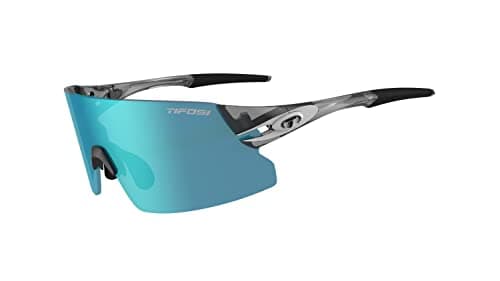
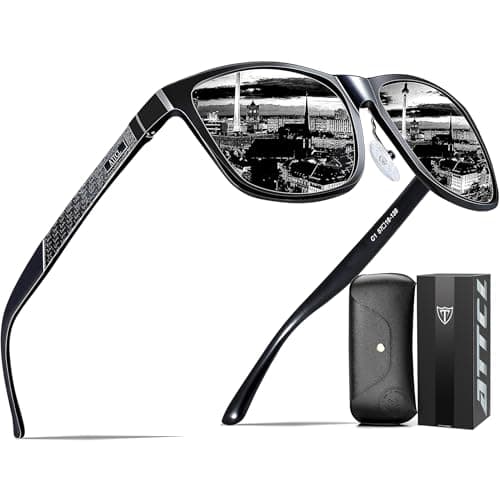
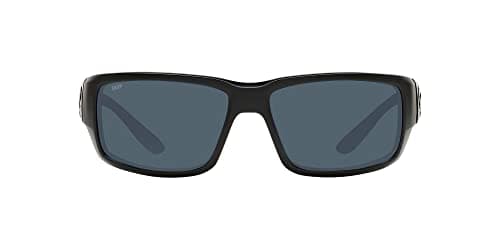
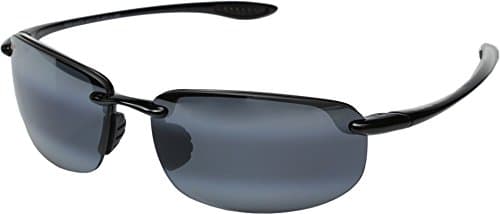
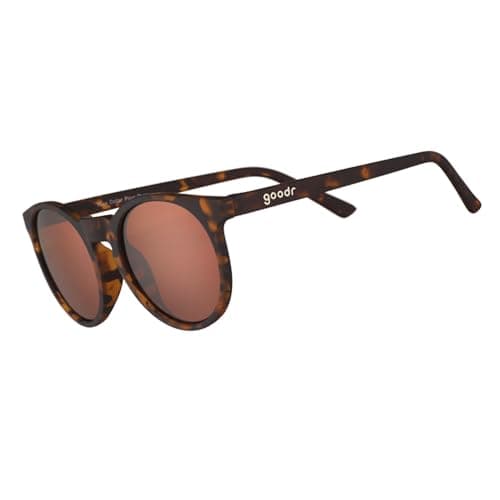
Buy for the activity, not the face. If you know someone runs, fishes, rides, golfs or drives a lot, you can choose confidently without knowing anything about their face shape — because the sport determines the frame type, and sport frames are far more size-tolerant than lifestyle ones. If you do not know their activity, buy a grippy, mid-size, polarized everyday pair and keep the receipt.
Sunglasses make a genuinely good gift: they are useful, they are visible, and there is a great pair at almost every budget. They are also the gift most likely to end up in a drawer, for exactly one reason — fit. Shape and size preferences are personal and hard to guess, and a beautiful frame that pinches gets worn once. This guide is built around dodging that problem rather than pretending you can solve it.
The rule: buy for the activity
A sport frame is chosen for coverage, grip and lens, and those are properties of the activity rather than the person. A runner wants a light frame that will not slide; a cyclist wants coverage and lenses for changing light; an angler wants a contrast lens and a retainer; a golfer wants a lens that helps read a green. None of those requires you to know whether the recipient prefers round or square frames.
By contrast, an everyday lifestyle frame is chosen almost entirely on shape and size — the two things you cannot guess. If the person you are buying for has no obvious outdoor activity, the safest everyday gift is a mid-size, moderately styled polarized frame with grip material at the nose, because the grip widens the range of faces it stays on and the moderate styling widens the range of tastes it suits.
The specs that always matter, whoever it is for
UV400.Non-negotiable, and the reason a cheap pair is a perfectly respectable gift — the American Optometric Association recommends 100% UVA and UVB blocking, and that is available at every price on this page.
Polarized, usually.Polarization cuts the reflected glare off roads and water, and it is the feature that makes someone say "oh" the first time they put a pair on. The exceptions are worth knowing: do not gift polarized to a cyclist who uses a bike computer, a golfer who reads greens carefully, or anyone who spends their outdoor time looking at an LCD screen. Our polarized vs non-polarized guide covers why.
A case and a cloth. Almost every pair includes one; check, because a gift that arrives with nothing to protect it will be scratched by spring.
Gifting by budget
Stocking filler, around $15–$25.A genuinely polarized, UV400 everyday pair or a budget sport wrap. This is a real gift, not a token one — the cheap end of this market is good now, as our cheap polarized guide lays out.
The safe middle, $25–$60. The sweet spot. Purpose-built frames: grip coatings for runners, interchangeable lens sets for cyclists, metal frames for drivers. Enough money to feel considered, not enough to be awkward if the shape is wrong.
The milestone gift, $150-plus.A tuned lens for someone with a specific hobby, or a premium everyday lens for someone who will keep it. Buy this tier only if you know the activity or the person's taste well — and check the return policy, because at this price a fit mistake is expensive.
Three ways gifted sunglasses go wrong
Buying a lifestyle frame for a sport. A beautiful acetate frame for someone who wanted a running pair will slide down their nose on the first outing and never come out again. See why frames slip.
Buying polarized for the wrong use. Polarized lenses dim LCD screens and can mask the sheen cyclists and skiers read as a hazard cue. For a cyclist, a photochromic or plain tinted sport lens is the better gift.
Buying too small.When in doubt, size up slightly. A frame narrower than the recipient's face is uncomfortable and unflattering; slightly wide is neither.
If you are shopping for a specific person and know their use, the category roundups will get you there faster than this page: running, cycling, fishing, golf and driving.
A four-question gift checklist
1. What do they do outdoors?
Answer this and the frame type is decided. Sport frames are far more forgiving of a fit guess than lifestyle frames.
2. Do they stare at a screen outdoors?
Bike computer, chartplotter, phone-as-navigation. If yes, avoid polarized and choose a photochromic or plain tinted sport lens.
3. Do they lose sunglasses?
If yes, the $25–$60 tier is a kinder gift than a premium pair they will feel guilty about losing.
4. Can it be returned?
Fit is the one thing you cannot guess. Buy where an exchange is easy, and say so when you give it — it is not unromantic, it is practical.