Top pick
Top pick
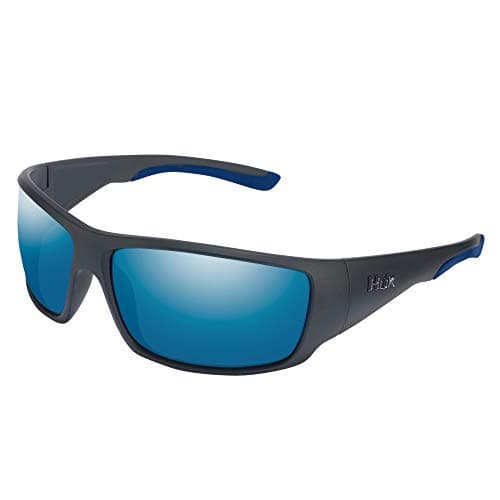
Huk Spearpoint (Polarized)
Best for: A step up from budget without Costa money
The best fishing pair under $100 because of the one spec that separates this band from the cheap end: Huk publishes hydrophobic and oleophobic coatings on its performance range, and that pair of coatings is what lets dried salt and spray rinse off rather than smear. Best for an angler who fishes often and does not want to spend premium money.
Budget pick
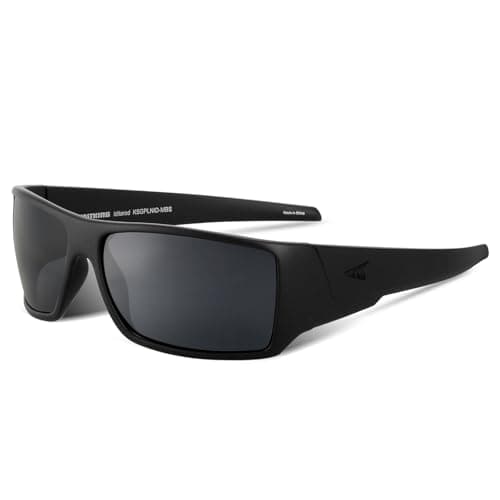
KastKing Iditarod Polarized
Best for: Frame quality on a budget-fishing spend
The budget pick, and the pair to keep in the tackle bag. Polarized TAC lenses, UV400 and a Grilamid TR90 frame - genuinely good frame material at a price where a pair going over the side is an inconvenience, not an event.
#ad · we may earn a commission. Live prices from the Amazon Product API, as of November 23, 2026. Where we have no verified live price we show none.
The best fishing sunglasses under $100 are the Huk Spearpoint: polarized, 100% UVA/UVB, and with published hydrophobic and oleophobic coatings, which is the thing that matters most on salt water and the thing the cheap end does not have. Best for the angler who fishes often without premium money. For bright open water and bass, buy the Strike King S11 Rogue and its bi-gradient mirror. If you want a published lifetime defect warranty rather than a fishing frame, buy the Tifosi Swank Polarized. The budget pick is the KastKing Iditarod — a TR90 frame and a real polarized lens for the tackle bag. Live prices below, with the date they were checked.
This band exists because the fishing eyewear market has a hole in it. Below $50 you can buy a polarized lens that kills surface glare perfectly well, and that page is best budget fishing sunglasses. Above about $200 you can buy Costa, Bajío, Smith and Maui Jim, and that ranking is our fishing sunglasses hub. In between sits the band most anglers actually shop, and the question it answers is narrow: what do you get for the second fifty dollars?
What the second $50 buys on the water
Four things, in descending order of how much they matter when you are actually fishing.
- Lens coatings that survive salt. The biggest real difference in this band. Dried spray scatters light, and wiping it off with a shirt is how a good lens dies. Huk publishes hydrophobic and oleophobic coatings on its performance range; below $50 nothing publishes a coating claim at all.
- Purpose-built tints.A bi-gradient mirror, a copper sight-fishing tint or a blue open-water mirror are real engineering choices rather than “dark”. Strike King publishes bi-gradient mirror options aimed specifically at bright open water.
- A frame that stays on when it is wet. Grip material at the nose and temple is what separates a frame that walks down your face over a hot deck from one that does not.
- A warranty. Tifosi publishes cover against manufacturer defects for the life of the product to the original owner — unusual at this price, with the usual exclusions for scratches and drops.
What the second $50 does not buy is the two things premium fishing brands actually sell: mineral glass and documented contrast platforms. Everything here is polycarbonate, and published Abbe values put mineral glass at 58-59 against polycarbonate at 30. If reading a foot of clear water is the job, that gap is the one you feel, and best saltwater fishing sunglasses ranks the field where glass is on the table.
| What you fish | Buy | The catch |
|---|
| Salt, often, and you want coatings | Huk Spearpoint (Polarized) | No published VLT or named contrast platform |
| Bass and bright open water | Strike King S11 Rogue (Blue Mirror) | Basic coatings; no warranty worth the name |
| You want a warranty more than a fishing frame | Tifosi Swank (Smoke Polarized) | A lifestyle shape, not a wrap; no grip material |
| Budget fishing, with good frame material | KastKing FlatRock (Polarized) | TAC laminate lens; coatings last a season or two |
| A cheap second pair for the tackle bag | Flying Fisherman Sand Bank | Basic build; a spare, not a main pair |
| The absolute budget pick | KastKing Iditarod Polarized | No repair path; generic fit |
The short answer
Quick picks
#ad · Live prices from the Amazon Product API, as of November 23, 2026. Where we have no verified live price, we show none — we would rather leave a gap than print a number that has rotted.
In detail
The picks, in full
A step up from budget without Costa money
Huk Spearpoint (Polarized)
PolarizedMirror coatingPerformance frameUV400
A capable polarized fishing wrap from a fishing-apparel brand, at a mid price.
- Glare control
- 8
- Optics
- 7
- Fit & coverage
- 8
- Durability
- 7
- Value
- 8
Pros
- +Sits in the gap between $25 budget wraps and $200 Costas — polarized, mirrored, and built for water
- +Lighter and more wrap-shaped than a lifestyle frame, so side glare is controlled
- +Huk knows the fishing customer; the fit and grip are tuned for it
Cons
- −Lens contrast doesn't match Costa's 580 or Bajío's LAPIS glass for pulling fish out of surface glare
- −Coatings are the first thing to wear at this price point
Don't buy this if…
…you sight-fish seriously and can stretch the budget — the premium fishing lenses genuinely see more, and that's the whole reason to spend up.
Bass fishing on a real budget
Strike King S11 Rogue (Blue Mirror)
Polarized (11-layer)Bi-gradient mirrorHydrophobic coatingOpen-style frame
A bass-tackle brand's own polarized frame at roughly a fifth of what the fishing-glass names charge.
- Glare control
- 8
- Optics
- 6
- Fit & coverage
- 7
- Durability
- 6
- Value
- 10
Pros
- +Costs about a fifth of a premium fishing frame and still carries the three coatings that matter on the water: polarizing filter, anti-reflective backing and a hydrophobic layer that sheds spray instead of spotting
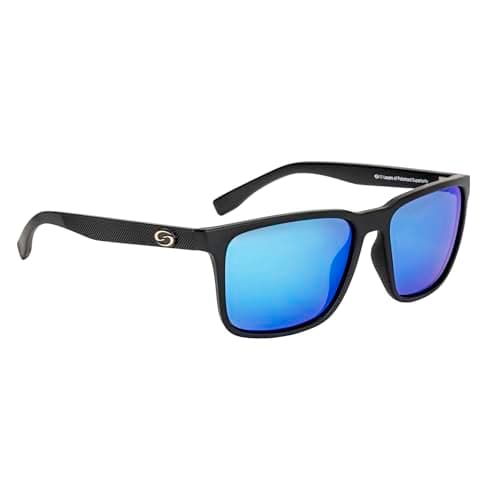
- +A bi-gradient mirror darkens the top of the lens against the sky and leaves the bottom clearer for looking down into the water, which is the exact geometry of sight-fishing a bank
- +Cheap enough to own two tints — the honest way most anglers solve changing light, instead of buying one expensive lens and hoping
Cons
- −Strike King publishes no VLT number and no ANSI rating for this lens, so you are buying on the brand's description rather than a spec you can check
- −Open-style frame means less side coverage than a wrap — good for airflow on a hot day, worse for low sun coming in from the side
- −Budget hinges and no megol-style grip pads; it will not hold on a sweating face like a $200 fishing frame does
Don't buy this if…
…you fish 200 days a year. At that rate the optics and the build of a premium frame are a genuine upgrade, and this one will be scratched by season two.
The everyday polarized Tifosi
Tifosi Swank (Smoke Polarized)
Injected polarized lensGrilamid frameHydrophilic gripUV400 polycarbonate
The polarized version of Tifosi's featherweight everyday frame — the one to buy if glare, not sport, is the problem.
- Glare control
- 8
- Optics
- 7
- Fit & coverage
- 7
- Durability
- 7
- Value
- 8
Pros
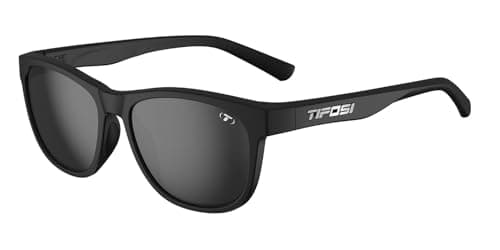
- +Tifosi builds polarization into the lens as an injected layer rather than a surface coating, so it cannot rub off the way a coated budget lens can
- +Same barely-there Grilamid frame and sweat-activated grip pads as the standard Swank — the lens is the only thing that changes
- +A genuinely polarized pair from a sport brand, at a price well under the polarized lifestyle marques
Cons
- −Costs roughly double the standard tinted Swank, and the two listings look nearly identical — easy to buy the wrong one by accident
- −Being polarized, it dims phone, bike-computer and dashboard screens, which is exactly why Tifosi leaves its cycling lenses unpolarized
- −Lifestyle shape, so less coverage than a true sport shield in low, side-on sun
Don't buy this if…
…the pair is for riding or for anything with a screen you need to read. Buy the standard tinted Swank or a Rail instead — polarization is the wrong tool there, not a better one.
Best budget fishing pick
KastKing FlatRock Polarized
PolarizedUV400Sport wrapLightweight
The best-value fishing pick. Polarized, floats the budget, and does the core job.
- Glare control
- 8
- Optics
- 6
- Fit & coverage
- 7
- Durability
- 6
- Value
- 10
Pros
- +Polarized glare control for the price of a couple of lures — the single cheapest way to actually see into water
- +Light sport-wrap shape controls side light better than a lifestyle frame
- +KastKing is a real tackle brand, so the frame is built for the environment
Cons
- −The lens lifts contrast less than a Costa 580 — you see less structure in tricky light
- −Budget coatings scratch; keep it in the pouch
Don't buy this if…
…you're on the water most weekends chasing spooky fish. This gets you 80% of the way; the last 20% is what the premium lenses sell.
A cheap second pair for the tackle bag
Flying Fisherman Sand Bank
PolarizedAmber tint100% UVLightweight
A long-time budget-fishing staple with AcuTint-style contrast tinting.
- Glare control
- 8
- Optics
- 6
- Fit & coverage
- 7
- Durability
- 5
- Value
- 9
Pros
- +Amber-tinted polarized lens lifts contrast in low and flat light — good for overcast days on the water
- +Cheap enough to own two and not mourn a pair lost overboard
- +A fishing-focused brand that has made these for years
Cons
- −Optical clarity and coating life are budget-grade
- −Frame feels light-duty next to a Huk or Costa
Don't buy this if…
…you want one nice pair to keep. This is a buy-two-and-abuse-them pick, not a keeper.
Frame quality on a budget-fishing spend
KastKing Iditarod Polarized
Grilamid framePolarized TAC lensUV400Sport wrap
A Grilamid-framed polarized wrap at a price that belongs two tiers higher.
- Glare control
- 8
- Optics
- 6
- Fit & coverage
- 8
- Durability
- 7
- Value
- 10
Pros
- +Grilamid is the frame material premium sport brands use, and finding it at this price is genuinely unusual
- +Polarized wrap coverage that seals out the side light a flat frame lets straight in
- +From a tackle brand, so the design assumptions are a boat deck rather than a sidewalk
Cons
- −A TAC film-laminate lens is optically a step below the molded polycarbonate in premium fishing glasses
- −No contrast tuning — it removes glare but does not lift fish out of the water the way a 580-class lens does
Don't buy this if…
…you sight-fish seriously. The frame punches above its price; the lens is honest budget, and the lens is what a sight-fisher is buying.
Who each pick is for, and what is wrong with it
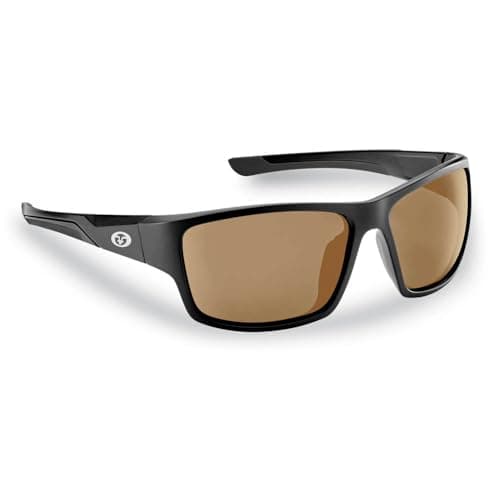
- Huk Spearpoint (Polarized) — Best for: a step up from budget without Costa money. The pick of this page, and it wins on coatings. Huk publishes polarized lenses, 100% UVA/UVB and hydrophobic and oleophobic coatings on its performance range — the first repels water, the second repels oil from your fingers, and together they are what let salt rinse off instead of smearing into a haze. Huk is a fishing-apparel brand first, so the frames are shaped for a deck rather than a sidewalk. Honest cons:no named contrast platform and no published light-transmission figure, so you are buying on build rather than on data; polarization is per listing across Huk's range, so read the title; and the lens is polycarbonate throughout. Our full take is the Huk sunglasses review.
- Strike King S11 Rogue (Blue Mirror) — Best for: bass fishing on a real budget, and bright open water. Strike King is a tackle company, and the S11 line shows it: published claims are polarized polycarbonate, 100% UVA/UVB and bi-gradient mirror options aimed at bright open water. A bi-gradient lens is darker at the top than the bottom, which is a genuinely sensible idea for a lens you look down through at the water and up through at a bank. Honest cons: no VLT figures published, basic coatings, no repair path, and a frame range built around function rather than fit. The dedicated page is best bass fishing sunglasses.
- Tifosi Swank (Smoke Polarized) — Best for: the angler who wants a warranty and wears the pair off the water too. Tifosi publishes a warranty against manufacturer defects to the original owner for the life of the product, with buyable replacement lenses and nose pieces, and Tifosi's own lens guide is unusually frank about which of its lens families actually does what. The Smoke Polarized is the everyday polarized version. Honest cons:it is a lifestyle shape rather than a fishing wrap — modest coverage, no grip material, so it is the wrong pick for a fast boat; and the warranty specifically excludes scratched lenses and dropped pairs. The standard Swank is narrow; wider faces want the XL.
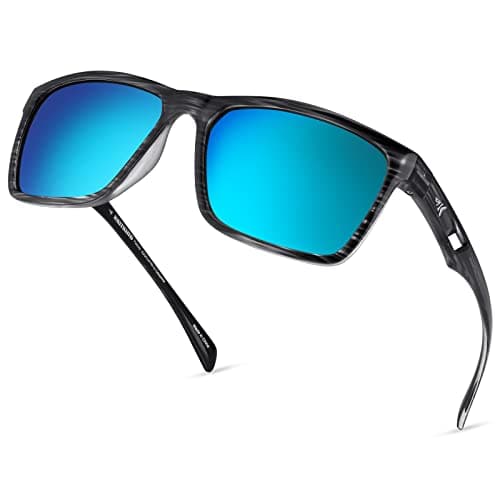
- KastKing FlatRock (Polarized) — Best for: the best fishing frame material per dollar here. KastKing publishes polarized TAC lens construction, UV400 and a Grilamid TR90 frame. TR90 is a genuinely good frame material — light, flexible, hard to break — and finding it well under this band's ceiling is the reason this pick is here. Honest cons: TAC is a laminated film construction rather than a bonded premium lens, the coatings are a season-or-two proposition, and there is no repair path. Our verdict is are KastKing sunglasses good.
- Flying Fisherman Sand Bank — Best for: a cheap second pair for the tackle bag. Flying Fisherman is an old, genuinely fishing-first company, and its published claims are AcuTint polarized lens coloring, AcuView coatings, 100% UVA/UVB and co-injected polycarbonate frames. The best argument for it is not optical: the most expensive sunglasses mistake in fishing is a bright day with no sunglasses at all, and a cheap polarized spare prevents it. Honest cons: basic build and finish, no named contrast platform, and a lens that will not read shallow water like a premium one. Treat it as the spare, not the main pair.
- KastKing Iditarod Polarized — Best for: the budget pick, and frame quality on a budget-fishing spend. The same TR90 and polarized TAC construction as the FlatRock in a different shape, at the bottom of this band. Honest cons: generic fit, no repair path, coatings that will go before the frame does, and no published lens data beyond polarized and UV400. Buy two tints before you buy one premium pair in the wrong one.
Tint matters more than the last $50
If you only read one paragraph here, read this one. Within this band, the tint you choose changes what you see far more than the brand does. Copper, amber and rose lift contrast and are the sight-fishing tints — they separate a dark shape from a sand or gravel bottom. Gray and blue mirrors cut the most light and distort color least, which is what you want on open bright water where there is nothing to read and everything to survive. Green mirror is the honest compromise. Buying a premium pair in the wrong tint is a worse outcome than buying a budget pair in the right one, and the full argument is best lens color for fishing.
Where this band falls short of premium
Two places, both real. The first is material: everything here is polycarbonate, and if the job is reading a foot of clear water on a flat, mineral glass is a visible step up rather than a marketing one. The second is contrast engineering. Costa publishes a 580nm filter at 99.9% polarization efficiency; Bajío publishes a 95% blue-light block to 445nm; Smith publishes a light-transmission figure for every tint it sells. Nothing in this band publishes anything comparable, so you are buying a competent general-purpose polarized lens rather than one tuned for water. Whether that matters depends entirely on whether you are looking into the water or across it. The brand-level comparison is best fishing sunglasses brands.
Spend the rest on a retainer and a second tint
At this price the two highest-return purchases are not a better lens. A retainer turns a lost pair into a dangling pair, which on open water is the difference between an annoyance and a replacement. And a second pair in a different tint — one dark mirror for bright open water, one copper for shallow and overcast — genuinely changes how many fish you see. Two pairs from this page cost less than one premium pair and cover far more conditions. If you wear prescription glasses, skip all of this and start at best fit-over sunglasses for fishing, which solves the problem for a fraction of a prescription lens.
Choosing in four questions
Salt or fresh?
Salt → the Huk, for the coatings, because dried spray is the thing that ruins lenses. Fresh → the Strike King or the KastKing, and put the difference into tackle.
Looking into the water or across it?
Into it → a copper or green mirror, and accept that polycarbonate is the ceiling in this band. Across it → a dark gray or blue mirror; this is the job where cheap lenses are closest to expensive ones.
Will you wear them off the water?
Yes → the Tifosi Swank Polarized, which looks like ordinary sunglasses and carries a lifetime defect warranty. No → buy a wrap; coverage beats style on a boat.
How likely is a pair to go over the side?
Likely → the KastKing Iditarod and a retainer, and buy two. Unlikely → the Huk is the pick, and the coatings will reward you.
How we picked
We don't run a testing lab
We compile each pair's published specifications — lens material, polarization, coating, frame material, coverage, UV rating and price — normalize them, and score each against a published rubric. The scores are judgments from documented research; they are notmeasurements we took, because we don't own a lab and we're not going to pretend we do. Pairs we claim to have lab-tested: 0.
Questions
Frequently asked
What are the best fishing sunglasses under $100?+
The Huk Spearpoint, because it is the one pick in this band with published hydrophobic and oleophobic lens coatings — the spec that matters most when salt spray dries on a lens. The Strike King S11 Rogue is the pick for bass and bright open water thanks to its bi-gradient mirror, and the KastKing Iditarod is the budget pick with a genuinely good TR90 frame.
Can you get good polarized fishing sunglasses for under $100?+
Yes, for most fishing. Glare removal is close to a binary feature, so a polarized lens in this band kills surface glare nearly as well as a premium one. What you give up is mineral glass clarity and documented contrast tuning — which matter if you are sight-fishing a clear flat, and matter much less if you are killing glare on a lake. The premium field is
our fishing sunglasses roundup.
What lens color should I buy in this price range?+
Copper, amber or rose if you are trying to see fish in shallow water, because those tints lift contrast. Gray or blue mirror if you are fighting all-day glare on open water, because they cut the most light and shift color least. Green mirror if you want one pair for both. Tint changes what you see more than brand does at this price —
best lens color for fishing has the detail.
Do any fishing sunglasses under $100 have a warranty?+
Tifosi publishes a warranty against manufacturer defects to the original owner for the life of the product, with buyable replacement lenses and nose pieces - unusual at this price. It excludes scratched lenses, dropped pairs, loss and anything you sat on. The dedicated fishing brands in this band (Huk, Strike King, KastKing, Flying Fisherman) do not publish comparable lifetime cover.
Is it better to buy one $100 pair or two $50 pairs?+
Two $50 pairs, for most anglers, and in different tints: one dark mirror for bright open water and one copper for shallow or overcast. Tint mismatch costs you more fish than lens quality does, and the pair that goes over the side is never the expensive one. The cheaper field is
best budget fishing sunglasses.
Receipts
Sources
- Huk - published eyewear claims (polarized lenses, 100% UVA/UVB protection, hydrophobic and oleophobic lens coatings on the performance range)
- Strike King - S11 Optics published claims (polarized polycarbonate lenses, 100% UVA/UVB protection, bi-gradient mirror options aimed at bright open water)
- KastKing - published eyewear claims (Polarized TAC lens construction, UV400 protection, Grilamid TR90 frames on the FlatRock and Iditarod lines)
- Flying Fisherman - published eyewear claims (AcuTint polarized lens coloring, AcuView coatings, 100% UVA/UVB protection, co-injected polycarbonate frames)
- Tifosi Optics - warranty information (official, verbatim: Tifosi will “warranty any sunglass against manufacturer’s defects to the original owner for the life of the product”; excludes normal wear and tear, lost, stolen, dropped, shattered, scratched or sat-on product, excludes scratched lenses, US residents and original purchaser only, does not cover prescription sunglasses, and carries a shipping and handling fee per claim)
- Tifosi Optics - Fototec vs Enliven vs Clarion vs Polarized: the honest Tifosi lens guide (official)
- OptoGrid - Abbe value by lens material (CR-39 58, mineral glass 58-59, polycarbonate 30)
- American Optometric Association - UV protection and sunglasses guidance (99-100% UVA and UVB blocking recommended at any price; lens darkness is not a measure of UV protection)
- Cleveland Clinic - polarized vs non-polarized sunglasses (polarization described as a filter that removes reflected, horizontally oriented light)
We do not run a testing lab, and we do not pretend to. Where a spec or measurement came from a manufacturer or a third party, we name and link it. Where we could not verify something, we say so on the page rather than quietly leaving it out. Read our full method.