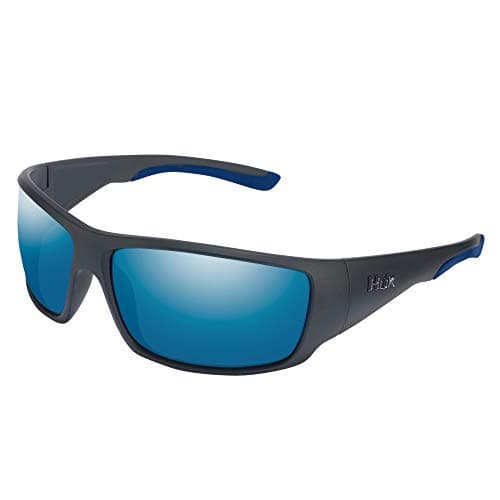
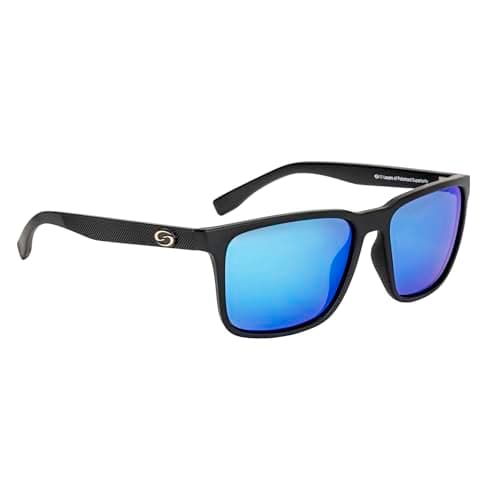
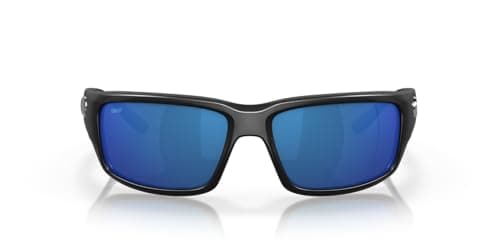
Top pick
Top pick
Costa Fantail 580P
Best for: Sight-fishing and time on the water
Costa is the brand to buy if you want one answer and no homework. Every lens it sells is polarized, so you cannot pick the wrong listing; the 580 lens is published at 99.9% polarization efficiency with a filter at 580nm; and the warranty is a limited lifetime cover against manufacturing defects with a paid repair route on top. The Fantail 580P is its all-round fishing frame.
Budget pick
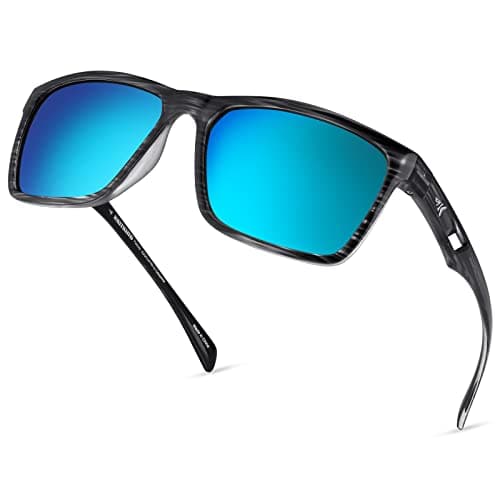
KastKing FlatRock Polarized
Best for: Best budget fishing pick
KastKing is the budget brand that still publishes something. Polarized TAC lenses, UV400 and a Grilamid TR90 frame at a fraction of a Costa - the right buy for a boat where sunglasses get stepped on, and the right buy for anyone fishing a handful of times a year.
#ad · we may earn a commission. Live prices from the Amazon Product API, as of November 23, 2026. Where we have no verified live price we show none.
The best fishing sunglasses brand for most anglers is Costa: every lens is polarized, the 580 lens is the most thoroughly documented water lens in the category, and the limited lifetime warranty is real. Buy it if you fish often and want one decision. If you sight-fish shallow water, Bajío is the specialist brand worth paying for, because it attacks blue light rather than simply darkening the scene. If you want the most published lens data for your money, Smith prints a light-transmission figure for every tint it sells. And the budget pick is KastKing, which puts a genuinely polarized TAC lens and a TR90 frame on a boat for pocket money. Prices below are live, with the date they were checked.
“Which brand” is a different question from “which pair”, and it deserves a different answer. A brand is a bundle of four things: what it publishes about its lenses, whether polarization is standard or an option you can get wrong, what its warranty actually covers, and whether you can buy a replacement lens in year three. That bundle is what you are choosing when you choose a brand, and it is why two pairs with similar specs are not interchangeable purchases.
What separates a fishing brand from a sunglasses brand
Three things, none of them the logo. The first is whether polarization is universal. On the water, an unpolarized lens is the wrong tool — the Cleveland Clinic describes polarization as a filter that removes reflected, horizontally oriented light, which is precisely the light bouncing off a flat surface into your eyes. Costa, Bajío and Maui Jim polarize everything they sell. Smith, Huk, Strike King and KastKing polarize most listings but not all, so you have to read.
The second is coverage and retention, which matter more on a boat than on a sidewalk. The CDC notes that UV reflects off water and specifically recommends sunglasses that wrap around, and reflected light off the surface arrives from below and from the side — angles a flat lifestyle lens does nothing about. A fishing brand builds 8-base wraps, tall lenses and nose pads that grip harder when wet. A fashion brand with a polarized option does not.
The third is the repair path. A scratched lens on a premium frame is a repair, not a write-off, and the brands here differ sharply on that. Costa publishes a limited lifetime warranty against manufacturing defects with a separate paid lens-replacement service; Smith publishes lifetime cover for defects. Neither covers a scratch or a dropped pair — nobody does — but both will sell you a lens. At the budget end there is no repair path at all, and that is fine, because the whole pair costs less than a premium lens.
How we ranked the brands
- What the brand publishes about its own lens.A named platform with numbers attached — a filter wavelength, a light-transmission figure per tint, a blue-light cutoff — is a claim you can check. “HD polarized” is not.
- Whether every lens is polarized. It removes a way to buy the wrong thing, and on the water that is worth real money.
- Whether the frames are built for a boat. Wrap, lens height, grip material when wet, and whether the brand sells a retainer-friendly shape at all.
- Warranty and parts, as published. Lifetime defect cover and a buyable replacement lens, in that order.
- Price honesty. Every number here is live and date-stamped. A brand that is excellent at four times the money is not automatically the better buy, and we say so.
| Brand | Every lens polarized? | Published lens claim | Our pick from the range |
|---|
| Costa Del Mar | Yes | 580 filter at 580nm, 99.9% polarization efficiency | Fantail 580P |
| Bajío | Yes | LAPIS blocks 95% of blue light to 445nm; VLT 12-18% by tint | Bales Beach (glass) |
| Smith | No — per listing | ChromaPop, with VLT published for every tint (10% to 65%) | Guide's Choice |
| Maui Jim | Yes | PolarizedPlus2, 99.9% glare cut; SuperThin Glass at Abbe 58 | Red Sands |
| Huk | No — per listing | Polarized, 100% UVA/UVB, hydrophobic and oleophobic coatings | Spearpoint |
| Strike King | No — per listing | S11 polarized polycarbonate, bi-gradient mirror for open water | S11 Rogue |
| KastKing | No — per listing | Polarized TAC lens, UV400, Grilamid TR90 frame | FlatRock |
The short answer
Quick picks
#ad · Live prices from the Amazon Product API, as of November 23, 2026. Where we have no verified live price, we show none — we would rather leave a gap than print a number that has rotted.
In detail
The picks, in full
Sight-fishing and time on the water
Costa Fantail 580P
580P polarizedPolycarbonateHydrolite gripVented
The fishing default. The 580 lens is built to pull fish out of glare, and it does.
- Glare control
- 10
- Optics
- 9
- Fit & coverage
- 9
- Durability
- 8
- Value
- 6
Pros
- +Costa's 580 lens filters yellow light to lift contrast — copper/green tints make fish and structure pop against surface glare
- +Hydrolite nose and temple pads grip harder the wetter they get, which is the whole game on a boat
- +580P (polycarbonate) is the lighter, more impact-resistant option versus the pricier 580G glass
Cons
- −Polycarbonate scratches more easily than Costa's 580G glass — the glass is clearer but heavier and dearer
- −A real premium over budget fishing wraps that also filter glare competently
Don't buy this if…
…you fish twice a year off a dock. The 580 lens earns its keep for people who sight-fish; occasional users get most of the benefit from a $30 polarized wrap.
Flats and bright-water sight-fishing
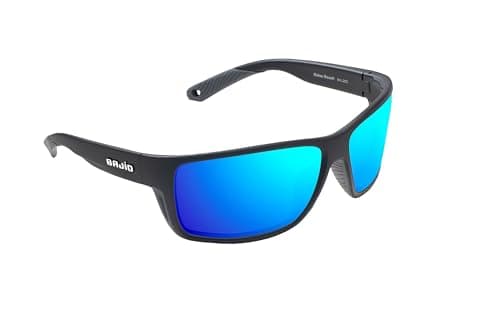
Bajío Bales Beach (Glass)
LAPIS glass lensPolarizedBlue-light filterFull wrap + vents
The flats-fishing specialist's pick — glass lenses with a blue-light filter, full coverage.
- Glare control
- 10
- Optics
- 10
- Fit & coverage
- 9
- Durability
- 8
- Value
- 5
Pros
- +Bajío's LAPIS coating targets blue light specifically, which is the wavelength that washes out a fish on a bright flat
- +Glass lenses give the truest optics here and resist scratches better than any polycarbonate
- +Vented full wrap kills side glare and fogs less than a sealed frame
Cons
- −Glass is heavier on the nose over a long day than Costa's 580P
- −Premium price, and the brand is less of a household name than Costa (which is the point, to some buyers)
Don't buy this if…
…you need impact resistance above all — a stray hook or a dropped pair fares better with polycarbonate than glass.
Sight-fishing and all-day water glare
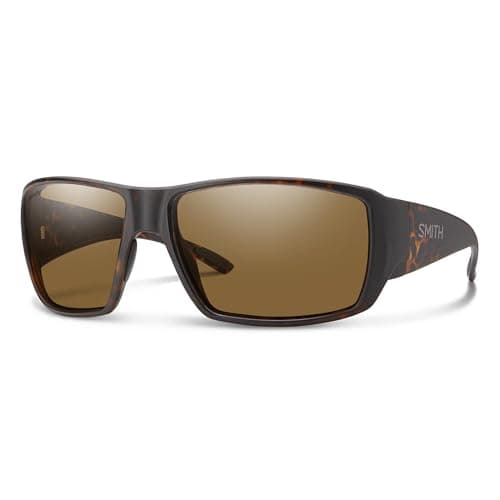
Smith Guide's Choice (ChromaPop Polarized)
ChromaPop polarized8-base wrapMegol nose/temple pads100% UV protection
The purpose-built angling frame in Smith's range — 8-base wrap, megol grip and a contrast-tuned polarized lens.
- Glare control
- 9
- Optics
- 9
- Fit & coverage
- 9
- Durability
- 8
- Value
- 6
Pros
- +Built as a fishing frame rather than a lifestyle shape with a polarized lens dropped in — wide temples and an 8-base wrap cut the side light that gets past a flat lens
- +Megol nose and temple pads tack up as they get wet, which is the difference between a frame that stays put over a hot deck and one that walks down your nose
- +ChromaPop's contrast tuning is aimed squarely at separating a fish from the bottom, and the anti-reflective coating kills the ghost image that bounces off the back of a dark lens
Cons
- −Priced with Costa and Maui Jim, so you are paying premium-brand money for a frame most anglers will treat roughly
- −Medium-large coverage on a wrap this aggressive is a lot of frame on a small face, and the fit has no adjustment beyond the pads
- −The Amazon listing is the ChromaPop polarized lens, not the glass version — if you specifically want Smith's Techlite glass you have to buy it elsewhere and pay more
Don't buy this if…
…you fish a dozen times a year. A $50 polarized fishing wrap finds fish in the same water; this frame earns its price on days 100 through 300, not on day one.
The best-in-class polarized lens
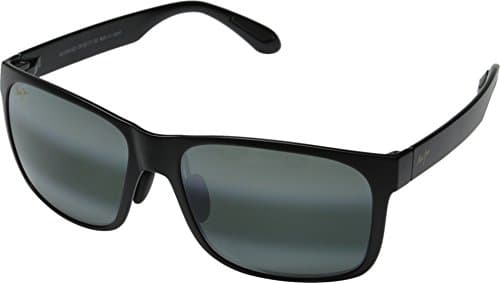
Maui Jim Red Sands (PolarizedPlus2)
PolarizedPlus2MauiPure lensUV + blue-lightNylon frame
If glare control and color are the whole point, this is the ceiling — at a ceiling price.
- Glare control
- 10
- Optics
- 10
- Fit & coverage
- 7
- Durability
- 9
- Value
- 5
Pros
- +Maui Jim's PolarizedPlus2 does more than cut glare — it lifts contrast and color, and the difference off water is real, not marketing
- +MauiPure lenses are lighter than glass and more optically true than most polycarbonate
- +Genuinely excellent build; the pair you keep for a decade
Cons
- −The most expensive pick on this site by a wide margin
- −Like any polarized lens it dims LCD and phone screens — a nuisance at a gas pump or a boat's chartplotter
Don't buy this if…
…you lose sunglasses. This is a heirloom-price lens, and the glare math that matters to a buyer is 90% there on pairs costing a fifth as much.
A step up from budget without Costa money
Huk Spearpoint (Polarized)
PolarizedMirror coatingPerformance frameUV400
A capable polarized fishing wrap from a fishing-apparel brand, at a mid price.
- Glare control
- 8
- Optics
- 7
- Fit & coverage
- 8
- Durability
- 7
- Value
- 8
Pros
- +Sits in the gap between $25 budget wraps and $200 Costas — polarized, mirrored, and built for water
- +Lighter and more wrap-shaped than a lifestyle frame, so side glare is controlled
- +Huk knows the fishing customer; the fit and grip are tuned for it
Cons
- −Lens contrast doesn't match Costa's 580 or Bajío's LAPIS glass for pulling fish out of surface glare
- −Coatings are the first thing to wear at this price point
Don't buy this if…
…you sight-fish seriously and can stretch the budget — the premium fishing lenses genuinely see more, and that's the whole reason to spend up.
Bass fishing on a real budget
Strike King S11 Rogue (Blue Mirror)
Polarized (11-layer)Bi-gradient mirrorHydrophobic coatingOpen-style frame
A bass-tackle brand's own polarized frame at roughly a fifth of what the fishing-glass names charge.
- Glare control
- 8
- Optics
- 6
- Fit & coverage
- 7
- Durability
- 6
- Value
- 10
Pros
- +Costs about a fifth of a premium fishing frame and still carries the three coatings that matter on the water: polarizing filter, anti-reflective backing and a hydrophobic layer that sheds spray instead of spotting
- +A bi-gradient mirror darkens the top of the lens against the sky and leaves the bottom clearer for looking down into the water, which is the exact geometry of sight-fishing a bank
- +Cheap enough to own two tints — the honest way most anglers solve changing light, instead of buying one expensive lens and hoping
Cons
- −Strike King publishes no VLT number and no ANSI rating for this lens, so you are buying on the brand's description rather than a spec you can check
- −Open-style frame means less side coverage than a wrap — good for airflow on a hot day, worse for low sun coming in from the side
- −Budget hinges and no megol-style grip pads; it will not hold on a sweating face like a $200 fishing frame does
Don't buy this if…
…you fish 200 days a year. At that rate the optics and the build of a premium frame are a genuine upgrade, and this one will be scratched by season two.
Best budget fishing pick
KastKing FlatRock Polarized
PolarizedUV400Sport wrapLightweight
The best-value fishing pick. Polarized, floats the budget, and does the core job.
- Glare control
- 8
- Optics
- 6
- Fit & coverage
- 7
- Durability
- 6
- Value
- 10
Pros
- +Polarized glare control for the price of a couple of lures — the single cheapest way to actually see into water
- +Light sport-wrap shape controls side light better than a lifestyle frame
- +KastKing is a real tackle brand, so the frame is built for the environment
Cons
- −The lens lifts contrast less than a Costa 580 — you see less structure in tricky light
- −Budget coatings scratch; keep it in the pouch
Don't buy this if…
…you're on the water most weekends chasing spooky fish. This gets you 80% of the way; the last 20% is what the premium lenses sell.
Brand by brand: who each one is for
- Costa Del Mar — Best for:the angler who wants one decision and no listing homework. Costa is the default for a reason: per SportRx's 580 lens guide the lens filters at 580nm with 99.9% polarization efficiency, 580G glass is published as 20% thinner and 22% lighter than other polarized glass, and 580P is the polycarbonate version built on a C-WALL bond that Costa itself points impact-sport users toward. Every lens is polarized and the tint range is tuned by water type rather than by fashion. Honest cons:you pay a brand premium that the lens alone does not fully explain, 580P does not resolve like glass, and the warranty excludes the two things most likely to kill your pair — a scratch and a drop. Our pick is the Fantail 580P; the range in full is the Costa sunglasses review.
- Bajío — Best for:sight-fishing shallow or stained water. Bajío is the specialist, and the specialism is real: per SportRx's lens guide, LAPIS blocks 95% of blue light up to 445nm, with VLT published from 12% on the Blue Mirror to 18% on Rose and Violet. Attacking blue light rather than dimming everything is why water looks readable through it rather than merely darker. Honest cons: it is the most expensive brand here alongside Maui Jim, glass means weight on a long day, the frame range is small, and the blue-light bias is a specialist choice that reads oddly for everyday wear. Start with the Bajío review and Bajío lens colors explained.
- Smith — Best for: the angler who wants the number for the exact tint they are buying. Smith publishes more lens data than anyone on this page: per its own technology page, ChromaPop Black is 10% VLT, Green Mirror and Gray Green 12%, Ignitor 32% and Low Light Amber 65%, and ChromaPop is described as filtering the blue/green and green/red wavelength crossovers for greater definition and clarity. The Guide's Choice is a purpose-built 8-base angling wrap with megol pads that grip harder as they wet. Honest cons:polarization is per listing, so you must read; the Amazon listing is polycarbonate ChromaPop rather than Smith's glass; and it is priced with Costa. More in the Smith review and Smith vs Costa.
- Maui Jim — Best for: the best-in-class lens, if you keep a pair for a decade. Per SportRx's Maui Jim guide, PolarizedPlus2 cuts 99.9% of glare with 100% UV and HEV protection, and SuperThin Glass is published at Abbe 58 against polycarbonate at 30 — the standard Abbe table confirms that gap is real. Honest cons: it is not a fishing-first brand; the frames are lifestyle shapes with superb lenses, which is the wrong emphasis for a casting deck. And it is the most expensive pair most anglers will ever consider. If that is the sticking point, read the best alternatives to Maui Jim.
- Huk — Best for: a step up from budget without premium money. Huk is the fishing-apparel brand that makes credible eyewear: its published claims are polarized lenses, 100% UVA/UVB and hydrophobic and oleophobic coatings on the performance range, which is the coating pair that matters when spray dries on a lens. Honest cons: there is no named contrast platform and no published VLT, so you are buying on brand and build rather than on data; polarization is per listing; and the lens is polycarbonate throughout. See the Huk review.
- Strike King — Best for: bass fishing on a real budget. Strike King is a tackle company first, and the S11 line reflects it: published claims are polarized polycarbonate, 100% UVA/UVB and bi-gradient mirror options aimed at bright open water, which is a genuinely useful idea for a lens you look through both down at the water and up at a bank. Honest cons: no VLT figures, basic coatings, and a frame range built for function rather than fit. The pick is in best bass fishing sunglasses.
- KastKing — Best for: the budget pick, and the pair you are willing to lose. KastKing publishes polarized TAC lens construction, UV400 and Grilamid TR90 frames on the FlatRock and Iditarod lines — TR90 is a genuinely good frame material to find at this price. Honest cons: TAC is a laminated film construction rather than a bonded premium lens, coatings are a season-or-two proposition, and there is no repair path. Our take is are KastKing sunglasses good and the KastKing review.
Flying Fisherman: the honorable mention
One brand worth knowing that does not make the ranked list because it competes on price rather than on data. Flying Fisherman is an old, genuinely fishing-first company, and its published claims are AcuTint polarized lens coloring, AcuView coatings, 100% UVA/UVB and co-injected polycarbonate frames. The Sand Bank is the pair to keep in the tackle bag as a spare — it is the cheapest honest polarized fishing lens here, and a spare pair prevents the much more expensive mistake of fishing a bright day in no sunglasses at all.
Which brand for which water
Flats and clear shallow water
Bajío first, Costa second. You are trying to see through a surface into a foot of water, which is the hardest optical job in fishing, and it is the job blue-light filtering and a copper-family tint are built for. The tint matters as much as the brand — best lens color for fishing is the page to read before you pick a mirror.
Offshore and open bright water
Costa or Smith, in a dark gray or blue mirror. Open water is a glare problem rather than a contrast problem: there is no bottom to read, so you want the darkest polarized lens you can comfortably wear and the biggest wrap you can tolerate. Best saltwater fishing sunglasses ranks the field by water type.
Freshwater, bank and kayak
Strike King, KastKing or Huk. The water is closer, the light is often filtered by trees, and the risk of losing a pair is high — all three point at a cheaper lens. Best bass fishing sunglasses and best sunglasses for kayaking are the specific pages.
Fishing in prescription glasses
None of the above, at first. A fit-over or a clip-on solves the problem for a fraction of what a prescription fishing lens costs, and the fit-over category has its own answer in best fit-over sunglasses for fishing.
The mistake this question usually hides
A lot of people searching for a fishing sunglasses brand are really asking permission to spend more. The honest arithmetic is hours on the water per year. Over a hundred days, a Costa or a Smith is a comfort and durability purchase that pays back. Under twenty, it is a lens you will scratch before you wear out, and two KastKings in different tints will catch you more fish than one premium pair in the wrong one. The American Optometric Association recommends 99-100% UVA and UVB blocking regardless of spend, and every brand here meets it — nobody has to buy premium for eye health.
Choosing a brand in four questions
How many days a year are you on the water?
Over 100 → Costa, Smith or Bajío; the coatings and the frame will out-survive the cheap pairs and the repair path is worth something. Under 20 → KastKing, Strike King or Flying Fisherman, and spend the difference on tackle.
Do you need to read the bottom, or kill surface glare?
Read the bottom → Bajío or Costa in a copper or green mirror. Kill glare → any dark polarized gray from any brand here; this is the job where the cheap lenses are closest to the expensive ones.
How likely are you to lose or break them?
Likely → buy the budget brand and a retainer. It is not a consolation prize; it is the correct answer to the question you actually asked.
Is polarization standard on the listing you are looking at?
Costa, Bajío and Maui Jim → yes, always. Smith, Huk, Strike King, KastKing → check the title says Polarized. How to tell if sunglasses are polarized covers the two-pair test if the listing is vague.
How we picked
We don't run a testing lab
We compile each pair's published specifications — lens material, polarization, coating, frame material, coverage, UV rating and price — normalize them, and score each against a published rubric. The scores are judgments from documented research; they are notmeasurements we took, because we don't own a lab and we're not going to pretend we do. Pairs we claim to have lab-tested: 0.
Questions
Frequently asked
What is the best brand of fishing sunglasses?+
Costa, for most anglers: every lens is polarized, the 580 lens is the best-documented water lens in the category at 99.9% polarization efficiency, and the limited lifetime warranty covers manufacturing defects with a paid repair route alongside it. Bajío beats it for shallow sight-fishing and Smith publishes more per-tint data, but neither is the easier decision.
Are expensive fishing sunglasses worth it?+
It depends entirely on days per year, not on the lens. Glare removal is close to a binary feature, so a $25 polarized lens kills surface glare about as well as a $250 one. What the money buys is optical clarity in the material, contrast tuning for water, coating life, a frame that stays put and a repair path. Our full arithmetic is in
are expensive sunglasses worth it.
Which fishing sunglasses brands polarize every lens they sell?+
Costa, Bajio and Maui Jim publish that every lens in their sunglass range is polarized, so you cannot buy an unpolarized pair by mistake. Smith, Huk, Strike King and KastKing all sell both, so the listing title has to say Polarized.
What is the best budget fishing sunglasses brand?+
KastKing, on published specs — polarized TAC lenses, UV400 and a Grilamid TR90 frame at a fraction of a premium pair. Strike King and Flying Fisherman are the other two worth buying. The ranked field is
best budget fishing sunglasses.
Do any of these brands replace scratched lenses?+
Costa and Smith both publish defect warranties and both sell replacement lenses as a separate paid service; a scratch is specifically excluded from the warranty but is usually repairable. The budget brands have no repair path, which is reasonable, because a complete pair costs less than a premium replacement lens.
Receipts
Sources
- SportRx - Costa 580 lens guide (580nm filter, 99.9% polarization efficiency, 580G glass published as 20% thinner and 22% lighter than other polarized glass, 580P built on a C-WALL bond and recommended for impact sport)
- Costa Del Mar - warranty and repairs (published US terms: limited lifetime warranty against manufacturing defects in materials and workmanship for the original owner, with scratched lenses, normal wear, accidental damage, loss and theft excluded; a paid lens replacement and repair service is offered separately)
- SportRx - Bajio lens guide (LAPIS blocks 95% of blue light up to 445nm; published VLT per tint: Blue Mirror 12%, Green Mirror 14%, Silver Mirror 16%, Copper 16%, Rose Mirror 18%, Violet Mirror 18%)
- Smith Optics - sunglass technology (ChromaPop described as filtering the blue/green and green/red wavelength crossovers “for greater definition, natural color, and clarity”; published VLT by tint - ChromaPop Black 10%, Green Mirror 12%, Gray Green 12%, Platinum 12%, Red Mirror 15%, Bronze Mirror 15%, Ignitor 32%, Contrast Rose 50%, Low Light Amber 65%)
- Smith Optics - warranty policy (sunglasses covered “for the lifetime of the product against manufacturer’s defects”; excludes product “lost, stolen, dropped, sat on, stepped on” and damage from accident, improper care, negligence and normal wear and tear)
- SportRx - Maui Jim lens guide (PolarizedPlus2 cuts 99.9% of glare with 100% UV and HEV protection from a patented blend of three rare earth elements; SuperThin Glass published at Abbe 58, 20% thinner and 32% lighter than standard laminated glass, against polycarbonate at Abbe 30)
- Huk - published eyewear claims (polarized lenses, 100% UVA/UVB protection, hydrophobic and oleophobic lens coatings on the performance range)
- Strike King - S11 Optics published claims (polarized polycarbonate lenses, 100% UVA/UVB protection, bi-gradient mirror options aimed at bright open water)
- KastKing - published eyewear claims (Polarized TAC lens construction, UV400 protection, Grilamid TR90 frames on the FlatRock and Iditarod lines)
- Flying Fisherman - published eyewear claims (AcuTint polarized lens coloring, AcuView lens coatings, 100% UVA/UVB protection, Co-Injected polycarbonate frames)
- OptoGrid - Abbe value by lens material (CR-39 58, mineral glass 58-59, polycarbonate 30)
- American Optometric Association - UV protection and sunglasses guidance (99-100% UVA and UVB blocking recommended; lens darkness is not a measure of UV protection)
- Cleveland Clinic - polarized vs non-polarized sunglasses (polarization described as a filter that removes reflected, horizontally oriented light)
- CDC - sun safety (UV is strongest 10 a.m. to 4 p.m., reaches you on cloudy days, and reflects off water, cement, sand and snow; “Wear sunglasses that wrap around and block both UVA and UVB rays”)
We do not run a testing lab, and we do not pretend to. Where a spec or measurement came from a manufacturer or a third party, we name and link it. Where we could not verify something, we say so on the page rather than quietly leaving it out. Read our full method.