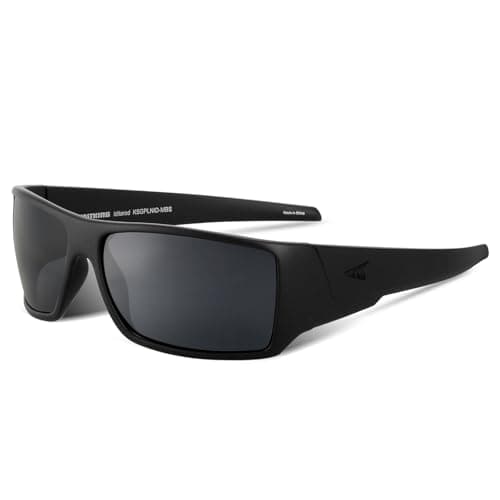
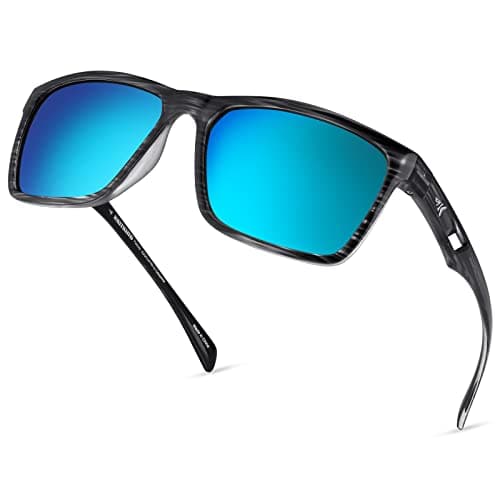
Yes. KastKing is one of the few genuinely good answers at the bottom of the fishing-eyewear market, and the reason is specific rather than vague: the whole sunglass range is polarized, the frames are Grilamid rather than generic injected plastic, and the lenses are published at 1.0mm TAC with a 7-layer construction — specs you would normally pay three times more for. Buy the FlatRock if you want one pair. What you are giving up against a Costa or a Bajío is contrast tint engineering and coating life, not the polarized filter itself.
KastKing is a fishing-tackle brand first — reels, rods, line — which is exactly why its eyewear is better than most tackle-brand eyewear. The sunglasses were built for the same customer as the reels, so they are specified for water rather than styled for a shelf. That shows up in the things anglers notice and nowhere else.
Are all KastKing sunglasses polarized? Yes
Every model in KastKing's sunglasses collection is sold as polarized — the FlatRock, Iditarod, Huzzah, Hiwassee, Skidaway, Chippewa, Osage, Etowah, the Molino fit-over and the bifocal models included. There is no non-polarized line to buy by mistake, which removes the single most expensive error available to a first-time buyer in this category. KastKing states range-wide that its lenses "block 100% of the harmful UVA and UVB rays which can cause eye damage and meet or exceed all U.S. ANSI standards", and that the frames are "made from the same super lightweight Grilamid material commonly used by the military and in medical applications".
One caution on that ANSI line, because we would rather flag it than repeat it uncritically: "meet or exceed all U.S. ANSI standards" is a brand claim, not a marking. The ANSI Z87.1 impact standard is certified by a Z87 or Z87+mark etched on the lens itself. If impact rating is a hard requirement for you — for riding, shooting or work — look for that etched mark rather than the sentence in the listing. For fishing, where the realistic hazard is a thrown lure rather than a high-velocity impact, the polycarbonate-class TAC lens is a sensible level of protection and this is not a reason to spend more.
What the published specs actually mean
Three numbers matter here and all three are better than the price implies.
1.0mm lens thickness. KastKing's own product documentation says its "1.0mm polarized lenses are comparable to the thickness you would find on much higher priced sports eyewear". That is not marketing fluff — a thin lens is where cheap eyewear saves money, and a thin lens flexes, which distorts the view at the edges and makes a polarized filter behave inconsistently across the surface. A genuinely 1mm lens is the main reason these do not feel cheap when you put them on.
TAC, 7 layers.TAC is triacetate cellulose, a laminated construction where the polarizing film is sandwiched between layers rather than coated onto the surface. The practical consequence is that the filter cannot rub off — which is a real failure mode on the cheapest "polarized" listings, where the polarization is a surface treatment. KastKing describes the lenses as passing a double decentering test for optical distortion and as being made with Japanese and German raw materials. Worth knowing what TAC is not: it is softer than polycarbonate and considerably softer than glass, so it scratches more readily. That is the brand's main compromise and it shows up in year two.
Grilamid frames.This is the same frame material Tifosi uses across its sport range, and finding it at this price is unusual. It is light, it flexes a long way before it breaks, and it tolerates heat — which matters for a pair that lives on a boat dash or a car parcel shelf in July. Our listing-terms decoder explains which of the other words on a budget listing mean anything and which do not.
Where the money shows — the honest limits
No contrast tint engineering.This is the real gap and the one that matters for sight-fishing. Costa's 580 filters a specific band of yellow light and Bajío's LAPIS targets blue scatter; both are designed to lift a fish out of its background rather than merely remove surface glare. KastKing does not attempt this and does not claim to. You get the big effect — the surface mirror disappearing, which is most of what polarization buys an angler — without the extra contrast on top. For a lot of fishing that is enough; for serious flats sight-casting it is not, and we would not pretend otherwise.
Coating and lens life.TAC scratches. Treat these as a one-to-three-season pair, keep them in the hard case that ships with them, and never wipe a dry lens — the method in how to clean sunglasses is worth more to a budget lens than to an expensive one, because there is less coating to lose.
Tint range. You get a handful of sensible options rather than a tint for every water type and light level. If you have worked out that you specifically want, say, a rose tint for low-light flats, the premium brands are where that choice lives. Our best lens color for fishing page maps tints to conditions, and getting the color right on a cheap lens beats getting it wrong on an expensive one.
Fit is fixed. No adjustable nose pieces, no published XL line. The shapes suit a broad middle range of faces; very wide or very narrow faces should measure first using our sizing guide.
Warranty, and where they are made
KastKing publishes a 30-day money-back guaranteealongside what it calls a hassle-free warranty and lifetime customer support. Read that as a generous returns policy plus responsive service rather than as a lifetime product guarantee — at this price, the sane expectation is that a faulty pair gets replaced quickly and a scratched pair gets replaced by you.
On "where are KastKing sunglasses made", which is a question the search data shows people asking: KastKing does not publish a country of manufacture on its sunglasses pages. What it does state is that the lenses are "manufactured with high quality Japanese and German raw materials". That is a materials-sourcing claim, not an assembly location, and we are not going to infer one from the other. If country of origin is a deciding factor for you, ask KastKing directly rather than trusting any site that states it confidently without a source.
Who should buy KastKing — and who should not
Buy themif you fish a few times a month, if you want a polarized pair you can drop in a boat without a flinch, if you need a second pair for the tackle bag, or if you are buying a first pair of real fishing glasses and do not want to spend $200 to find out whether you care. They are also an easy gift for an angler precisely because every model is polarized, so there is no wrong version to pick — see sunglasses gifts for fishermen.
Skip themif you sight-fish seriously and want the contrast tint that genuinely separates a fish from the bottom — that is the Costa and Bajío argument, and it is a real one. Skip them if you keep eyewear for a decade, because TAC will not last that long. And skip them if your main use is not water at all: a budget fishing wrap is not the best shape for driving or everyday wear, where the picks in our polarized roundup fit better.
How KastKing compares at this price
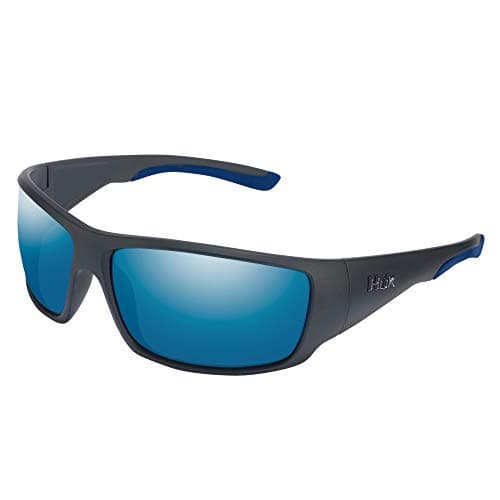
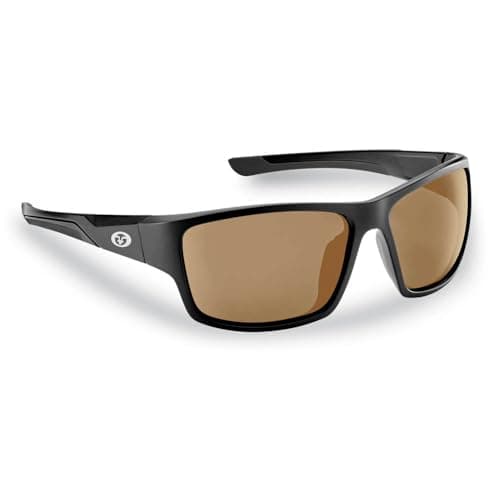
The honest field at the bottom of the fishing market is three or four brands wide. KastKing is the one we reach for first, because of the 1mm lens and the Grilamid frame. The Flying Fisherman in the picks above is the alternative to consider if you want an amber tint specifically — a classic inshore choice. The step up is the Huk Spearpoint at roughly double, which adds a mirror coating and a more performance-oriented frame without reaching Costa money. The whole ladder, from the cheapest honest pair to glass, is ranked in our best fishing sunglasses roundup, and the model-by-model detail is in our KastKing review.
The short version
KastKing sunglasses are good. Every model is polarized, the lens and frame specs beat the price, and the limits are the predictable ones: no contrast tuning, softer lenses that scratch, fixed fit. For most anglers most of the time that is a very good trade, and it is the trade this site recommends more often than it recommends the premium one.