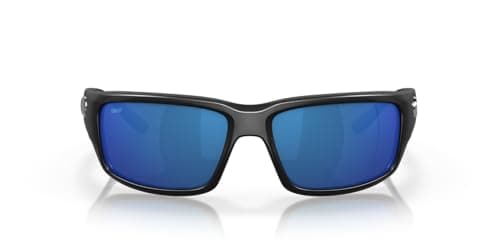
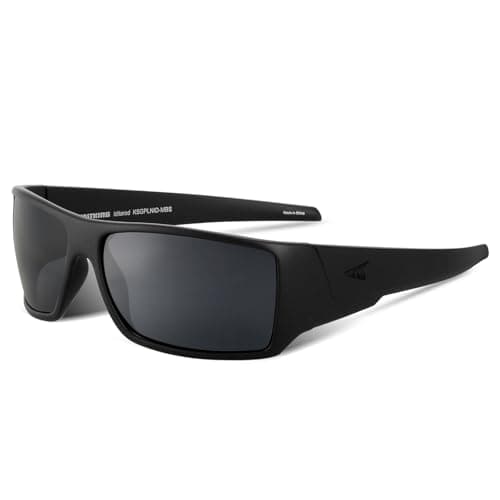
Buy the KastKing Iditarod and buy a floating retainer at the same time. That is the whole answer for most kayakers: a polarized Grilamid sport wrap that costs less than a dry bag, on a strap, so a capsize costs you a swim and not a replacement. If you fish from the boat, the Strike King S11 Rogue adds a hydrophobic coating and a bi-gradient mirror built for looking down into water. And if you are determined to paddle in a premium lens, the Costa Fantail 580P is ranked last here on purpose - not because it is worse, but because a kayak is the worst place on earth to find out how attached you are to an expensive pair of sunglasses.
Kayaking breaks the normal sunglasses logic in three specific ways, and every pick on this page is chosen against those three, in this order.
The three criteria, in priority order
1. Retention, because the pair is going in the water
Not might. Will, eventually. You lean, you roll, you duck under a branch, you wipe your face with a wet forearm and flick them off. Aqua-Bound, which makes paddles rather than sunglasses, puts it plainly in its paddler's guide to polarized lenses: an eyewear retainer is "the simplest way to keep them with you and out of the water," with "bonus points if the strap floats, and if it's a bright color so it's hard to lose." The same guide is honest about the limit, warning that even floating eyewear "could still be tricky to retrieve when you're paddling on current, in wind or in wavy conditions."
Two consequences people get wrong. First, a strap is not an accessory here, it is part of the purchase - budget for it the way you budget for a PFD whistle. Second, and this is the one that costs money: almost no sunglasses float. The buoyancy comes from the strap, not the frame, and "floating sunglasses" in a listing title usually means a floating strap is included. Assume yours sink.
2. Polarization, because you are sitting at water level
In a kayak your eyes are perhaps a foot above the surface, which means you look across water rather than down at it for most of the day. That is the geometry that produces the worst reflected glare, and it is exactly what a polarizing filter removes rather than merely dims. The Cleveland Clinic describes the mechanism; Aqua-Bound describes the payoff for paddlers specifically - "looking at the water through that polarized filter lets us see beyond the surface reflection and into the water itself," which is how you spot the submerged rock, the shelf, the strainer or the fish.
Every pick on this page is polarized for that reason. Two honest caveats come with it, both published by lens makers themselves. Tifosi's lens guide notes that polarized lenses can affect depth perception and dim screens - so if you paddle with a GPS or a fish finder, check it through the lens before you commit. And some paddlers find that removing surface reflection flattens the visual cues they use to read wave shape in rough water. If you run technical whitewater, that is worth weighing; for flatwater, touring, sea kayaking and kayak fishing, polarized is the right default.
3. Replacement cost, which is why the ranking looks upside down
This is the criterion almost no roundup is willing to state. The expected lifespan of a pair of sunglasses in a kayak is short, and the correct response is to buy a pair whose loss is annoying rather than painful. A twenty-five-dollar polarized wrap on a strap protects your eyes exactly as well as a two-hundred-dollar one for the purposes of UV and glare; what you give up is contrast tuning, coating life and optical finesse. In a boat you climb in and out of, from water, that is a trade most people should take - and it is the same logic we apply in best budget fishing sunglasses.
Coverage and sun exposure, briefly
Open water is the harshest UV environment most people voluntarily sit in for six hours. The CDC notes that UV reflects off water, that it reaches you on cloudy and cool days, that it is strongest between 10 a.m. and 4 p.m., and advises sunglasses that "wrap around and block both UVA and UVB rays." On a kayak you get the direct sun from above andthe reflected dose off the surface, which is why a wrap earns its place: it blocks the light coming in under and around the lens that a flat lifestyle frame lets straight through. Aqua-Bound agrees - "sport-type sunglasses that wrap around your eyes and face rather than sit in front of your eyes are great for paddlers" - and recommends at least 95% UVA and 99% UVB blocking. The American Optometric Association sets the bar a little higher at 99-100% of both, which is what UV400 means and what every pick here carries.
What we did not rank highly, and why
Glass lenses. Clearer and far harder to scratch, and the wrong choice in a boat you fall out of: glass is heavier on your nose for a long paddle and shatters where polycarbonate flexes. If you want the glass argument in a context where it makes sense, it is in best glass lens sunglasses.
Big goggle-scale shields.The autocomplete family for this query includes "best goggles for kayaking," and it is a fair instinct for whitewater - but a large sealed lens close to a sweating face fogs on a slow upstream grind, and anything that cannot be pushed up onto your head one-handed is a liability in a boat.
Anything without a strap attachment point. If the temple tips are so slim or so bulbous that a retainer will not seat on them, the pair is wrong for this use regardless of how good the lens is.
The short answer
Quick picks
#ad · Live prices from the Amazon Product API, as of October 31, 2026. Where we have no verified live price, we show none — we would rather leave a gap than print a number that has rotted.
In detail
The picks, in full
Frame quality on a budget-fishing spend
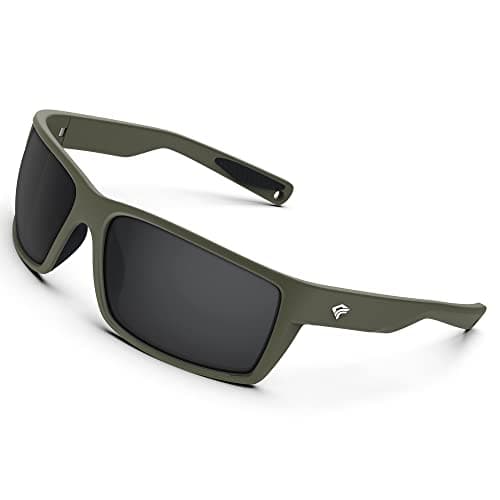
KastKing Iditarod Polarized
Grilamid framePolarized TAC lensUV400Sport wrap
A Grilamid-framed polarized wrap at a price that belongs two tiers higher.
- Glare control
- 8
- Optics
- 6
- Fit & coverage
- 8
- Durability
- 7
- Value
- 10
Pros
- +Grilamid is the frame material premium sport brands use, and finding it at this price is genuinely unusual
- +Polarized wrap coverage that seals out the side light a flat frame lets straight in
- +From a tackle brand, so the design assumptions are a boat deck rather than a sidewalk
Cons
- −A TAC film-laminate lens is optically a step below the molded polycarbonate in premium fishing glasses
- −No contrast tuning — it removes glare but does not lift fish out of the water the way a 580-class lens does
Don't buy this if…
…you sight-fish seriously. The frame punches above its price; the lens is honest budget, and the lens is what a sight-fisher is buying.
Bass fishing on a real budget
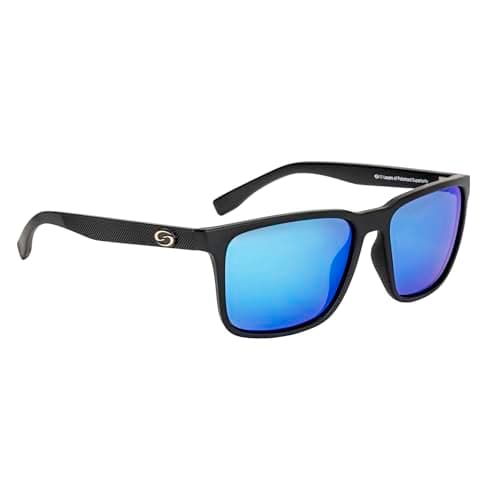
Strike King S11 Rogue (Blue Mirror)
Polarized (11-layer)Bi-gradient mirrorHydrophobic coatingOpen-style frame
A bass-tackle brand's own polarized frame at roughly a fifth of what the fishing-glass names charge.
- Glare control
- 8
- Optics
- 6
- Fit & coverage
- 7
- Durability
- 6
- Value
- 10
Pros
- +Costs about a fifth of a premium fishing frame and still carries the three coatings that matter on the water: polarizing filter, anti-reflective backing and a hydrophobic layer that sheds spray instead of spotting
- +A bi-gradient mirror darkens the top of the lens against the sky and leaves the bottom clearer for looking down into the water, which is the exact geometry of sight-fishing a bank
- +Cheap enough to own two tints — the honest way most anglers solve changing light, instead of buying one expensive lens and hoping
Cons
- −Strike King publishes no VLT number and no ANSI rating for this lens, so you are buying on the brand's description rather than a spec you can check
- −Open-style frame means less side coverage than a wrap — good for airflow on a hot day, worse for low sun coming in from the side
- −Budget hinges and no megol-style grip pads; it will not hold on a sweating face like a $200 fishing frame does
Don't buy this if…
…you fish 200 days a year. At that rate the optics and the build of a premium frame are a genuine upgrade, and this one will be scratched by season two.
A sport pair that survives being sat on
TOREGE Polarized Sport (Flexible Frame)
Flexible framePolarizedUV400Sport wrap
The bendy TOREGE — a polarized sport wrap you would have to work hard to break.
- Glare control
- 7
- Optics
- 6
- Fit & coverage
- 8
- Durability
- 6
- Value
- 9
Pros
- +The frame flexes and returns instead of snapping, which is the failure mode that kills cheap sport frames
- +Polarized and UV400, so glare and UV are genuinely handled
- +Light and grippy enough for running, riding and general outdoor use
Cons
- −Flexible frames feel less precisely located on your face than a rigid sport shield
- −Budget coatings scratch; the pouch is not optional
Don't buy this if…
…you want optical precision. This is a survive-anything frame with a competent lens, not a lens showcase.
A step up from budget without Costa money
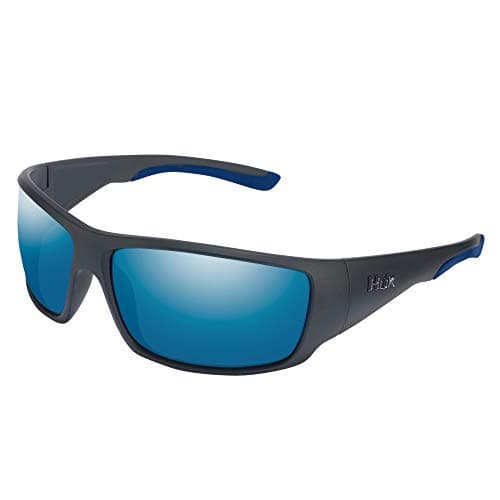
Huk Spearpoint (Polarized)
PolarizedMirror coatingPerformance frameUV400
A capable polarized fishing wrap from a fishing-apparel brand, at a mid price.
- Glare control
- 8
- Optics
- 7
- Fit & coverage
- 8
- Durability
- 7
- Value
- 8
Pros
- +Sits in the gap between $25 budget wraps and $200 Costas — polarized, mirrored, and built for water
- +Lighter and more wrap-shaped than a lifestyle frame, so side glare is controlled
- +Huk knows the fishing customer; the fit and grip are tuned for it
Cons
- −Lens contrast doesn't match Costa's 580 or Bajío's LAPIS glass for pulling fish out of surface glare
- −Coatings are the first thing to wear at this price point
Don't buy this if…
…you sight-fish seriously and can stretch the budget — the premium fishing lenses genuinely see more, and that's the whole reason to spend up.
Coverage without giving up the grip
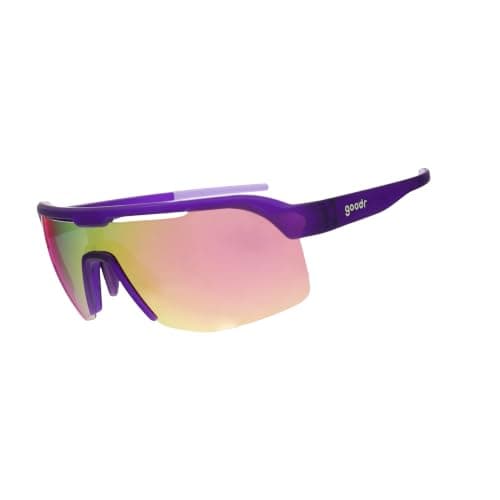
goodr Bolt G (Polarized Wrap)
PolarizedUV400Vented wrap lensAdjustable nose piece
The OG's grip coating in a vented wrap — goodr for runners who want coverage rather than a lifestyle shape.
- Glare control
- 8
- Optics
- 7
- Fit & coverage
- 9
- Durability
- 7
- Value
- 8
Pros
- +A wrap lens seals out the low, side-on sun that gets straight past goodr's flat OG frame
- +The adjustable nose piece is the thing the OG does not have — it is how you stop a wrap sitting wrong on a narrow or a high bridge
- +Same polarized UV400 lens and no-slip grip coating as the rest of the goodr line, so nothing is traded for the extra coverage
Cons
- −Half again the price of the OG, which is a lot for goodr money
- −More lens close to your face means more to fog at a slow, humid pace than the open OG frame, vents or not
- −goodr colorways rotate constantly and each listing is one color in one size — the exact pair here may sell through
Don't buy this if…
…you want one pair that works on the run and at dinner. The wrap reads as sports equipment in a way the OG does not, and that is the entire point of it.
Sight-fishing and time on the water
Costa Fantail 580P
580P polarizedPolycarbonateHydrolite gripVented
The fishing default. The 580 lens is built to pull fish out of glare, and it does.
- Glare control
- 10
- Optics
- 9
- Fit & coverage
- 9
- Durability
- 8
- Value
- 6
Pros
- +Costa's 580 lens filters yellow light to lift contrast — copper/green tints make fish and structure pop against surface glare
- +Hydrolite nose and temple pads grip harder the wetter they get, which is the whole game on a boat
- +580P (polycarbonate) is the lighter, more impact-resistant option versus the pricier 580G glass
Cons
- −Polycarbonate scratches more easily than Costa's 580G glass — the glass is clearer but heavier and dearer
- −A real premium over budget fishing wraps that also filter glare competently
Don't buy this if…
…you fish twice a year off a dock. The 580 lens earns its keep for people who sight-fish; occasional users get most of the benefit from a $30 polarized wrap.
Who each pick is for
- KastKing Iditarod — best overall for kayaking. A polarized sport wrap in a Grilamid frame, which is the material premium sport brands use, at a price that makes a capsize survivable. The wrap seals out the side light that comes off the surface beside you, it is light enough to forget on your face, and the temple arms take a retainer properly. Honest cons: the TAC film-laminate lens is optically a step below molded polycarbonate, and there is no contrast tuning - it removes glare but will not lift a fish out of the water the way a premium fishing lens does. Do not buy it if you sight-fish seriously; the lens is honest budget and the lens is exactly what a sight-fisher is paying for.
- Strike King S11 Rogue — best for kayak fishing.The most kayak-appropriate lens design here, from a bass-tackle brand rather than an eyewear brand. It carries the three coatings that matter on the water - a polarizing filter, an anti-reflective backing that kills the ghost image bouncing off the inside of a dark lens, and a hydrophobic layer that sheds spray instead of spotting with it, which is a real difference when your face is a paddle-blade's distance from the water. The bi-gradient mirror is darker at the top against the sky and clearer at the bottom for looking down, which is the exact geometry of sight-fishing from a low seat. Honest cons: Strike King publishes no VLT figure and no impact rating for this lens, and the open frame gives up some side coverage to the Iditarod. Do not buy it if you want a sealed wrap for open-water wind.
- TOREGE Polarized Sport (flexible frame) — best cheap pair to abuse. The one to buy two of. The frame flexes and returns instead of snapping, which is the failure mode that actually kills cheap sport glasses - and in a kayak the failure mode is usually being sat on, knelt on, or crushed in a hatch under a dry bag. Polarized and UV400, so the lens does the two jobs that matter. Honest cons: a flexible frame feels less precisely located on your face than a rigid shield, and the budget coatings scratch, so the pouch is not optional. Do not buy it if you want optical precision - this is a survive-anything frame with a competent lens, not a lens showcase.
- Huk Spearpoint — best for sea kayaking and long days. The step up from budget without premium money, from a fishing-apparel brand whose design assumptions are a wet deck rather than a sidewalk. More wrap-shaped than a lifestyle frame, mirrored, and tuned for the fishing customer, which overlaps almost exactly with the touring paddler: hours of exposure, salt, and glare from every direction. Honest cons: the lens contrast does not match a premium fishing lens for pulling detail out of surface glare, and coatings are the first thing to wear at this price. Do not buy it if you sight-fish seriously and can stretch the budget.
- goodr Bolt G — best grip when you are sweating.Paddling is upper-body work and your face gets wet from above and below; a frame that walks down your nose on the third mile is a genuine problem. goodr publishes a no-slip grip coating across its line, every lens polarized and UV400, and the Bolt G puts that in a vented wrap with an adjustable nose piece rather than the flat OG shape - so it seals out low side-on sun and can be tuned to your bridge. Honest cons: it is half again the price of goodr's OG, more lens close to your face means more to fog at a slow humid pace, and goodr colorways rotate constantly so the exact pair may shift. Do not buy it if you want a fishing lens - this is a sport frame with a competent polarized lens, not a contrast tool.
- Costa Fantail 580P — the premium pick, ranked last on purpose.If you paddle in flat water you know, keep the pair leashed, and want the best lens on this page, this is it: Costa's 580 filter cuts a band at 580nm to lift contrast, published at 99.9% polarization efficiency, and the 580P is the polycarbonate version - which is the correct Costa for a kayak, because the 580G glass version is heavier and shatters. The vented frame and Hydrolite grip are built for exactly this environment. Honest cons: it costs many times the Iditarod, the contrast advantage is real but incremental against a competent budget polarized lens, and a kayak is a high-loss environment by definition. Do not buy it if you are new to paddling, run whitewater, or would be genuinely upset to watch it sink - and be aware that the 580P is also the pick over the glass version for anywhere a hook or a fall is likely.
Sea kayaking, whitewater and kayak fishing want different things
The autocomplete family for this query splits three ways, and so should the advice.
Sea and touring kayaking is the longest-exposure case: six to eight hours of direct and reflected sun, salt spray drying on the lens, and wind. Prioritize coverage and a lens you can clean in the field - the Huk Spearpoint or the Iditarod, on a floating retainer, with a cloth somewhere dry. Salt is the hidden enemy here: dried salt is abrasive, so rinse rather than wipe when you can, which is the same rule as in how to clean sunglasses.
Whitewater is the one case where we would not insist on polarization, for the reason above: some paddlers read wave shape partly off surface reflection. Prioritize retention above everything - a snug strap, nothing loose near your paddle or your PFD buckles - and a frame cheap enough that a swim through a rapid is not an expensive event. The flexible TOREGE is the honest pick for this.
Kayak fishing inverts it: here the lens genuinely matters, because you are trying to see into the water from a seat six inches above it. This is where contrast tuning earns its money, and where a bi-gradient mirror or a 580-class lens is a real advantage - the Strike King for the budget version of that argument, the Costa for the full one. The species-specific reasoning carries over from best bass fishing sunglasses and best lens color for fishing, both of which apply from a kayak the same way they apply from a bank.
Lens tint: what to pick for the water you paddle
One tint, chosen for your usual light, beats a collection you never swap. Broadly: a gray lens for bright open water keeps colors true and is the safe default; copper, brown or amber lifts contrast in flat, overcast and shallow-water light, which is why fishing brands lean on it; and a mirror finish on top of either cuts the total light reaching your eye, which is worth it on big open water in summer and too much on a shaded creek. A bi-gradient mirror is the kayak-specific special case - dark at the top for the sky, clearer at the bottom for looking down. The full breakdown is in sunglasses lens colors explained.
What about prescription?
"Best prescription sunglasses for kayaking" is in the autocomplete family and it is the hardest version of this problem, because the thing you would normally do - buy one good prescription pair - is exactly what a high-loss environment punishes. The honest routes are a cheap fit-over worn with your own glasses, a clip-on, or a dedicated budget prescription pair you are willing to lose, and all four options are weighed in prescription polarized sunglasses and sunglasses that fit over glasses. Whichever you choose, leash it. If you wear contacts, a wrap frame also helps with the wind-dry problem that makes a long paddle uncomfortable.
The honest summary
There is no best pair of sunglasses for kayaking in the way there is a best pair for driving, because the limiting factor is not optical. It is that you are wearing them in a boat you sit inside, at water level, while doing something that occasionally puts you in the water. Get a polarized UV400 wrap, get a floating retainer, and spend the difference on a second pair rather than a better one. If your paddling is mostly from a deck rather than a cockpit, the trade-offs change and best sunglasses for boating is the page you want instead.
Buying for a kayak, step by step
1. Buy the retainer in the same order
A floating, brightly colored strap, snug but with no loose cord near your paddle or PFD buckles. This is the single highest-value thing on the page.
2. Insist on polarized and UV400
Polarization is what lets you see past surface reflection at water level; UV400 is the eye-health floor. Both are available for well under the price of a paddle leash.
3. Choose a wrap, not a flat lifestyle frame
On water you get light from above and reflected light from below. A wrap blocks what comes in around the lens; a flat frame does not.
4. Pick polycarbonate over glass
Lighter for a long paddle, and it flexes where glass shatters. Save the glass lens for the boat with a windshield.
5. Then set your budget by how much you would mind losing it
That is the real question, and answering it honestly is how this list got its order. Two cheap pairs beat one expensive pair for most paddlers.
The cheap stuff that matters
Essentials under $40
The add-ons this page already told you to get. None of these is scored — our rubric measures glare control, optics, fit, durability and value, and four of those mean nothing for a cleaning cloth. So you get a reason and a live price instead of a number we'd have had to invent.
Generic
Floating Sunglasses Straps for Water (4-pack)
A buoyant strap for boats, kayaks and wading. Note what this is: the STRAP provides the flotation. Do not assume any pair floats on its own.
Chums
Chums Original Cotton Retainer
The plain cotton eyewear keeper. Adjustable, washable, and the version most people mean when they say Croakies. Colorways vary on the listing.
#ad · Live prices as of October 31, 2026, hidden when our data goes stale. We may earn a commission, at no cost to you. How this works.
How we picked
We don't run a testing lab
We compile each pair's published specifications — lens material, polarization, coating, frame material, coverage, UV rating and price — normalize them, and score each against a published rubric. The scores are judgments from documented research; they are notmeasurements we took, because we don't own a lab and we're not going to pretend we do. Pairs we claim to have lab-tested: 0.
Questions
Frequently asked
Do you need polarized sunglasses for kayaking?+
For flatwater, touring, sea kayaking and kayak fishing, yes - you sit roughly a foot above the surface and look across the water all day, which is the geometry that produces the worst reflected glare. Aqua-Bound puts the paddler's case plainly: a polarized filter lets you see past the surface reflection and into the water, which is how you spot submerged rocks and fish. The exception is technical whitewater, where some paddlers use surface reflection to read wave shape.
Do sunglasses float?+
Almost never. The flotation in nearly every "floating sunglasses" setup comes from the strap, not the frame, so assume any pair you own will sink. Buy a buoyant retainer in a bright color and treat it as part of the purchase. Even then, a paddle maker's own guide warns that floating eyewear can be hard to retrieve in current, wind or waves.
What color lens is best for kayaking?+
Gray for bright open water if you want true colors and a safe default; copper, brown or amber for flat, overcast or shallow-water light, where it lifts contrast; a mirror on top of either for big open water in summer. For kayak fishing specifically, a bi-gradient mirror is the useful special case - darker at the top against the sky, clearer at the bottom for looking down. More in
sunglasses lens colors explained.
Should I spend a lot on sunglasses for kayaking?+
Usually not. A kayak is a high-loss environment, and a budget polarized UV400 wrap protects your eyes from UV and glare exactly as well as a premium pair - what you give up is contrast tuning, coating life and optical finesse. Buy a good cheap pair, buy a floating retainer, and consider a spare before an upgrade. If you do spend up, pick polycarbonate rather than glass.
Are goggles better than sunglasses for whitewater kayaking?+
For most paddlers, no. A large sealed lens close to a sweating face fogs on slow sections, and anything you cannot push onto your head one-handed is awkward in a boat. A snug retainer on a flexible polarized wrap solves the actual problem - staying on your face - without the fogging penalty.
How do I stop sunglasses slipping while paddling?+
Paddling is upper-body work and your face gets wet from both directions, so a frame that fits dry often slides when wet. Three fixes, cheapest first: silicone temple sleeves, a frame with a published grip coating or megol pads, and an adjustable nose piece so the frame sits on the bridge rather than sliding down it. The full set is in
how to stop sunglasses slipping.
Receipts
Sources
- Aqua-Bound (paddle maker) - polarized sunglasses for kayaking (verbatim: "The biggest advantage is that the polarizing coating on the glasses is anti-reflective"; "Looking at the water through that polarized filter lets us see beyond the surface reflection and into the water itself"; "As long as sunglasses have the right levels of UV ray-blocking protection, polarized sunglasses aren't healthier for your eyes-but they offer significant advantages for paddlers"; recommends 95% UVA and 99% UVB blocking; "Sport-type sunglasses that wrap around your eyes and face rather than sit in front of your eyes are great for paddlers"; an eyewear retainer is "The simplest way to keep them with you and out of the water", "Bonus points if the strap floats, and if it's a bright color"; caveat that floating glasses can still be hard to retrieve "when you're paddling on current, in wind or in wavy conditions")
- CDC - Sun safety and skin cancer prevention (UV rays are strongest from 10 a.m. to 4 p.m. daylight saving time; UV reaches you on cloudy and cool days; UV reflects off water, cement, sand and snow; "Wear sunglasses that wrap around and block both UVA and UVB rays")
- American Optometric Association - UV protection and sunglasses guidance (99-100% UVA and UVB blocking recommended at any price)
- Cleveland Clinic - Polarized vs non-polarized sunglasses (how the filter works)
- Tifosi Optics - lens guide (polarized lenses "filter harsh reflected light that bounces off flat surfaces like water, snow, and pavement", plus the published depth-perception and screen caveat)
- SportRx - Costa 580 explainer (580nm filter, 99.9% polarization efficiency, 580G published as 20% thinner and 22% lighter than other polarized glass, 580P C-WALL bond and the impact guidance for sport)
- goodr - official product claims (all lenses polarized, UV400, no-slip grip coating)
We do not run a testing lab, and we do not pretend to. Where a spec or measurement came from a manufacturer or a third party, we name and link it. Where we could not verify something, we say so on the page rather than quietly leaving it out. Read our full method.