Top pick
Top pick
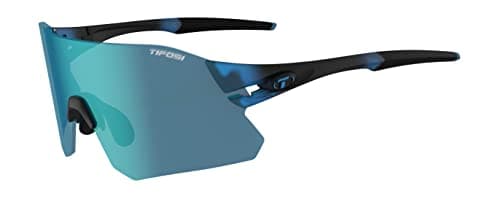
Tifosi Rail (Interchange Set)
Best for: Maximum coverage
Hunting light moves further in an hour than any other outdoor light, and the only honest answer to that is more than one lens. The full-size Rail ships with three — Clarion Blue for bright open country, All-Conditions Red for flat and overcast, and a Clear lens for the half-hour before legal light — on an oversized rimless shield at a published 32g. It is not polarized, which for most hunting is the right call and is explained below.
Budget pick
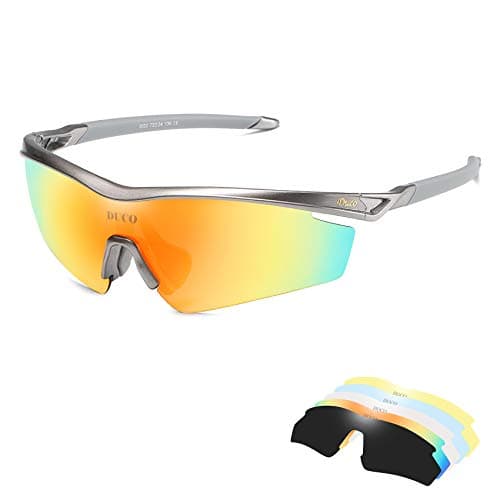
DUCO Sport Polarized (5 Lenses)
Best for: Changing light on a tight budget
The same idea for a fraction of the money: a five-lens interchangeable kit, one of them polarized. The frame and the lens optics are budget-grade and the swap mechanism feels it, but a cheap kit that matches the light beats an expensive single lens that does not.
#ad · we may earn a commission. Live prices from the Amazon Product API, as of November 24, 2026. Where we have no verified live price we show none.
The best sunglasses for hunting are the full-size Tifosi Rail with its three-lens interchange set, because the problem is the light schedule and not the brightness. If you want one lens that handles the whole swing without swapping, the Julbo Fury with the REACTIV 1-3 Light Amplifier lens, published at 75% down to 17% transmission. For waterfowl over open water, the polarized Smith Guide's Choice. For both tricks in one lens at a sane price, the Tifosi Crit, which is polarized and photochromic. The budget pick is the DUCO five-lens kit. Live prices below, each with the date it was checked.
Read this part first, because it is the part that matters.Sunglasses are not shooting glasses. The National Shooting Sports Foundation's seventh rule of firearms safety is “Always Wear Eye and Ear Protection When Shooting”, and its own wording is that “all shooters should wear protective shooting glasses,” which “guard against twigs, falling shot, clay target chips and the rare ruptured case or firearm malfunction.” The impact standard that language points at is ANSI Z87.1 — the same one OSHA requires for occupational eye protection — and a genuine rating is etched onto the lens or frame rather than claimed in a listing.
Not one pick on this page publishes a Z87+ rating.They are sun lenses, chosen for the light. If an impact rating is your requirement — and for anyone shooting clays, or hunting with others, it reasonably is — then buy a rated pair for the shooting and treat everything below as the pair for the walk in and the walk out. NEVEN is one brand that publishes a polarized ANSI Z87+ line in standard and XL sizes, which is the narrow aisle worth searching. The longer version of this distinction is in sunglasses vs glasses, goggles and safety glasses.
Why hunting light is a different problem
Most “best sunglasses for X” lists optimize for the brightest part of the day. Hunting inverts that. The two hours that decide whether a day works are the first and the last, which are the two hours a dark lens is actively harmful in — and in between you get flat overcast, dappled timber, snow glare or open stubble, often in the same morning.
So this page ranks on range, and there are exactly three ways to get it:
- Carry more than one lens. An interchangeable kit. Cheapest, most flexible, requires you to actually carry and swap them with cold hands.
- Let the lens do it. Photochromic. Julbo publishes REACTIV as giving “clear, precise vision in all conditions : from bright sunshine to low light”, and says that when the sky clouds over or you move into shade “it becomes clear again almost instantly.” More money, zero effort, slower in the cold.
- Buy one lens for the light you actually hunt in. Perfectly reasonable, and the cheapest route of all if your season is one habitat and one time of day.
How we ranked these
- Range across the light, by published figure where one exists. A stated transmission range beats an adjective every time. The Julbo publishes “Category / Photochromic 1-3” and a VLT of 75%-17%; Smith publishes per-tint transmission across its ChromaPop range — Low Light Amber at 65%, Contrast Rose at 50%, Ignitor at 32%, down to Black at 10%. Those numbers are what “low light lens” actually means, and most makers never print them.
- Coverage and retention in cover. Hunting involves branches, wind and a lot of looking up. A wrap or a shield keeps side light and twigs out; grip material at the nose and temples keeps the frame where you left it when you are sweating under layers.
- Polarized or not, decided per use rather than as a default. See the section below. It is genuinely a split decision in this category, unlike fishing where the answer is almost always yes.
- UV, which every pick passes and nobody gets credit for. The American Optometric Association recommends 99-100% UVA and UVB blocking at any price, and the American Academy of Ophthalmology notes that lens darkness is not a guide to protection. The CDC adds the part hunters feel in November: UV reaches you on cloudy days and reflects off snow.
- What it is NOT. No pick here is impact-rated, and we say so on every one rather than once at the top.
- Price honesty.Our prose uses bands, never dollars. Every figure renders live with its own “as of” stamp.
| How you hunt | Buy | The catch |
|---|
| Dark start, bright finish, same sit | Tifosi Rail (Interchange Set) | You have to carry and swap three lenses |
| One lens, no swapping, premium budget | Julbo Fury (REACTIV 1-3) | Slower to react in the cold; premium money |
| Waterfowl, marsh, anything over water | Smith Guide's Choice (ChromaPop Polarized) | An angling wrap, and the most expensive pick here |
| Polarized glare control that still tracks the light | Tifosi Crit (Polarized Fototec) | Polarized dims an LCD rangefinder display |
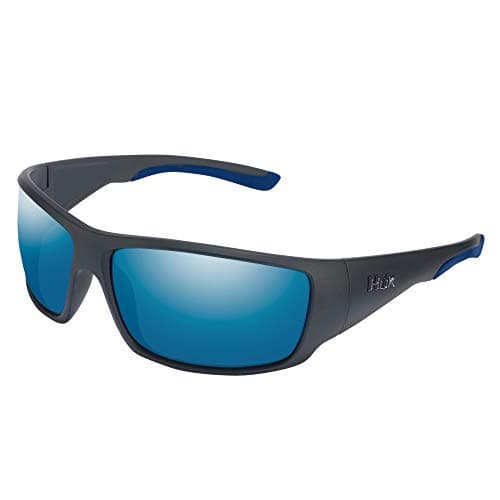
| Open country and water on a mid budget | Huk Spearpoint (Polarized) | Coatings are the first thing to go at this price |
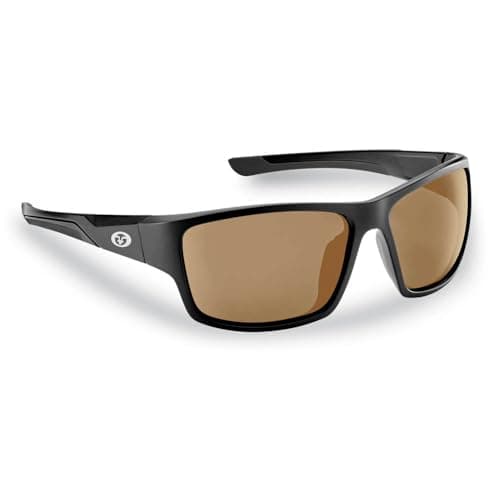
| A cheap amber pair for flat, gray mornings | Flying Fisherman Sand Bank | Light-duty frame; budget optics |
| Range on the smallest possible budget | DUCO Sport Polarized, 5 lenses (budget pick) | Fiddly swaps; confirm which lens is the polarized one |
The short answer
Quick picks
#ad · Live prices from the Amazon Product API, as of November 24, 2026. Where we have no verified live price, we show none — we would rather leave a gap than print a number that has rotted.
In detail
The picks, in full
Maximum coverage
Tifosi Rail (Interchange Set)
Clarion Blue/AC Red/ClearOversized rimless shieldGrilamid TR-9032g published
The full-size Rail: the same three-lens kit behind a taller shield, for bigger faces and maximum coverage.
- Glare control
- 6
- Optics
- 8
- Fit & coverage
- 9
- Durability
- 8
- Value
- 9
Pros
- +The oversized shield is the most coverage in this price tier — wind, grit and low sun stay out at speed
- +Same three-lens interchange kit as the XC (Clarion Blue, All-Conditions Red, Clear) and the same hardshell case
- +Grilamid TR-90 frame with a metal core through the arms and nose piece, so the adjustable fit holds its shape
Cons
- −Bike Perfect found the tall lens can knock against the brow of some helmets on chunky terrain — the XC exists precisely to fix that
- −The long arms suit a larger head; on a smaller one they interfere with helmet straps until you adjust them
- −Not polarized — deliberate on a bike, but wrong if you wanted glare control off water
Don't buy this if…
…your face is average or small, or you ride in a helmet with a low brow. The Rail XC gives you the same lens kit in a frame that clears the helmet and weighs a gram less.
The widest photochromic range in one lens
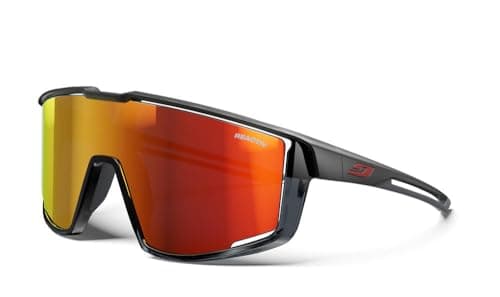
Julbo Fury (REACTIV 1-3)
REACTIV 1-3 photochromicMultilayer mirrorVented shieldSport fit
The reference photochromic sport lens — a category 1-3 range that genuinely covers dawn to glare.
- Glare control
- 6
- Optics
- 9
- Fit & coverage
- 9
- Durability
- 8
- Value
- 6
Pros
- +The REACTIV 1-3 range is wide enough to leave in low light and finish in full sun without carrying a spare lens
- +Julbo builds mountain eyewear first, so the venting and the wrap are tuned for effort rather than for looks
- +Mirror layer sheds extra light at the bright end of the range
Cons
- −Premium price — several times what a budget photochromic costs
- −Like every photochromic it transitions slower in the cold, and it barely activates behind a car windshield
Don't buy this if…
…your light is reliably constant. A fixed tint at a fraction of the price is optically better in a single condition; photochromic buys range, not peak quality.
Sight-fishing and all-day water glare
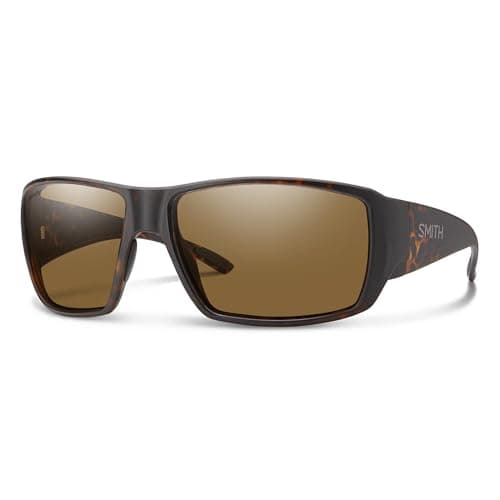
Smith Guide's Choice (ChromaPop Polarized)
ChromaPop polarized8-base wrapMegol nose/temple pads100% UV protection
The purpose-built angling frame in Smith's range — 8-base wrap, megol grip and a contrast-tuned polarized lens.
- Glare control
- 9
- Optics
- 9
- Fit & coverage
- 9
- Durability
- 8
- Value
- 6
Pros
- +Built as a fishing frame rather than a lifestyle shape with a polarized lens dropped in — wide temples and an 8-base wrap cut the side light that gets past a flat lens
- +Megol nose and temple pads tack up as they get wet, which is the difference between a frame that stays put over a hot deck and one that walks down your nose
- +ChromaPop's contrast tuning is aimed squarely at separating a fish from the bottom, and the anti-reflective coating kills the ghost image that bounces off the back of a dark lens
Cons
- −Priced with Costa and Maui Jim, so you are paying premium-brand money for a frame most anglers will treat roughly
- −Medium-large coverage on a wrap this aggressive is a lot of frame on a small face, and the fit has no adjustment beyond the pads
- −The Amazon listing is the ChromaPop polarized lens, not the glass version — if you specifically want Smith's Techlite glass you have to buy it elsewhere and pay more
Don't buy this if…
…you fish a dozen times a year. A $50 polarized fishing wrap finds fish in the same water; this frame earns its price on days 100 through 300, not on day one.
Polarized glare control in changing light
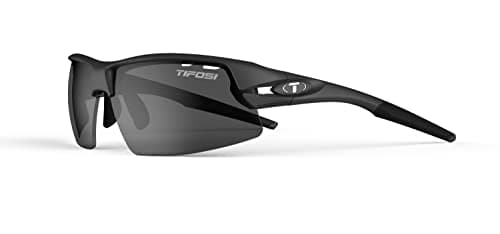
Tifosi Crit (Polarized Fototec)
Fototec photochromicPolarizedSport frameHydrophilic grip
The rare lens that is both polarized and photochromic — glare control that also tracks the light.
- Glare control
- 8
- Optics
- 8
- Fit & coverage
- 8
- Durability
- 7
- Value
- 7
Pros
- +Combines the two lens tricks most brands make you choose between: it darkens with the light AND cancels reflected glare
- +Sport shape and grip pads mean it stays put through a ride, a run or a long day outside
- +A far cheaper route to a polarized photochromic lens than the premium marques charge
Cons
- −Being polarized, it still dims a bike computer or a boat chartplotter — the photochromic half does not fix that
- −Photochromic lenses transition slower in the cold and never reach the darkness of a fixed bright-sun tint
Don't buy this if…
…you ride with a head unit. A polarized lens is the wrong tool there no matter how clever the photochromic layer is — take a non-polarized photochromic instead.
A step up from budget without Costa money
Huk Spearpoint (Polarized)
PolarizedMirror coatingPerformance frameUV400
A capable polarized fishing wrap from a fishing-apparel brand, at a mid price.
- Glare control
- 8
- Optics
- 7
- Fit & coverage
- 8
- Durability
- 7
- Value
- 8
Pros
- +Sits in the gap between $25 budget wraps and $200 Costas — polarized, mirrored, and built for water
- +Lighter and more wrap-shaped than a lifestyle frame, so side glare is controlled
- +Huk knows the fishing customer; the fit and grip are tuned for it
Cons
- −Lens contrast doesn't match Costa's 580 or Bajío's LAPIS glass for pulling fish out of surface glare
- −Coatings are the first thing to wear at this price point
Don't buy this if…
…you sight-fish seriously and can stretch the budget — the premium fishing lenses genuinely see more, and that's the whole reason to spend up.
A cheap second pair for the tackle bag
Flying Fisherman Sand Bank
PolarizedAmber tint100% UVLightweight
A long-time budget-fishing staple with AcuTint-style contrast tinting.
- Glare control
- 8
- Optics
- 6
- Fit & coverage
- 7
- Durability
- 5
- Value
- 9
Pros
- +Amber-tinted polarized lens lifts contrast in low and flat light — good for overcast days on the water
- +Cheap enough to own two and not mourn a pair lost overboard
- +A fishing-focused brand that has made these for years
Cons
- −Optical clarity and coating life are budget-grade
- −Frame feels light-duty next to a Huk or Costa
Don't buy this if…
…you want one nice pair to keep. This is a buy-two-and-abuse-them pick, not a keeper.
Changing light on a tight budget
DUCO Sport Polarized (5 Lenses)
5 interchangeable lensesPolarizedUV400Sport frame
A whole interchangeable-lens kit for the price of one budget pair — the cheap answer to changing light.
- Glare control
- 7
- Optics
- 7
- Fit & coverage
- 8
- Durability
- 6
- Value
- 10
Pros
- +A lens set means you can match the tint to the light instead of squinting through the wrong one
- +Undercuts the established interchangeable sport kits by a wide margin
- +Sport frame shape and grip suit running, riding and general outdoor use
Cons
- −Interchangeable kits typically pair one polarized lens with tinted spares — confirm which lens in the box is the polarized one before you rely on it
- −Swapping lenses on a budget frame is fiddlier and feels less secure than on a premium sport shield
Don't buy this if…
…you want one lens you never think about. A kit is only an advantage if you will actually carry and swap the spares.
Who each pick is for, and what is wrong with it
- Tifosi Rail (Interchange Set) — Best for: the whole light swing in one purchase, and the default here. Tifosi publishes an oversized rimless shield in Grilamid TR-90 at 32g with a three-lens set — Clarion Blue, All-Conditions Red and Clear — which maps almost exactly onto a hunting day: clear before legal light, red for flat gray timber, blue mirror for open stubble at noon. The oversized shield is the most coverage in its price tier, which is what you want against wind and branches. Honest cons:spare lenses only help if you carry them, and swapping with cold hands in a blind is genuinely annoying; none of the three stock lenses is polarized; the long arms suit a larger head; and it carries no impact rating. Tifosi's lifetime cover for manufacturer's defects explicitly excludes dropped, sat-on, scratched, lost and stolen pairs and charges shipping per claim. Also ranked in best sunglasses with interchangeable lenses.
- Julbo Fury (REACTIV 1-3) — Best for: one lens, no swapping, and the widest published range on the page. Julbo lists this exact lens as “REACTIV 1-3 Light Amplifier” at “Category / Photochromic 1-3”, VLT 75%-17%, 25g in size M — and 75% transmission at the light end is the number that matters for a dawn sit, because it means the lens is nearly clear rather than merely lighter. Julbo describes the Light Amplifier version as one that “amplifies light for better visibility”. Honest cons: it is several times the price of a budget photochromic; like every photochromic it reacts slower in the cold, which is exactly when you are hunting; it barely activates behind a windshield on the drive in; and this lens is photochromic, not polarized, so it does nothing extra for glare off water. No impact rating. More context in best photochromic sunglasses.
- Smith Guide's Choice (ChromaPop Polarized) — Best for:waterfowl, marsh, and anywhere the glare is coming off water rather than out of the sky. It is the only frame in our catalog with a published base curve — an 8-base wraparound with megol nose and temple pads that grip harder when wet, and Italian spring hinges — and Smith publishes real transmission figures across the ChromaPop range, including a Low Light Amber at 65% for exactly this kind of morning. Honest cons: it is built for sight-fishing, so the tint choices are water-specialized; it is the dearest pick here; polarization is the wrong filter if you need to read an LCD rangefinder; and it carries no impact rating. The fishing version of the argument is in best saltwater fishing sunglasses.
- Tifosi Crit (Polarized Fototec) — Best for: the reader who wants both tricks and will not pay Julbo money. This is the rare lens that is polarized and photochromic at once: it darkens with the light and cancels reflected glare, which is the combination that suits a marsh morning better than either alone. Sport shape and hydrophilic grip pads keep it on. Honest cons:being polarized, it dims an LCD display no matter how clever the photochromic layer is; photochromic lenses transition slower in the cold and never reach the darkness of a fixed bright-sun tint; and no impact rating. Tifosi's own lens guide is unusually frank that polarized lenses can make screens difficult to read.
- Huk Spearpoint (Polarized) — Best for: a mid-price polarized wrap for open country and water, from a brand that builds for the fishing and waterfowl customer. It sits in the gap between budget wraps and premium fishing glasses: polarized, mirrored, wrap-shaped, so side glare is controlled without sports-equipment looks. Honest cons: the lens contrast does not match a 580-class or ChromaPop lens for pulling detail out of surface glare; the coatings are the first thing to wear at this price; and no impact rating.
- Flying Fisherman Sand Bank — Best for: a cheap amber pair to leave in the truck for flat gray mornings. The amber-tinted polarized lens is the classic low-and-flat-light choice, and amber is a tint the anglers quoted by Bassmaster name alongside copper at 12% transmission and silver mirror at 30% when the light is poor. Honest cons: optical clarity and coating life are budget-grade; the frame feels light-duty next to the Huk or the Smith; and no impact rating. It is a buy-two-and-abuse-them pick, not a keeper.
- DUCO Sport Polarized (5 Lenses) — Best for: the budget pick, and range on the smallest possible spend. A whole interchangeable kit for the price of one cheap pair, so you can match the tint to the light instead of squinting through the wrong one. Honest cons: budget kits typically pair ONE polarized lens with tinted spares, so confirm which lens in the box is the polarized one before you rely on it; swapping on a budget frame is fiddlier and feels less secure; the optics are what the price implies; and no impact rating.
Polarized or not for hunting? It depends on the water
For fishing the answer is almost always yes. For hunting it genuinely splits, and the dividing line is whether you are looking at water.
Polarized, if there is water in front of you.Waterfowl over a marsh, a flooded timber hole, a decoy spread on a pond — a polarizing filter removes reflected, horizontally oriented light, which is exactly the sheet of white glare sitting between you and the birds. Nothing about a darker tint substitutes for it.
Non-polarized, if you are reading a screen or picking detail out of shade. A polarized lens dims or blacks out an LCD panel depending on the angle you hold it at, and a lot of field gear — rangefinders, trail-camera screens, phone maps — is an LCD panel. In timber, where the glare is low and the problem is separating a gray-brown animal from a gray-brown background, a contrast tint does more for you than a polarizing filter does.
If you only buy one, buy non-polarized for timber and polarized for water. The general argument is in polarized vs non-polarized, and the screen-specific version in do polarized sunglasses block screens.
Amber and yellow lenses: what they do, and what they do not
Every hunting-eyewear aisle sells amber, rose and yellow as low-light lenses, and there is a real mechanism behind it: these tints cut short-wavelength blue light, which is the light that scatters most, and the result reads as more separation between similar browns and greens. Smith's own published figures put its Low Light Amber at 65% transmission and Contrast Rose at 50% — both far lighter than a sun lens, which is the point.
Here is the part the aisle does not tell you. The strongest claim made for yellow lenses — that they help you see in the dark — did not survive testing. A 2019 JAMA Ophthalmology study compared pedestrian detection during simulated night driving with and without yellow-lens glasses and found they did not appear to improve detection; the authors concluded the findings did not support recommending them.
That is a night-driving study, not a deer-woods study, and we are not going to over-read it. But it is the best controlled evidence available on the claim, and the honest conclusion is this: buy amber or rose for contrast in flat daylight, not as night vision.For the genuinely dark half-hour, what helps is a clear or near-clear lens that keeps twigs out of your eyes — which is why the Rail ships with a clear lens and why the Julbo's 75% light end matters more than its dark end.
Hunting and fishing with one pair
This is the second-most-searched version of this question, and it has a clean answer: buy for the water, because the water case is the stricter one. A polarized wrap with a copper or amber contrast tint covers a marsh morning and a bass pond equally well, and is merely adequate rather than ideal in dark timber. On this page that is the Smith if budget allows, the Huk if it does not, and the Flying Fisherman as a spare.
If the fishing half is the bigger half of your year, start from our fishing ranking and best lens color for fishing instead, and treat the hunting use as the secondary one.
Three mistakes this page exists to prevent
- Buying the darkest lens you can find.A category-3 lens is wrong for the two hours that matter, and lens darkness has nothing to do with UV protection — the AAO says so directly.
- Assuming a sun lens is a safety lens. It is not, none of these publishes an impact rating, and the rating is etched on the lens when it is real.
- Buying polarized for timber. It costs you nothing in dark woods and it costs you your rangefinder display. Save it for water.
Choosing in four questions
When do you actually hunt?
First and last light → range is everything: the Rail's three-lens set, or the Julbo's 75%-to-17% photochromic. Mid-day, open country → a single dark polarized wrap is simpler and cheaper: the Huk.
Is there water in front of you?
Yes — waterfowl, marsh, flooded timber → polarized: the Smith, the Crit, the Huk. No — timber, stubble, hill country → non-polarized contrast: the Rail or the Julbo.
Will you carry spare lenses?
Honestly yes → an interchangeable kit is the cheapest route to range, so the Rail or the DUCO. Honestly no → photochromic, so the Julbo or the Crit. Pretending you will carry them is how people end up with one dark lens and two unused ones in a drawer.
Are you shooting with other people?
Yes → buy an ANSI Z87+ rated pair for the shooting, separately from anything on this page, and check the rating is etched on the lens. No → the picks here are chosen for the light, and the light is the right thing to optimize.
The cheap stuff that matters
Essentials under $40
The add-ons this page already told you to get. None of these is scored — our rubric measures glare control, optics, fit, durability and value, and four of those mean nothing for a cleaning cloth. So you get a reason and a live price instead of a number we'd have had to invent.
SMARTTOP
SMARTTOP Silicone Eyeglass Ear Grips (18 pairs)
Soft sleeves that slide onto the temple arms so they grip skin instead of sliding on it. The cheapest real fix for a frame that is otherwise the right size.
Chums
Chums Original Cotton Retainer
The plain cotton eyewear keeper. Adjustable, washable, and the version most people mean when they say Croakies. Colorways vary on the listing.
Generic
Floating Sunglasses Straps for Water (4-pack)
A buoyant strap for boats, kayaks and wading. Note what this is: the STRAP provides the flotation. Do not assume any pair floats on its own.
#ad · Live prices as of November 24, 2026, hidden when our data goes stale. We may earn a commission, at no cost to you. How this works.
How we picked
We don't run a testing lab
We compile each pair's published specifications — lens material, polarization, coating, frame material, coverage, UV rating and price — normalize them, and score each against a published rubric. The scores are judgments from documented research; they are notmeasurements we took, because we don't own a lab and we're not going to pretend we do. Pairs we claim to have lab-tested: 0.
Questions
Frequently asked
What are the best sunglasses for hunting?+
The full-size Tifosi Rail for most hunters, because it ships with three lenses — clear, All-Conditions Red and Clarion Blue — and hunting light changes more than any other outdoor light. If you would rather not swap lenses, the Julbo Fury's REACTIV 1-3 Light Amplifier lens is published at 75% down to 17% transmission, which covers a dawn sit and a bright noon in one lens. For waterfowl over water, the polarized Smith Guide's Choice. The budget pick is the DUCO five-lens kit. None of them is an impact-rated shooting glass.
Should hunting sunglasses be polarized?+
Only if you are looking at water. For waterfowl, marsh and flooded timber, polarization removes the sheet of reflected glare sitting on the surface, and nothing else does that job. In dry timber or stubble it buys you very little, and it costs you something real: a polarized lens
dims or blacks out LCD displays at some angles, and rangefinders, trail-camera screens and phone maps are LCD displays. If you only own one pair and you hunt dry ground, buy non-polarized.
What lens color is best for hunting?+
Amber, rose or copper for flat and low light, because cutting short-wavelength blue raises the separation between similar browns and greens. The useful way to shop it is by published transmission rather than by color name — Smith, for instance,
lists Low Light Amber at 65% and Contrast Rose at 50%, against 10% for its darkest lens. For bright open country a dark neutral or mirrored lens is correct. For the genuinely dark half-hour, a clear lens, which is why interchangeable kits ship with one.
Do yellow lenses help you see in low light?+
For contrast in flat daylight, they can. For seeing in the dark, the evidence says no. A
2019 JAMA Ophthalmology study compared pedestrian detection in simulated night driving with and without yellow-lens glasses, found no apparent improvement, and concluded the findings did not support recommending them. That is a driving study rather than a hunting one, so treat it as the best available evidence rather than the last word — but it is enough to say that amber and yellow are contrast tints, not night-vision lenses.
Can I use fishing sunglasses for hunting?+
Yes, and if you do both, buying for the water is the right call — it is the stricter case. A polarized wrap with a copper or amber contrast tint handles a marsh morning and a bass pond equally well and is merely adequate in dark timber. What does not transfer is a very dark sight-fishing tint, which is wrong for the first and last hour of a hunting day. Our
fishing ranking is the other half of this answer.
Are sunglasses good enough for shooting, or do I need safety glasses?+
You need rated eye protection for the shooting. The National Shooting Sports Foundation's
rule 7 states that “all shooters should wear protective shooting glasses,” which guard against twigs, falling shot and “the rare ruptured case or firearm malfunction,” and the standard that language points at is ANSI Z87.1 — the same one
OSHA requires at work. A real rating is etched on the lens, not claimed in a product description. No pick on this page publishes one; they are sun lenses chosen for the light. Buy both, and keep them straight.
Receipts
Sources
- National Shooting Sports Foundation - Rules of Firearms Safety, rule 7 “Always Wear Eye and Ear Protection When Shooting” (verbatim: “All shooters should wear protective shooting glasses and some form of hearing protectors while shooting”; shooting glasses “guard against twigs, falling shot, clay target chips and the rare ruptured case or firearm malfunction”; “No target shooter, plinker or hunter should ever be without them”; verified 2026-11-24)
- OSHA 29 CFR 1910.133 - Eye and face protection (protectors must meet ANSI/ISEA Z87.1-2010, ANSI Z87.1-2003 or ANSI Z87.1-1989 (R-1998); side protection required where there is a hazard from flying objects)
- 7eye by Panoptx - ANSI Z87.1 explained (Z87 against Z87+ impact tests, and why the rating is etched on the lens rather than claimed in a listing)
- NEVEN Eyewear - Polarized ANSI Z87+ Safety Eyewear collection (official collection page; polarized and safety-rated listings in Standard and XL sizes)
- Hwang, Tuccar-Burak & Peli, JAMA Ophthalmology 2019;137(10):1147-1153 - Comparison of Pedestrian Detection With and Without Yellow-Lens Glasses During Simulated Night Driving With and Without Headlight Glare (yellow lenses did not appear to improve pedestrian detection; the findings do not support recommending them)
- Julbo - Fury REACTIV product page (official: “Lenses: REACTIV 1-3 Light Amplifier”, “Category / Photochromic 1-3”, published VLT 75%-17%, weight 25g in size M; verified 2026-11-24)
- Julbo - REACTIV photochromic lenses (official, verbatim: REACTIV lenses give “clear, precise vision in all conditions : from bright sunshine to low light”; “When the sky clouds over or you move into the shade, it becomes clear again almost instantly”; REACTIV 1-3 Light Amplifier listed as “Amplifies light for better visibility”, “Ideal for: trail running, cycling”; verified 2026-11-24)
- Smith Optics - sunglass technology (ChromaPop verbatim: “Normally the eye has trouble distinguishing colors where the blue/green and the green/red wavelengths cross over” and ChromaPop “filters these specific crossovers for greater definition, natural color, and clarity”; published VLT by tint - ChromaPop Black 10%, Green Mirror 12%, Gray Green 12%, Platinum 12%, Red Mirror 15%, Bronze Mirror 15%, Ignitor 32%, Contrast Rose 50%, Low Light Amber 65%)
- Feather-Craft Fly Fishing - Smith Guide's Choice published specs (ChromaPop polarized, 8-base wraparound curvature, megol nose and temple pads, Italian spring hinges, 100% UV, anti-reflective and moisture-resistant coatings)
- Tifosi Optics - Rail product page (official: oversized rimless shield, three-lens interchange set of Clarion Blue, All-Conditions Red and Clear, Grilamid TR-90 frame, published 32g)
- Tifosi Optics - Crit product page (official; polarized Fototec photochromic lens)
- Tifosi Optics - “Fototec vs Enliven vs Clarion vs Polarized: the honest Tifosi lens guide” (official; polarized lenses called ideal for driving, fishing and skiing while noting they can make LCD screens difficult to read)
- Tifosi Optics - warranty information (manufacturer's defects for the life of the product, original US purchaser only, excluding normal wear, loss, theft and damage; stated shipping and handling fee per claim)
- Huk - eyewear collection (official product claims)
- Bassmaster - Best lens colors for sight fishing (Elite pros on copper at 12% light transmission, amber, Sunrise Silver Mirror at 30%, and high-contrast yellow for bed fishing)
- Cleveland Clinic - polarized vs non-polarized sunglasses (polarization described as a filter that removes reflected, horizontally oriented light)
- All About Vision - polarized lenses and LCD screens (why a polarized lens can dim or black out an LCD panel depending on viewing angle)
- American Optometric Association - UV protection and sunglasses guidance (99-100% UVA and UVB blocking recommended; lens darkness is not a measure of UV protection)
- American Academy of Ophthalmology - “Seven Myths About Sunglasses That Could Damage Your Vision” (official EyeSmart release, verbatim: “Polarized lenses do not block more radiation” and “The darkness of the lens isn’t indicative of protection”; also recommends oversized or wraparound styles to cut UV entering from the side)
- CDC - sun safety (UV reaches you on cloudy days and reflects off water, cement, sand and snow; “Wear sunglasses that wrap around and block both UVA and UVB rays”)
We do not run a testing lab, and we do not pretend to. Where a spec or measurement came from a manufacturer or a third party, we name and link it. Where we could not verify something, we say so on the page rather than quietly leaving it out. Read our full method.