Top pick
Top pick
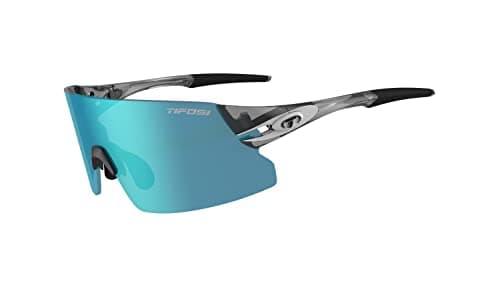
Tifosi Rail (Interchange Set)
Best for: Maximum coverage
The most lens for the money, in the shape that needs it: a big-coverage sport frame that a named outlet describes as huge coverage with three interchangeable lenses, so bright sun, flat light and dusk are all covered by one purchase. Best for anyone whose sport runs from midday to evening and who does not want to own three pairs.
Budget pick
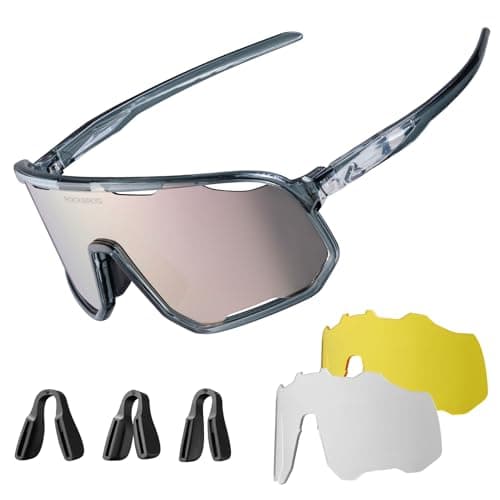
ROCKBROS Polarized Cycling (3 Lenses)
Best for: Polarized for bright sun, with lenses for everything else
A polarized lens for bright sun plus spares for everything else, for less than a single replacement lens costs from a premium brand. Best for finding out whether you will actually swap lenses before you spend real money on a system.
#ad · we may earn a commission. Live prices from the Amazon Product API, as of November 23, 2026. Where we have no verified live price we show none.
An interchangeable-lens frame solves a problem most people do not notice until they own one: the lens that is right at noon is wrong at seven in the evening, and the lens that is right under trees is uselessly pale in the open. Buy one dark lens and you squint early and late. Buy one pale lens and you squint in the middle of the day. A frame that takes several lenses lets you match the lens to the light instead of averaging it.
The trap is counting. Listings compete on lens number, and a box with five lenses in it is not better than a box with three if four of them are tinted plastic nobody would choose. So this page ranks on three things in order: what is actually in the box (a bright lens, a low-light lens and ideally a clear one is the useful set); how the lens changes, because a swap that needs two hands, a video and a prayer is a swap you will do twice; and whether you can still buy lenses in two years, which is the whole point of a system and the thing cheap kits are worst at.
It is worth saying what the alternative is, because for a lot of readers it is the better buy. A photochromic lens does the same job with no swapping at all: one lens that darkens and lightens as the light changes. It is more convenient and it is never quite as good at either end — a photochromic lens at its darkest is usually lighter than a dedicated dark lens, and it reacts slowly going in and out of shade. We rank that field separately at best photochromic sunglasses, and if you know you will never bother carrying a spare lens, go there instead.
A note on polarization, since the autocomplete for this query asks about it directly. Most interchangeable sets are not polarized, and that is deliberate rather than cheap: swap-lens frames are mostly sport frames, and a polarized lens hides the sheen that tells you a road is wet or a patch of snow is ice. One pick here is polarized and says why; the budget pick ships a polarized lens for bright sun with non-polarized spares, which is arguably the ideal arrangement.
Nothing on this page was tested in a lab by us. The ranking uses published lens counts and claims from the maker or a named retailer, the mechanics of the swap mechanism as the maker describes it, and live prices — and where a frame's real advantage is a deep catalogue of replacement lenses rather than the box contents, we say so.
The short answer
Quick picks
#ad · Live prices from the Amazon Product API, as of November 23, 2026. Where we have no verified live price, we show none — we would rather leave a gap than print a number that has rotted.
In detail
The picks, in full
Maximum coverage
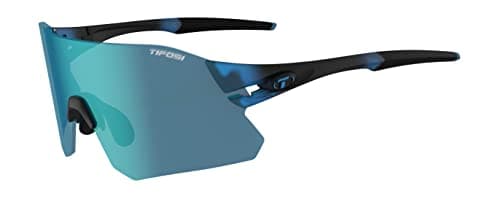
Tifosi Rail (Interchange Set)
Clarion Blue/AC Red/ClearOversized rimless shieldGrilamid TR-9032g published
The full-size Rail: the same three-lens kit behind a taller shield, for bigger faces and maximum coverage.
- Glare control
- 6
- Optics
- 8
- Fit & coverage
- 9
- Durability
- 8
- Value
- 9
Pros
- +The oversized shield is the most coverage in this price tier — wind, grit and low sun stay out at speed
- +Same three-lens interchange kit as the XC (Clarion Blue, All-Conditions Red, Clear) and the same hardshell case
- +Grilamid TR-90 frame with a metal core through the arms and nose piece, so the adjustable fit holds its shape
Cons
- −Bike Perfect found the tall lens can knock against the brow of some helmets on chunky terrain — the XC exists precisely to fix that
- −The long arms suit a larger head; on a smaller one they interfere with helmet straps until you adjust them
- −Not polarized — deliberate on a bike, but wrong if you wanted glare control off water
Don't buy this if…
…your face is average or small, or you ride in a helmet with a low brow. The Rail XC gives you the same lens kit in a frame that clears the helmet and weighs a gram less.
Best cycling sunglasses for the money
Tifosi Rail XC (Interchangeable)
Interchangeable lensesBig shieldVentedVery light
The value pick for cyclists: big coverage and three lenses for changing light.
- Glare control
- 6
- Optics
- 8
- Fit & coverage
- 10
- Durability
- 8
- Value
- 9
Pros
- +Ships with multiple lenses so you swap for bright sun, overcast and low light — the right answer for a sport where light changes mid-ride
- +Large shield gives the coverage a road or gravel cyclist actually needs at speed
- +A fraction of the price of the Italian marquee brands for comparable coverage
Cons
- −The included lenses are tinted/contrast, not polarized — deliberate, since polarized can mask road sheen and dims a bike computer
- −Big-shield look isn't for everyone off the bike
Don't buy this if…
…you want a do-everything lifestyle frame. This is a cycling tool — glorious on the bike, a lot of sunglasses at a cafe.
The premium cycling shield
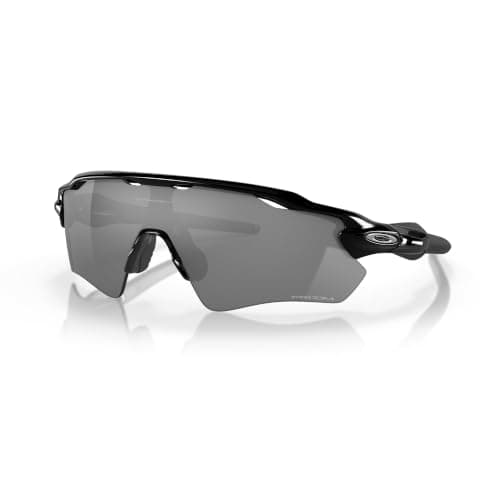
Oakley Radar EV Path (Prizm)
Prizm lensPlutoniteTall shieldUnobtainium grip
The pro-peloton default. Prizm contrast, huge coverage, and a price to match.
- Glare control
- 6
- Optics
- 10
- Fit & coverage
- 10
- Durability
- 9
- Value
- 5
Pros
- +Prizm tuning boosts the specific contrasts that matter on the road — you pick out cracks and gravel earlier
- +The tall Path lens gives coverage when you're down in the drops and looking up through the top of the lens
- +Oakley's Unobtainium grips tack up with sweat and the build lasts
Cons
- −Expensive — several times the Tifosi Rail for a contrast advantage most riders won't fully exploit
- −Prizm Road is not polarized (by design for cycling), so don't expect glare-off-water behavior
Don't buy this if…
…you're a value-focused rider. The Tifosi Rail delivers the coverage and lens options that matter for a quarter of the money.
Best golf sunglasses overall
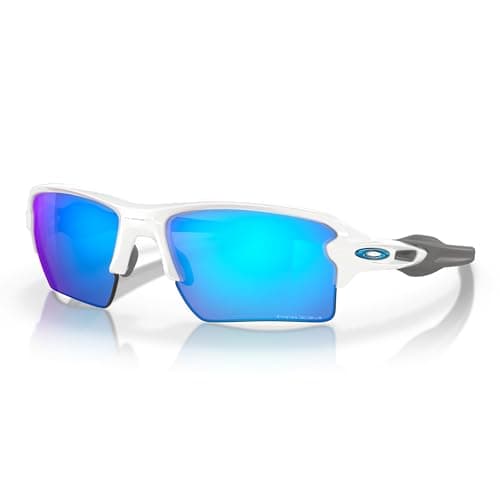
Oakley Flak 2.0 XL (Prizm)
Prizm lensPlutoniteHalf-frameXL coverage
The golfer's default. Prizm lifts fairway and green contrast without the polarized downsides.
- Glare control
- 6
- Optics
- 9
- Fit & coverage
- 8
- Durability
- 9
- Value
- 6
Pros
- +Prizm Golf (and Prizm variants) enhance the green-vs-fairway contrast that helps you read the course
- +Non-polarized by design — polarized lenses can flatten the subtle slope cues golfers rely on when reading greens
- +Half-frame Flak shape stays out of your sightline through the swing
Cons
- −Premium price, and Prizm Golf specifically can look odd off the course
- −Half-frame gives less bottom coverage than a full shield
Don't buy this if…
…you want one pair for golf and the boat. Prizm's non-polarized lens is right for greens but won't cut water glare like a polarized fishing lens.
Road and triathlon riders who want Zeiss clarity
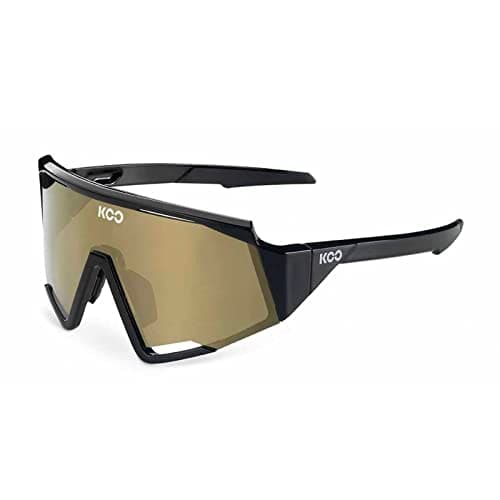
KOO Spectro (Zeiss lens)
Zeiss lensVented shieldAdjustable noseLightweight
KOO's road-and-triathlon shield — Zeiss optics in a narrower, less shouty frame than the Demos.
- Glare control
- 6
- Optics
- 9
- Fit & coverage
- 9
- Durability
- 8
- Value
- 6
Pros
- +Zeiss optics keep the edges of the lens sharp, which is where cheap lenses smear and where a rider's peripheral vision lives
- +A more restrained shape than the oversized shields, so it works off the bike too
- +Adjustable nose piece dials in fit properly instead of hoping the molded bridge suits you
Cons
- −Single lens in the box — no interchangeable set for changing light at this price
- −Premium cost in a category where the value option is genuinely excellent
Don't buy this if…
…your light changes mid-ride. A multi-lens kit or a photochromic solves that problem better than any single premium lens.
Changing light on a tight budget
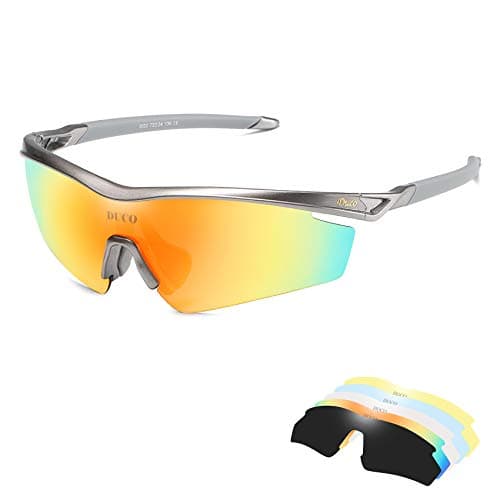
DUCO Sport Polarized (5 Lenses)
5 interchangeable lensesPolarizedUV400Sport frame
A whole interchangeable-lens kit for the price of one budget pair — the cheap answer to changing light.
- Glare control
- 7
- Optics
- 7
- Fit & coverage
- 8
- Durability
- 6
- Value
- 10
Pros
- +A lens set means you can match the tint to the light instead of squinting through the wrong one
- +Undercuts the established interchangeable sport kits by a wide margin
- +Sport frame shape and grip suit running, riding and general outdoor use
Cons
- −Interchangeable kits typically pair one polarized lens with tinted spares — confirm which lens in the box is the polarized one before you rely on it
- −Swapping lenses on a budget frame is fiddlier and feels less secure than on a premium sport shield
Don't buy this if…
…you want one lens you never think about. A kit is only an advantage if you will actually carry and swap the spares.
Polarized for bright sun, with lenses for everything else
ROCKBROS Polarized Cycling (3 Lenses)
Polarized lens3 interchangeable lensesUV400Cycling wrap
A polarized cycling lens that comes with an exit route — the yellow and clear spares cover the light the dark lens cannot.
- Glare control
- 8
- Optics
- 6
- Fit & coverage
- 8
- Durability
- 6
- Value
- 10
Pros
- +Solves the real problem with a polarized cycling lens: it is also a dark lens, and this one comes with a yellow light-enhancing and a clear lens for dawn, dusk and tree cover
- +A cycling-shaped wrap rather than a lifestyle frame reshaped, so the coverage is where a rider needs it
- +Costs about the same as a single budget lens, which makes trying polarized on the bike a low-stakes experiment
Cons
- −On interchangeable sets it is normally only the dark lens that carries the polarizing filter — the spares are tinted, not polarized, so confirm the set before relying on it
- −Budget hinges, coatings and lens-swap mechanism; the swap feels less secure than on a premium shield
- −The polarized lens still dims a bike computer, which is the reason to keep one of the spares on the bike
Don't buy this if…
…you want one lens you never think about. A photochromic cycling lens adapts without you carrying anything, and it does not dim your head unit.
Who each pick is for, and what is wrong with it
- Tifosi Rail (Interchange Set) — Best for: the most usable lens set at a sane price, and the default here. Maximum coverage in the frame plus the three-lens arrangement a sport user actually needs, which BikePerfect summarises as huge coverage and three interchangeable lenses, all backed by Tifosi's lifetime cover against manufacturer's defects. Honest cons: it is a large shield and looks like one; the lenses are not polarized; pressing a lens into a shield frame takes more nerve than a half-frame does; and the warranty excludes wear, loss and damage.
- Tifosi Rail XC (Interchangeable) — Best for: the same system in a smaller frame, and the better choice on a normal or narrow face. Tifosi publishes the lens set and frame claims for the Rail family, and the XC trades some coverage for less mass and a less aggressive look. Honest cons: less coverage than the winner, which is the whole reason the winner wins; still not polarized; and like all shields it fogs if you stop moving. Reviewed in full at Tifosi Rail XC review.
- Oakley Radar EV Path (Prizm) — Best for:the deepest lens catalogue on the market, if the frame is a long-term purchase. The box is one lens, not three — the advantage is that Oakley's Prizm range offers more tints for this frame than any other here, and Oakley publishes a warranty, so you are buying into a system rather than a bundle. Honest cons: you pay separately for every extra lens, so the real cost of a three-lens setup is far above the sticker; this listing is not polarized; and the tall shield shape suits few faces off the bike.
- Oakley Flak 2.0 XL (Prizm) — Best for: the same lens catalogue in a half-frame that people will wear off the course. Easier lens changes than a full shield, because a half-frame flexes where a shield does not. Honest cons:same economics — lenses are sold one at a time; the XL sizing is genuinely large; and the half-frame gives up the shield's bottom coverage, which you notice on reflective ground.
- KOO Spectro (Zeiss lens) — Best for: riders who care about optical quality more than about having three lenses. The Zeiss lens is the best optic in this group and the frame takes replacements. Honest cons:one lens in the box at a premium price; replacement lens availability is thinner than Oakley's or Tifosi's; and it is a road-race frame with road-race styling.
- DUCO Sport Polarized (5 Lenses) — Best for: covering changing light on a tight budget with a genuinely polarized bright-sun lens in the set. Five lenses, one of them polarized, for less than a single premium replacement. Honest cons:this is where lens counting gets exposed — the pale and novelty tints in the set are filler; published specs are thin; the swap mechanism is stiff and scratches lenses if you are careless; and there is no realistic prospect of buying a replacement lens for it in three years.
- ROCKBROS Polarized Cycling (3 Lenses) — Best for: the budget pick, and the most sensible cheap arrangement: a polarized lens for bright sun plus spares for flat light and dusk. ROCKBROS publishes UV400 and its interchangeable-lens claims. Honest cons: the spare lenses are visibly cheaper than the polarized one; the swap is fiddly; quality control across colorways is uneven; and there is no warranty to lean on. Ranked against the field on best cycling sunglasses under $100.
The lens set that is actually useful
Three lenses, and specifically these three: a dark one for open midday sun, a rose, amber or contrast-tinted one for flat and overcast light, and a clear or near-clear one for dusk, night and dust. That set covers every condition a sport user meets. Anything beyond it is colour choice. If a box advertises five lenses and two of them are a mirror finish of the dark one in a different colour, you have bought three lenses and two spares.
How the swap actually works, and why it decides the ranking
Half-frame designs — a lens held at the top with the bottom edge free — are the easiest: the lens flexes and pops out. Full shields hold the lens at more points and need you to bend a large piece of polycarbonate, which is fine but feels alarming the first few times. Cheap kits usually use a tight channel that grips the lens edge, and that is the mechanism most likely to leave a scratch across the lens you are installing. A system you find frightening is a system you will not use, which is why box contents alone do not decide this page.
Interchangeable, photochromic, or just polarized?
Three answers to one problem. Interchangeable is best if your light changes between outings rather than during them, and if you will carry a case. Photochromic is best if it changes mid-ride and you will not: one lens, no carrying, slightly worse at both extremes — see best photochromic sunglasses and polarized vs photochromic. One polarized lens is best if your problem is reflected glare off water or road rather than brightness as such, because polarization filters reflected, horizontally oriented light and no amount of tint swapping replicates that.
| If this is you | Buy | What you give up |
|---|
| Most lens for the money, large face | Tifosi Rail (Interchange Set) | Big shield looks; not polarized |
| Same system, normal or narrow face | Tifosi Rail XC | Less coverage than the winner |
| A frame you will own for a decade | Oakley Radar EV Path (Prizm) | One lens in the box; extras cost real money |
| Oakley lenses in something wearable off the course | Oakley Flak 2.0 XL (Prizm) | Less bottom coverage; large sizing |
| Optics first, lens count second | KOO Spectro (Zeiss lens) | Thin replacement-lens availability |
| Polarized bright-sun lens in a cheap multi-pack | DUCO Sport Polarized (5 Lenses) | Filler tints; no future replacements |
| Testing whether you will swap at all | ROCKBROS Polarized Cycling (budget pick) | Cheap spares; uneven QC |
The cheap stuff that matters
Essentials under $40
The add-ons this page already told you to get. None of these is scored — our rubric measures glare control, optics, fit, durability and value, and four of those mean nothing for a cleaning cloth. So you get a reason and a live price instead of a number we'd have had to invent.
SMARTTOP
SMARTTOP Silicone Eyeglass Ear Grips (18 pairs)
Soft sleeves that slide onto the temple arms so they grip skin instead of sliding on it. The cheapest real fix for a frame that is otherwise the right size.
Chums
Chums Original Cotton Retainer
The plain cotton eyewear keeper. Adjustable, washable, and the version most people mean when they say Croakies. Colorways vary on the listing.
Generic
Floating Sunglasses Straps for Water (4-pack)
A buoyant strap for boats, kayaks and wading. Note what this is: the STRAP provides the flotation. Do not assume any pair floats on its own.
#ad · Live prices as of November 23, 2026, hidden when our data goes stale. We may earn a commission, at no cost to you. How this works.
How we picked
We don't run a testing lab
We compile each pair's published specifications — lens material, polarization, coating, frame material, coverage, UV rating and price — normalize them, and score each against a published rubric. The scores are judgments from documented research; they are notmeasurements we took, because we don't own a lab and we're not going to pretend we do. Pairs we claim to have lab-tested: 0.
Questions
Frequently asked
Which sunglasses have interchangeable lenses?+
In this catalogue: both Tifosi Rail builds (which ship as three-lens sets), the Oakley Radar EV Path and Flak 2.0 XL (one lens in the box, the deepest replacement catalogue), the KOO Spectro, and two cheap multi-lens kits from DUCO and ROCKBROS. As a rule, sport frames take lenses and lifestyle frames do not — a swap mechanism needs a frame engineered around it, which is why you will not find an interchangeable Wayfarer.
Are interchangeable lens sunglasses worth it?+
If your light genuinely varies, yes: one frame and three lenses costs far less than three frames and takes one slot in a bag. If your light does not — you ride at the same time of day, or you only wear sunglasses in bright sun — you are paying for lenses that stay in the case forever, and a single good polarized pair is the better buy. The honest test is whether you will carry a case.
Can you get polarized interchangeable lenses?+
You can, but most sets are not polarized, and for sport that is often correct: polarization removes the reflected sheen that distinguishes wet tarmac from dry or ice from snow, which matters when you are moving quickly. The useful compromise is a set with one polarized bright-sun lens and non-polarized spares — both cheap kits on this page are arranged that way. See
are polarized lenses good for cycling.
How many lenses do I actually need?+
Three: dark for open sun, a contrast tint for flat or overcast light, and clear for dusk and dark. Anything past that is preference. Treat a five-lens listing as three useful lenses plus colour options, and judge it on the price of the three.
Receipts
Sources
We do not run a testing lab, and we do not pretend to. Where a spec or measurement came from a manufacturer or a third party, we name and link it. Where we could not verify something, we say so on the page rather than quietly leaving it out. Read our full method.