Top pick
Top pick
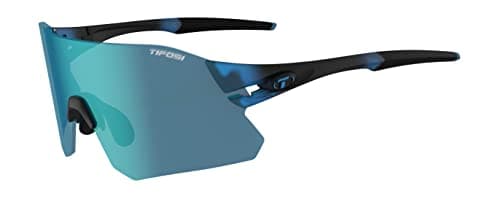
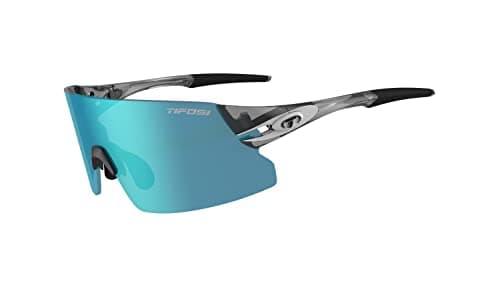
Tifosi Rail XC (Interchangeable)
Best for: Best cycling sunglasses for the money
The best cycling buy under $100 and the one most riders should get. A big, light shield that arrives with three lenses, so bright sun, flat light and night riding are all covered by one purchase rather than three. Tifosi also publishes lifetime cover for manufacturer's defects. Best for road and cross-country riders who ride in more than one light condition.
Budget pick
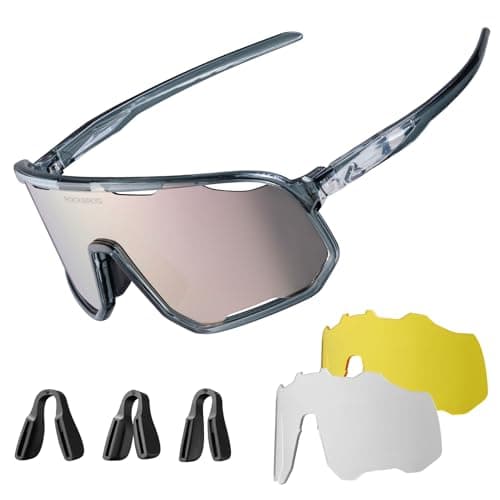
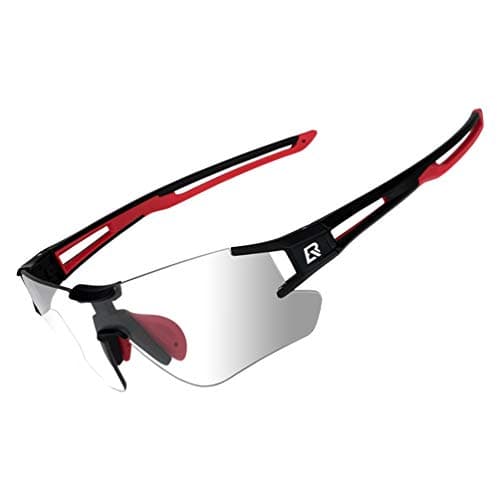
ROCKBROS Polarized Cycling (3 Lenses)
Best for: Polarized for bright sun, with lenses for everything else
The cheap way to get the same idea: a polarized lens for bright sun with yellow and clear spares for the light it cannot handle. Buy it if you ride occasionally and would rather spend the difference on tires.
#ad · we may earn a commission. Live prices from the Amazon Product API, as of November 23, 2026. Where we have no verified live price we show none.
The best cycling sunglasses under $100 for most riders are the Tifosi Rail XC: a big, very light shield that ships with three interchangeable lenses, which means one purchase covers bright sun, overcast and night riding. Best for road and cross-country. If you would rather not carry spare lenses, buy the Tifosi Crit with the Fototec lens instead — it is the one pick here that is both photochromic and polarized. For the largest coverage in the band, the full-size Tifosi Rail. The cheapest route to an adapting lens is the ROCKBROS Photochromic, and the budget pick is the ROCKBROS polarized three-lens kit. Live prices below, with the date they were checked.
A hundred dollars goes further in cycling eyewear than in almost any other category on this site, because the things that make a riding lens good are cheap to engineer and the things that make a premium one premium are not things most riders will notice. Coverage, venting, low weight and a lens that suits the light are all available well under this ceiling. What you are not buying at this price is a documented contrast lens with published transmission figures per tint, or a frame with a long service life of replacement parts.
The one decision this band is really about
Light on a bike changes constantly — you leave in bright sun and finish in shade, or you drop into trees at speed, or the ride starts before dawn. There are exactly two ways to deal with that, and both are buyable under $100:
- A three-lens interchange kit. One frame, three lenses: a dark one for sun, a contrast-boosting one for flat light, a clear one for night and heavy tree cover. You get the right lens for each ride, at the cost of carrying and swapping them. Both Tifosi Rail models do this, and so do the cheap ROCKBROS and DUCO kits.
- One photochromic lens that adapts.The lens darkens and clears with the light, so there is nothing to carry and nothing to swap mid-ride. The cost is that it cannot be as dark as a dedicated sun lens or as clear as a dedicated clear one, and the transition is not instantaneous — which matters most going into and out of tunnels and dense woods. Best photochromic sunglasses covers the technology across categories.
Neither is wrong. If you ride mostly at one time of day, buy a lens for that light and ignore both. If your rides vary, pick the route that fits how you think: the kit if you plan rides, the photochromic if you leave the house and see what happens.
Should a cycling lens be polarized?
This is the one category where the site's own namesake lens is a minority choice, and it is worth knowing before you spend. Polarization is a filter that removes reflected, horizontally oriented light, and on a bike some of that reflected light is information: a wet patch of tarmac, a sheet of ice, an oil slick on a corner. The case against it is made plainly by riding retailers themselves, which also point out that a polarized lens dims a bike computer or phone screen — a real nuisance if you navigate from a bar-mounted device. That is why most dedicated cycling lenses, including the Clarion and AC Red lenses in the Rail kits, are deliberately not polarized.
Polarized is the right call for riders whose main complaint is glare rather than contrast: long hours on open roads, coastal riding, bright flat concrete, or anyone who finds glare genuinely painful. Two picks here are polarized, and we say which. The longer argument is in are polarized lenses good for cycling, with the ranked polarized-only list at best polarized cycling sunglasses.
How we ranked these
- Does it solve changing light? Either a lens set or an adapting lens. A single fixed dark lens is the weakest answer in this band, and we rank it accordingly.
- Coverage and venting. A riding lens needs to stay in front of your eyes when you are in a low position and looking up the road, and it needs to move air so it does not fog on a climb. The CDC recommends a wrap shape on general UV grounds too.
- Weight, where it is published. Lighter frames bounce less and press less under a helmet strap. Where a maker publishes a figure we quote it; where it does not, we say so rather than guessing.
- Grip at the contact points. Tifosi publishes hydrophilic rubber pads that increase grip the more you sweat on its sport range, which is the strongest published retention claim in this band.
- Warranty. Two brands here publish real defect cover; most of the budget field publishes nothing.
- Price honesty.Every figure is live and date-stamped. Prose on this site never states a dollar amount — only the band in the URL is fixed.
| What you ride | Buy | The catch |
|---|
| Road or cross-country, varied light | Tifosi Rail XC (Interchangeable) | You have to carry and swap the spare lenses |
| You want one lens that handles everything | Tifosi Crit (Polarized Fototec) | At the ceiling of this band; polarized, which not every rider wants |
| A bigger face, or maximum coverage | Tifosi Rail (Interchange Set) | Large enough to look like race kit on a commute |
| An adapting shield as cheaply as possible | KAPVOE Photochromic (K63) | No published transmission range; generic fit |
| Lightest cheap adapting lens, glasses underneath | ROCKBROS Photochromic | Not polarized; basic coatings |
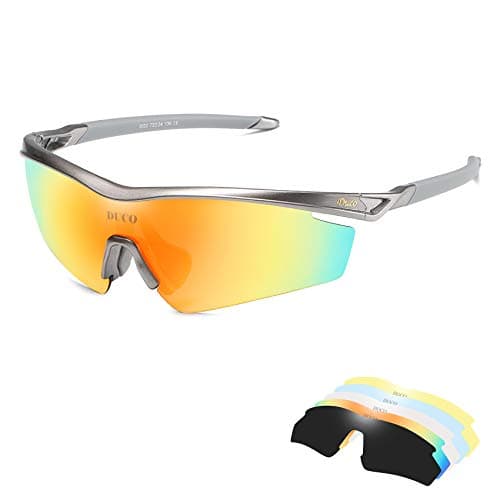
| A whole lens kit on the tightest budget | DUCO Sport Polarized (5 Lenses) | Build quality is exactly what the price implies |
| Bright sun on a budget, with spares | ROCKBROS Polarized Cycling (budget pick) | Polarized, so it dims a bar-mounted screen |
The short answer
Quick picks
#ad · Live prices from the Amazon Product API, as of November 23, 2026. Where we have no verified live price, we show none — we would rather leave a gap than print a number that has rotted.
In detail
The picks, in full
Best cycling sunglasses for the money
Tifosi Rail XC (Interchangeable)
Interchangeable lensesBig shieldVentedVery light
The value pick for cyclists: big coverage and three lenses for changing light.
- Glare control
- 6
- Optics
- 8
- Fit & coverage
- 10
- Durability
- 8
- Value
- 9
Pros
- +Ships with multiple lenses so you swap for bright sun, overcast and low light — the right answer for a sport where light changes mid-ride
- +Large shield gives the coverage a road or gravel cyclist actually needs at speed
- +A fraction of the price of the Italian marquee brands for comparable coverage
Cons
- −The included lenses are tinted/contrast, not polarized — deliberate, since polarized can mask road sheen and dims a bike computer
- −Big-shield look isn't for everyone off the bike
Don't buy this if…
…you want a do-everything lifestyle frame. This is a cycling tool — glorious on the bike, a lot of sunglasses at a cafe.
Polarized glare control in changing light
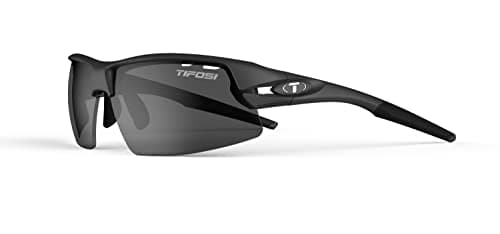
Tifosi Crit (Polarized Fototec)
Fototec photochromicPolarizedSport frameHydrophilic grip
The rare lens that is both polarized and photochromic — glare control that also tracks the light.
- Glare control
- 8
- Optics
- 8
- Fit & coverage
- 8
- Durability
- 7
- Value
- 7
Pros
- +Combines the two lens tricks most brands make you choose between: it darkens with the light AND cancels reflected glare
- +Sport shape and grip pads mean it stays put through a ride, a run or a long day outside
- +A far cheaper route to a polarized photochromic lens than the premium marques charge
Cons
- −Being polarized, it still dims a bike computer or a boat chartplotter — the photochromic half does not fix that
- −Photochromic lenses transition slower in the cold and never reach the darkness of a fixed bright-sun tint
Don't buy this if…
…you ride with a head unit. A polarized lens is the wrong tool there no matter how clever the photochromic layer is — take a non-polarized photochromic instead.
Maximum coverage
Tifosi Rail (Interchange Set)
Clarion Blue/AC Red/ClearOversized rimless shieldGrilamid TR-9032g published
The full-size Rail: the same three-lens kit behind a taller shield, for bigger faces and maximum coverage.
- Glare control
- 6
- Optics
- 8
- Fit & coverage
- 9
- Durability
- 8
- Value
- 9
Pros
- +The oversized shield is the most coverage in this price tier — wind, grit and low sun stay out at speed
- +Same three-lens interchange kit as the XC (Clarion Blue, All-Conditions Red, Clear) and the same hardshell case
- +Grilamid TR-90 frame with a metal core through the arms and nose piece, so the adjustable fit holds its shape
Cons
- −Bike Perfect found the tall lens can knock against the brow of some helmets on chunky terrain — the XC exists precisely to fix that
- −The long arms suit a larger head; on a smaller one they interfere with helmet straps until you adjust them
- −Not polarized — deliberate on a bike, but wrong if you wanted glare control off water
Don't buy this if…
…your face is average or small, or you ride in a helmet with a low brow. The Rail XC gives you the same lens kit in a frame that clears the helmet and weighs a gram less.
Cheapest usable photochromic shield
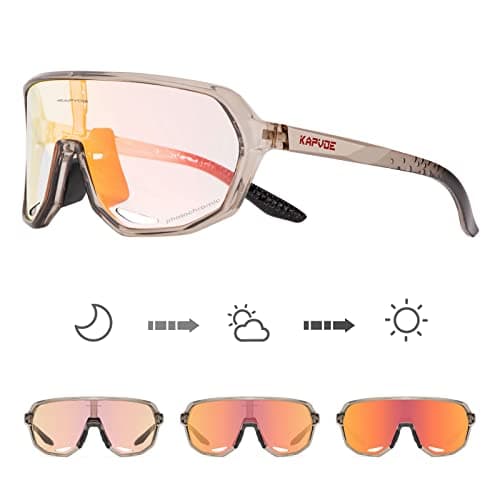
KAPVOE Photochromic (K63)
Photochromic lensUV400Large shieldLightweight frame
A photochromic sport shield at a price that makes the premium photochromics hard to justify.
- Glare control
- 6
- Optics
- 6
- Fit & coverage
- 8
- Durability
- 6
- Value
- 10
Pros
- +Gets you the one-lens-covers-the-ride advantage for the price of a couple of inner tubes
- +Big shield coverage that a lifestyle frame cannot match at any price
- +Non-polarized, which is the correct choice for reading a bike computer
Cons
- −The transition is narrower and slower than a premium photochromic, and slower again in the cold
- −Budget hinges and coatings; treat it as a season-or-two frame
Don't buy this if…
…you want the widest possible light range. The premium photochromics genuinely cover more of the spectrum and switch faster.
One lens for all-day changing light
ROCKBROS Photochromic
Photochromic lensUV40022gMyopia insert
A photochromic lens that darkens with the sun — the budget cyclist's clever pick.
- Glare control
- 6
- Optics
- 7
- Fit & coverage
- 8
- Durability
- 6
- Value
- 10
Pros
- +The lens auto-darkens in bright light and clears in shade — one lens covers a whole ride, no swapping
- +Photochromic (not polarized) is arguably the right choice on a bike: it doesn't mask wet-road sheen or dim a Garmin
- +Includes a myopia insert for prescription wearers, which is rare at this price
Cons
- −Photochromic lenses transition slower in the cold and never go as dark as a dedicated bright-sun lens
- −Budget build; the hinges are the weak point
Don't buy this if…
…you ride in extreme bright glare and want the darkest possible lens — a dedicated dark tint beats a photochromic at its darkest.
Changing light on a tight budget
DUCO Sport Polarized (5 Lenses)
5 interchangeable lensesPolarizedUV400Sport frame
A whole interchangeable-lens kit for the price of one budget pair — the cheap answer to changing light.
- Glare control
- 7
- Optics
- 7
- Fit & coverage
- 8
- Durability
- 6
- Value
- 10
Pros
- +A lens set means you can match the tint to the light instead of squinting through the wrong one
- +Undercuts the established interchangeable sport kits by a wide margin
- +Sport frame shape and grip suit running, riding and general outdoor use
Cons
- −Interchangeable kits typically pair one polarized lens with tinted spares — confirm which lens in the box is the polarized one before you rely on it
- −Swapping lenses on a budget frame is fiddlier and feels less secure than on a premium sport shield
Don't buy this if…
…you want one lens you never think about. A kit is only an advantage if you will actually carry and swap the spares.
Polarized for bright sun, with lenses for everything else
ROCKBROS Polarized Cycling (3 Lenses)
Polarized lens3 interchangeable lensesUV400Cycling wrap
A polarized cycling lens that comes with an exit route — the yellow and clear spares cover the light the dark lens cannot.
- Glare control
- 8
- Optics
- 6
- Fit & coverage
- 8
- Durability
- 6
- Value
- 10
Pros
- +Solves the real problem with a polarized cycling lens: it is also a dark lens, and this one comes with a yellow light-enhancing and a clear lens for dawn, dusk and tree cover
- +A cycling-shaped wrap rather than a lifestyle frame reshaped, so the coverage is where a rider needs it
- +Costs about the same as a single budget lens, which makes trying polarized on the bike a low-stakes experiment
Cons
- −On interchangeable sets it is normally only the dark lens that carries the polarizing filter — the spares are tinted, not polarized, so confirm the set before relying on it
- −Budget hinges, coatings and lens-swap mechanism; the swap feels less secure than on a premium shield
- −The polarized lens still dims a bike computer, which is the reason to keep one of the spares on the bike
Don't buy this if…
…you want one lens you never think about. A photochromic cycling lens adapts without you carrying anything, and it does not dim your head unit.
Who each pick is for, and what is wrong with it
- Tifosi Rail XC (Interchangeable) — Best for:road and cross-country riders with varied light, and the default under $100. It is the best-value answer to the whole changing-light problem: a large, very light shield that arrives with three lenses, so one purchase covers bright sun, flat light and dark. BikePerfect's independent review of the Fototec version called it super lightweight with adaptive lens tinting, and Tifosi publishes lifetime cover for manufacturer's defects to the original owner. Honest cons: the spare lenses only help if you actually carry them, swapping is fiddly with cold hands, the stock lenses publish no transmission figures, and the warranty explicitly excludes dropped, sat-on, scratched, lost and stolen pairs and charges shipping per claim. Our full write-up is the Tifosi Rail XC review.
- Tifosi Crit (Polarized Fototec) — Best for: riders who want one lens and no spares. The rare combination of both lens technologies in one: Tifosi lists Fototec photochromic and polarized options on the Crit, so this lens both adapts to the light and cuts reflected glare. If your complaint is glare rather than contrast, and you do not want to think about lens choice before a ride, this is the buy — and it sits right at the top of this band rather than above it. Honest cons:it is the most expensive pick here; the polarization is a real downside on wet roads and on a bar-mounted computer; a photochromic lens never gets as dark as a dedicated sun lens; and the frame is a smaller, more traditional sport shape than the Rail shields, so coverage is lower. Tifosi's own lens guide is the clearest statement of which of its lenses are polarized and which are not.
- Tifosi Rail (Interchange Set) — Best for:bigger faces and maximum coverage. The full-size Rail is the same three-lens proposition behind a taller, wider rimless shield, on a Grilamid TR-90 frame with a published 32 grams. BikePerfect's review of it is titled on exactly that point — huge coverage and three interchangeable lenses. If the XC sits too close to your eyelashes or stops short of your brow, this is the fix. Honest cons: it is genuinely large, which looks like race equipment on a commute; a rimless shield is easier to scratch when you put it down; and like the XC it publishes no per-lens transmission figures.
- KAPVOE Photochromic (K63) — Best for: the cheapest adapting shield worth buying. A large photochromic sport shield for a fraction of what the Tifosi picks cost, which makes the premium photochromics hard to justify if you ride a few times a month. The large single lens also gives more coverage than anything else at this price. Honest cons: there is no published transmission range, so we cannot tell you how dark it gets or how fast it switches; the coatings are basic; the fit is one generic size; and there is no warranty worth the name.
- ROCKBROS Photochromic — Best for:the lightest cheap adapting lens, and riders who wear prescription glasses. ROCKBROS publishes a 22-gram frame and an optional myopia insert on this line, which is a genuinely useful feature at the price — it is the cheap route to a riding lens if you need correction underneath. Its published claims are UV400, a lightweight frame and interchangeable lens sets across the range. Honest cons: this lens is not polarized, the insert is a compromise against real prescription eyewear, coatings are basic, and there is no documentation on the photochromic range. More on the brand in the ROCKBROS review, and prescription polarized sunglasses covers the better options if correction is your main problem.
- DUCO Sport Polarized (5 Lenses) — Best for: a whole lens kit on the tightest budget. Five interchangeable lenses for roughly the price of one budget pair, which makes it the cheapest way to cover every light condition you will ride in. For a rider working out which tint they actually want, it is a sensible experiment. Honest cons: build, hinges and lens retention are what the price implies; a five-lens kit at this money means each lens is basic; and there is no published lens documentation at all. It is a starter kit, not a long-term frame.
- ROCKBROS Polarized Cycling (3 Lenses) — Best for: the budget pick, and bright-sun riding with an exit route. A polarized lens for glare with yellow and clear spares for the light polarization is wrong for. That combination is the right shape of product at this price: you get the filter when it helps and a non-polarized option when it does not. Honest cons: polarization dims a bar-mounted computer or phone screen; the frame is generic one-size; coatings are basic; and there is no meaningful warranty. If you only ever ride in bright sun, the ROCKBROS polarized sport frame without the lens kit does the same job.
What $100 buys on a bike, and what it does not
It buys the entire functional core. Full UV protection is standard — the American Optometric Association recommends 99-100% UVA and UVB blocking at any price, and every pick here publishes UV400. It buys real coverage: the shields in this band are as large as the ones on frames costing three times more. It buys venting, interchange, and in two cases a published lifetime defect warranty. For most riders, that is the whole shopping list.
It does not buy documented optics. Published Abbe values put polycarbonate at 30 against mineral glass and CR-39 at 58-59, and everything in this band is polycarbonate — which is the correct material for riding anyway, because it is the impact resistant one, but it is not the clear one. It does not buy per-tint transmission figures, which the premium cycling brands publish and nobody here does. And it does not buy fit range: one size per model is the rule, with adjustment limited to the nose piece and arms. The premium end of the category, where those things exist, is on the cycling sunglasses hub.
Fit under a helmet, which nobody mentions until it annoys them
Two things go wrong. First, temple arms that sit outside the helmet retention strap get pushed every time you adjust the helmet; arms that sit inside it get pressed into your temples on a long climb. Thin, flat arms — which all the Tifosi frames here have — are much less prone to either. Second, a tall shield plus a low-sitting helmet brow leaves a gap that light comes through exactly at eyebrow height. If you ride in a low position on drop bars, favor the taller lens: the full-size Rail over the XC.
Fogging is the other helmet-adjacent problem, and it is a venting question rather than a lens question. Every pick here is a vented or half-frame design for that reason. Retailer guidance on this — Oberson's guide to choosing sunglasses for running and cycling is a clear version — puts airflow and coverage ahead of lens exotica for exactly this reason.
Matching the lens to the ride
Bright open roads, summer
A dark lens, and polarized is defensible here: the Crit Fototec, or the ROCKBROS polarized kit on a budget. Tifosi's own cycling lens guidance is a reasonable starting point for tint choice by condition.
Woods, singletrack, dappled light
A contrast lens rather than a dark one, and not polarized — you want to read roots and rocks in shade. The Rail XC's mid-tint lens, or a photochromic. The dedicated ranking is best mountain bike sunglasses.
Dawn, dusk and commuting in the dark
The clear lens from an interchange kit, every time. A photochromic in its clear state is not as clear as a clear lens, and a dark lens at night is genuinely dangerous. This is the single best argument for the three-lens kits over the adapting ones.
You also run in them
Then weight and grip matter more than interchange. See best sunglasses for cycling and running and best no-slip running sunglasses.
Choosing in four questions
Do you ride in more than one light condition?
Yes → a three-lens kit (Rail XC, or the cheap ROCKBROS and DUCO sets) or a photochromic (Crit Fototec, KAPVOE, ROCKBROS). No, one time of day only → buy a fixed lens for that light and spend less.
Will you actually carry spare lenses?
Yes → the interchange kits give the best lens for each ride. No, honestly → a photochromic, and accept that it is a compromise at both ends of its range.
Is glare your problem, or contrast?
Glare → polarized: the Crit Fototec, or the ROCKBROS polarized kit. Contrast, or you ride wet roads, or you navigate from a bar-mounted screen → not polarized, which is what most of this band is.
How big is your face, and how low do you ride?
Large face, or low on drop bars → the full-size Rail, for the taller shield. Standard or smaller → the Rail XC. Either way, read how to choose sunglasses size before you order.
Several frames in this band ship as lens sets rather than single lenses, which is a genuinely different value calculation. We rank that field on its own terms at best sunglasses with interchangeable lenses.
How we picked
We don't run a testing lab
We compile each pair's published specifications — lens material, polarization, coating, frame material, coverage, UV rating and price — normalize them, and score each against a published rubric. The scores are judgments from documented research; they are notmeasurements we took, because we don't own a lab and we're not going to pretend we do. Pairs we claim to have lab-tested: 0.
Questions
Frequently asked
What are the best cycling sunglasses under $100?+
The Tifosi Rail XC for most riders: a large, light shield that ships with three interchangeable lenses, so one purchase covers bright sun, flat light and dark, backed by Tifosi's published lifetime cover for manufacturing defects. If you would rather not carry spare lenses, the Tifosi Crit with the Fototec lens is the pick — it is both photochromic and polarized. For maximum coverage, the full-size Tifosi Rail.
Do you need to spend more than $100 on cycling sunglasses?+
Not for the things that matter most on a bike. Coverage, venting, low weight, UV400 and a lens suited to the light are all available under this ceiling. Spending more buys documented contrast lenses with published transmission figures per tint, better coatings, a wider fit range and a longer parts and service life. If you ride most days, those are worth paying for; if you ride at weekends, they are not. The premium end is ranked on our
cycling sunglasses page.
Should cycling sunglasses be polarized?+
Usually not, which is why most dedicated cycling lenses are deliberately non-polarized. Polarization removes reflected light, and on a bike some of those reflections are information — a wet patch of road, ice, or oil on a corner. It also dims a bar-mounted bike computer or phone screen. It is the right choice for riders whose main complaint is glare on open, bright roads. The full argument is in
are polarized lenses good for cycling.
Interchangeable lenses or photochromic for cycling?+
Interchangeable if you plan your rides and will carry the spares: you get a genuinely dark lens for sun and a genuinely clear one for night. Photochromic if you would rather not think about it: one lens, nothing to carry, at the cost of never being as dark or as clear as a dedicated lens, and of a transition that takes a moment. Both routes are fully available under $100, which is why this band is better value than it looks.
Are cheap cycling sunglasses safe?+
On the thing that matters medically, yes: every pick here publishes UV400, and the
American Optometric Association recommends 99-100% UVA and UVB blocking at any price, with lens darkness being no guide to UV protection. Where cheap frames are genuinely worse is impact and retention: budget hinges and lens retention are not built to the standard of a premium sport frame, so if you race or ride technical trails, buying up is a reasonable call.
Can you wear cycling sunglasses over prescription glasses?+
Not comfortably — a riding shield is designed to sit close to your face. The two realistic routes are an insert, which ROCKBROS publishes on its photochromic line and is the cheap answer, or proper prescription sport eyewear. Our
prescription polarized sunglasses guide covers both, and
sunglasses that fit over glasses covers fit-overs for everyday use, which are the wrong shape for riding.
Receipts
Sources
- Tifosi Optics - Rail XC product page (official: the lighter cross-country and baseball shield, three-lens interchange set)
- Tifosi Optics - Rail product page (official: oversized rimless shield, three-lens interchange set, Grilamid TR-90 frame, published 32g)
- Tifosi Optics - Crit product page (official: Fototec photochromic and polarized lens options on a vented sport frame)
- Tifosi Optics - Fototec vs Enliven vs Clarion vs Polarized: the honest Tifosi lens guide (official - states which Tifosi lens families are polarized and which are not, and that Fototec is the photochromic family)
- Tifosi Optics - warranty information (official, verbatim: Tifosi will “warranty any sunglass against manufacturer’s defects to the original owner for the life of the product”; excludes normal wear and tear, lost, stolen, dropped, shattered, scratched or sat-on product, excludes scratched lenses, US residents and original purchaser only, does not cover prescription sunglasses, and carries a shipping and handling fee per claim)
- Tifosi Optics - Vero product page (official, verbatim: “To ensure that our sun and safety glasses stay in place during your game, we’ve added hydrophilic rubber nose and ear pads”, with a spec list reading “Vented half frame, fully adjustable arms, hydrophilic rubber pads that increase grip the more you sweat” on a Grilamid TR-90 frame)
- Tifosi Optics - the best cycling lenses for all-weather conditions (official guidance on tint choice by light condition)
- BikePerfect - Tifosi Rail XC Clarion Fototec review (independent review of the adaptive-tint version: “super lightweight sunglasses with adaptive lens tinting”)
- BikePerfect - Tifosi Rail review (independent review: “huge coverage and three interchangeable lenses”)
- ROCKBROS - published polarized cycling eyewear claims (UV400, polarized lens, lightweight frame, interchangeable lens sets)
- Selle Anatomica - why cyclists should never wear polarized sunglasses (the cycling case against polarization: it can flatten the look of a wet or icy road surface and dim a bike computer or phone screen)
- Oberson - how to choose sunglasses for running and cycling (retailer guidance on coverage, venting, grip and lens choice for endurance sport)
- Cleveland Clinic - polarized vs non-polarized sunglasses (polarization described as a filter that removes reflected, horizontally oriented light)
- American Optometric Association - UV protection and sunglasses guidance (99-100% UVA and UVB blocking recommended at any price; lens darkness is not a measure of UV protection)
- CDC - sun safety (UV is strongest 10 a.m. to 4 p.m., reaches you on cloudy days, and reflects off water, cement, sand and snow; “Wear sunglasses that wrap around and block both UVA and UVB rays”)
- OptoGrid - Abbe value by lens material (CR-39 58, mineral glass 58-59, polycarbonate 30)
We do not run a testing lab, and we do not pretend to. Where a spec or measurement came from a manufacturer or a third party, we name and link it. Where we could not verify something, we say so on the page rather than quietly leaving it out. Read our full method.