The gap Neven sits in
The sunglasses market has a strange shape. There is an enormous, genuinely good budget tier where polarized UV400 pairs cost less than a restaurant main. There is a premium tier where documented lens technology and decade-long build quality start around two hundred dollars. And between them is a band that is mostly occupied by fashion licensing — frames that cost several times the budget tier without offering any of the premium tier's optical or durability advantages.
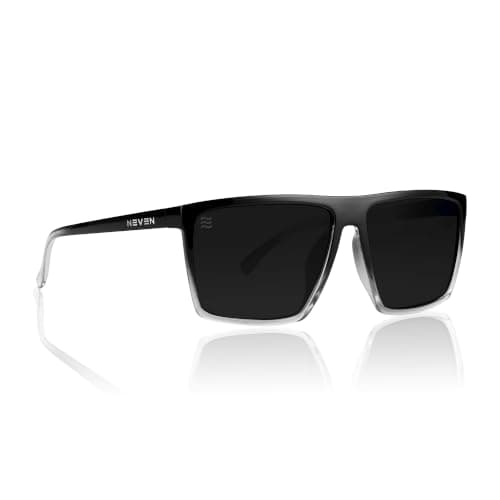
Neven is one of a number of smaller, direct-leaning brands trying to make that middle band make sense: better materials and finish than the $20 field, coastal-leaning styling, polarized lenses, and a price that stops well short of premium. Whether that is a good buy depends almost entirely on how you weigh finish and design against documented optics, so let us be specific about what is and is not on offer.
What the mid-price gets you
Finish and feel. This is the honest headline. Frames in this band typically have better surface finish, better hinge feel and more considered detailing than the budget tier. It is not a specification you can point at on a chart, but it is the difference between a pair that feels like a tool and one that feels like an object.
Styling that is not everywhere. The budget tier is dominated by a handful of shapes replicated across dozens of sellers. A smaller brand with its own design direction gives you something the person next to you is not wearing, which is a legitimate part of why anyone buys sunglasses.
Genuine polarization and UV protection.The fundamentals are present, as they should be at any price. Polarization removes the reflected glare off wet roads and water that a plain tint only dims, and UV protection is the actual eye-health function — the American Optometric Association recommends 100% UVA and UVB blocking regardless of what you spend.
A shape that suits a lot of faces.The rectangular frame is the safest broadly flattering shape available, particularly for rounder and softer faces where angular frames provide balance — the geometry is in our round face guide.
What it does not get you
Documented lens technology. This is the clearest limitation, and it applies to most smaller brands rather than to Neven specifically. Costa publishes what 580 does and why; Oakley publishes Prizm; Maui Jim publishes PolarizedPlus2. A smaller brand generally publishes far less, which means there is less for a reviewer to evaluate and less for you to compare. We treat that as a limit on what we can claim rather than as evidence the lens is poor — but if you want to compare lens performance on stated mechanisms, the premium brands are where you can.
Contrast tuning.No general-purpose lens at this price does what a fishing or golf lens does. If your use is sight-fishing or green-reading, this is not the pair — see the fishing and golf roundups.
A service network. Lens replacement and repair programs are one of the quiet things premium money buys, and smaller brands generally cannot match them.
The comparison that actually matters
The real question is not Neven versus Maui Jim. It is Neven versus two very good budget pairs. For roughly the same money you could own a metal-framed polarized everyday pair and a polarized sport wrap, covering two different jobs, and lose either one without much pain. That is the argument we make repeatedly on this site and it is a strong one — it is the whole thesis of our cheap polarized guide.
The counter-argument is equally valid and worth stating fairly: two cheap pairs are two cheap pairs. If you want one nicer object that you enjoy wearing, that feels good in the hand, and that is not the same frame everyone else bought, the mid-price band exists for you and there is nothing irrational about shopping there. Just go in knowing you are buying finish and design, not optics. We lay out the full ladder in are expensive sunglasses worth it.
Who Neven suits
Someone who wants a well-finished everyday polarized pair with some design character, is not chasing a specific sport lens, and would rather own one nicer pair than two functional ones. For driving, travel, coastal walking and general bright-day wear, a rectangular polarized frame in this band is a completely sensible purchase.
It suits you less if you are hard on sunglasses, if you lose pairs regularly, or if you want to be able to read a published spec and compare lens performance directly. In those cases the budget tier and the premium tier are both more rational destinations than the middle.
Are Neven sunglasses worth it?
As a well-made everyday polarized pair with styling you will not see everywhere, yes — provided you understand the trade. You are paying above the budget field for finish, design and brand rather than for a measurable optical advantage, and that is a legitimate reason to spend money as long as nobody pretends otherwise. If you want maximum function per dollar, the budget tier remains unbeatable. If you want documented, purpose-built optics, the premium tier is where those live. The middle is where taste goes, and taste is allowed.