Top pick
Top pick
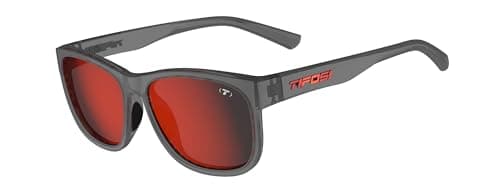
Tifosi Swick
Best for: Best value on the course
The best golf buy under $100 and the one most golfers should get. A very light Grilamid frame with hydrophilic grip at the nose and ears, a single non-polarized lens, and nothing you are paying for that a course does not need. Best for a golfer who wants a pair that disappears through the swing and does not flatten the green.
Budget pick
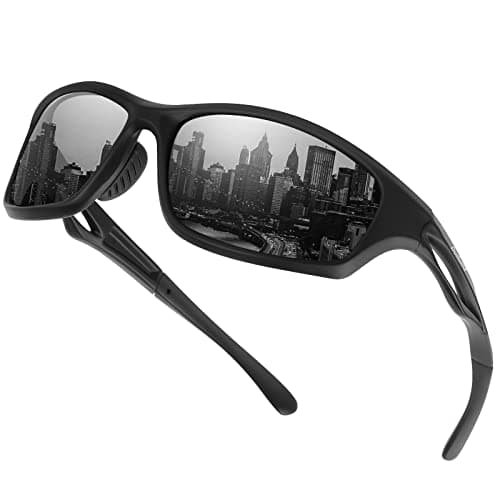
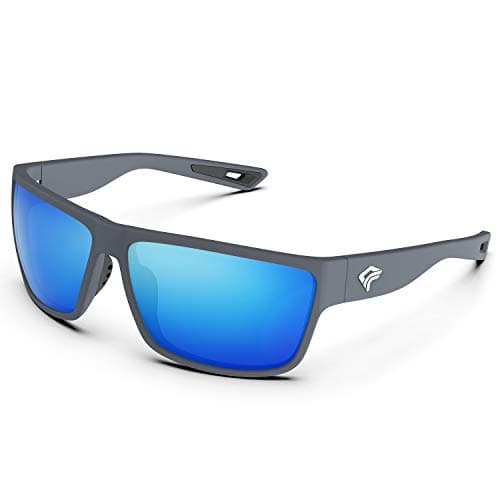
Duduma TR90 Polarized Sport
Best for: The cheapest polarized sport wrap worth owning
The cheapest thing here worth owning, and honest about what it is: a polarized TR90 sport wrap for a fraction of the money. Buy it if you play a handful of rounds a year — but read the polarization section first, because polarized is the one spec on a course that is genuinely debatable.
#ad · we may earn a commission. Live prices from the Amazon Product API, as of November 23, 2026. Where we have no verified live price we show none.
The best golf sunglasses under $100 for most players are the Tifosi Swick: a featherweight Grilamid frame with hydrophilic grip pads, a single non-polarized lens, and no premium you are paying for features a course does not use. If you want an unobstructed top sightline over the ball, the Tifosi Vero half-frame shield. If you want a golf brand on the temple, the Callaway Modern sits right at the ceiling of this band. For light that changes between the first tee and the back nine, the Tifosi Crit with the Fototec lens — the only adapting lens here. For a wider face, the Swank XL. The budget pick is the Duduma TR90. Live prices below, with the date they were checked.
Golf is the category where spending more buys you the least, and it is worth understanding why before you shop. The things that make eyewear good on a course are a light frame that does not move when you rotate through a swing, grip that survives a sweaty summer round, enough lens height that you are not looking over the top of the frame at address, and a tint that lifts contrast on grass. Every one of those is cheap. What premium money buys in other categories — glass optics, documented transmission curves per tint, laminated polarizing film — is either irrelevant on a course or actively unwanted.
The thing that makes this band different: most of it should not be polarized
On nearly every other page on this site, polarized is the upgrade. On a golf page it is the argument. A polarizing filter removes reflected, horizontally oriented light, and on a green some of that reflected light is information: the sheen that tells you which way the grass is lying and how the surface falls away. A lot of golfers and instructors find that polarization flattens exactly those cues.
It is genuinely debated rather than settled, and we have a whole page on both sides of it at are polarized sunglasses good for golf. What is not debated is what the manufacturers do. Tifosi's own lens guide describes Enliven Golf as a color-enhancing lens made specifically for golf and explicitly “not a light-changing lens”, and in the same guide calls polarized lenses ideal for driving, fishing and skiing while noting they can make LCD screens difficult to read. The industry builds golf lenses around contrast, not around polarization. That is the single most useful fact in this band, and it is why four of the seven picks below are not polarized — which also happens to make them cheaper.
If you want one pair for golf and for driving and for the lake, a polarized crossover is a reasonable trade and we name three. Just make it a decision rather than an accident.
How we ranked these
- Does it stay put through a swing? The only failure mode unique to golf: a frame that shifts when you rotate, or slides down a sweaty nose over eighteen holes. Tifosi publishes hydrophilic rubber nose and ear pads added, in its own words, “to ensure that our sun and safety glasses stay in place during your game” — the most specific published retention claim in this band.
- Lens height and sightline. SportRx's golf buying guide puts it well: having enough lens coverage above and below your eyes keeps you from squinting or straining. At address you are looking down through the top of the lens; a short lens or a thick top rim puts a frame edge in your field of view on every shot.
- Contrast rather than darkness. The same guide calls contrast-enhancing lens tech “a must for golfers” because the right lens “can make or break your ability to track the ball.” A dark lens is not a contrast lens, and the AAO is clear that lens darkness is no guide to protection either.
- Weight. Lighter frames press less under a cap and move less in rotation. Where a maker publishes a figure we quote it; where it does not, we say so rather than inventing one.
- Warranty. Tifosi publishes defect cover for the life of the product to the original US purchaser, with real exclusions. Most of the budget field publishes nothing at all, and we say which.
- Price honesty. Every figure is live and date-stamped. Prose on this site never states a dollar amount — only the band in the URL is fixed.
| Your situation | Buy | The catch |
|---|
| You want the sane default and nothing clever | Tifosi Swick | One fixed lens; standard width only |
| You want nothing above the ball at address | Tifosi Vero (Smoke Polarized) | Polarized, which is the debated spec on a green |
| You want a golf name on the temple | Callaway Modern (Golf) | Right at the ceiling of the band; no published transmission figures |
| Early tee time, finishing in flat evening light | Tifosi Crit (Polarized Fototec) | At the ceiling, and polarized as well as adapting |
| The standard width pinches your temples | Tifosi Swank XL | Lifestyle-sport styling rather than a true sport shield |
| One cheap pair for golf and the car | TOREGE TR26 Polarized Sport | Polarized, and a half-frame wrap looks like cycling kit |
| A few rounds a year, smallest possible spend | Duduma TR90 Polarized Sport (budget pick) | Polarized; no published specs; generic fit |
The short answer
Quick picks
#ad · Live prices from the Amazon Product API, as of November 23, 2026. Where we have no verified live price, we show none — we would rather leave a gap than print a number that has rotted.
In detail
The picks, in full
Best value on the course
Tifosi Swick
Grilamid frameSingle lensHydrophilic gripVery light
A light, low-cost golf-friendly frame that stays put through the swing.
- Glare control
- 6
- Optics
- 7
- Fit & coverage
- 7
- Durability
- 7
- Value
- 9
Pros
- +Extremely light and low-profile, so it doesn't intrude at address or through the swing
- +Grip pads tack up with sweat and heat — it stays on when you're walking 18
- +A fraction of the Oakley price for a frame that does the core golf job
Cons
- −The base lens is a general tint, not a green-reading contrast lens like Prizm Golf
- −Less coverage than a wrap in low-angle morning sun
Don't buy this if…
…you specifically want a contrast-tuned green-reading lens — that's the one thing the premium golf lenses do that this doesn't.
Baseball, softball and open-sightline sport
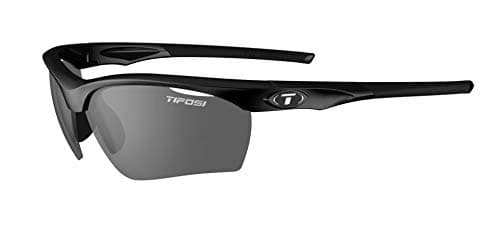
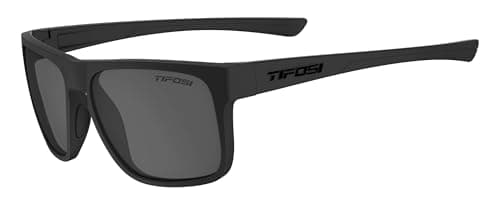
Tifosi Vero (Smoke Polarized)
Half-frame shieldPolarized optionHydrophilic gripVented lens
A half-frame sport shield built for ball sports — open top sightline, grippy, light.
- Glare control
- 8
- Optics
- 7
- Fit & coverage
- 9
- Durability
- 8
- Value
- 8
Pros
- +The half-frame leaves the top of your field of view unobstructed, which is exactly what you need looking up at a fly ball
- +Grip pads tack up with sweat so the frame does not shift when you run
- +Vented lens cuts the fogging that kills a sealed shield on a hot field
Cons
- −The polarized version dims LCD screens and can flatten some sky contrast — Tifosi's non-polarized lenses are the alternative for that
- −Half-frame gives up bottom coverage against low sun
Don't buy this if…
…you want maximum wraparound coverage. A full shield seals better; the Vero trades some of that for an unobstructed upward sightline.
Golfers who want a golf brand
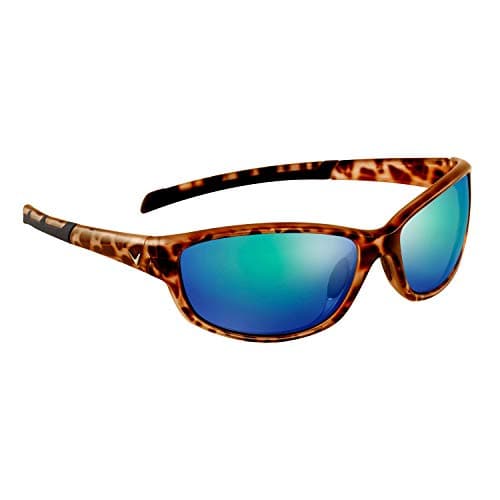
Callaway Modern (Golf)
Golf-tuned lensLightweight frameUV protectionSport fit
A golf-brand frame built around course optics, from a name golfers already trust.
- Glare control
- 6
- Optics
- 7
- Fit & coverage
- 7
- Durability
- 7
- Value
- 7
Pros
- +Callaway builds these specifically for the golf customer — tint and fit are aimed at the course
- +A recognizable golf brand at a mid price, below the Oakley premium
- +Sport fit keeps it stable through the swing
Cons
- −Lens contrast doesn't match Oakley's Prizm Golf for reading subtle green transitions
- −Availability and colorways are more limited than the big eyewear brands
Don't buy this if…
…you want the most contrast a golf lens can give — Prizm Golf is still the reference, at a price.
Polarized glare control in changing light
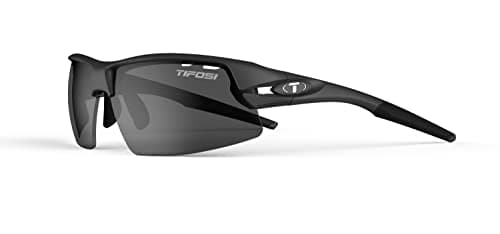
Tifosi Crit (Polarized Fototec)
Fototec photochromicPolarizedSport frameHydrophilic grip
The rare lens that is both polarized and photochromic — glare control that also tracks the light.
- Glare control
- 8
- Optics
- 8
- Fit & coverage
- 8
- Durability
- 7
- Value
- 7
Pros
- +Combines the two lens tricks most brands make you choose between: it darkens with the light AND cancels reflected glare
- +Sport shape and grip pads mean it stays put through a ride, a run or a long day outside
- +A far cheaper route to a polarized photochromic lens than the premium marques charge
Cons
- −Being polarized, it still dims a bike computer or a boat chartplotter — the photochromic half does not fix that
- −Photochromic lenses transition slower in the cold and never reach the darkness of a fixed bright-sun tint
Don't buy this if…
…you ride with a head unit. A polarized lens is the wrong tool there no matter how clever the photochromic layer is — take a non-polarized photochromic instead.
Wider faces wanting a light sport-casual frame
Tifosi Swank XL
Grilamid frameXL sizingHydrophilic gripVery light
The Swank scaled up — the light lifestyle-sport crossover for faces the standard size pinches.
- Glare control
- 5
- Optics
- 7
- Fit & coverage
- 8
- Durability
- 7
- Value
- 9
Pros
- +Solves the single most common complaint about light sport-casual frames: that they are too small for a wider face
- +Barely-there weight makes it comfortable for a long session on a court or a walk
- +Grip pads hold as you heat up rather than getting slicker
Cons
- −The base lens is a tint, not polarized — no glare-off-water benefit unless you choose a polarized option
- −Lifestyle shape means less coverage than a true sport shield in low sun
Don't buy this if…
…you need polarized glare control or full wrap coverage. This is a light everyday-and-easy-sport frame, and it is honest about that.
A first sport pair on a tight budget
TOREGE TR26 Polarized Sport
TR90 framePolarizedUV400Half-frame wrap
The do-everything budget wrap — polarized, light, and hard to kill.
- Glare control
- 7
- Optics
- 6
- Fit & coverage
- 8
- Durability
- 6
- Value
- 9
Pros
- +A polarized TR90 wrap for pocket money — genuinely useful across running, cycling and casual fishing
- +TR90 nylon shrugs off drops that would snap an acetate frame
- +Rubberized nose and temples hold on when you sweat
Cons
- −Lens coating scratches more easily than the premium picks — treat it as a two-season pair, not a decade one
- −Fit runs large; a narrow face gets gaps at the temples
Don't buy this if…
…you want optical precision or a lens that survives being tossed in a bag lens-down. At this price the trade-off is coating durability.
The cheapest polarized sport wrap worth owning
Duduma TR90 Polarized Sport
TR90 framePolarizedUV400Sport wrap
The internet's default cheap sport wrap — polarized, unbreakable-ish, everywhere.
- Glare control
- 7
- Optics
- 6
- Fit & coverage
- 8
- Durability
- 6
- Value
- 10
Pros
- +TR90 frame flexes instead of snapping — it survives being sat on
- +Polarized and UV400 at the bottom of the price range
- +The wrap shape controls side glare better than a flat lifestyle lens
Cons
- −Optics and coatings are exactly what the price implies
- −Fit is generic; no fine adjustment
Don't buy this if…
…you want optical precision or a coating that lasts years. This is a knock-around-and-replace pick.
Who each pick is for, and what is wrong with it
- Tifosi Swick — Best for: most golfers under $100, and the default here. A very light Grilamid frame with a single non-polarized lens and hydrophilic grip at the nose and ears, which is the whole list of things a course actually asks for. Not being polarized is a feature on a green rather than a saving, and Tifosi publishes lifetime cover for manufacturing defects. Honest cons: one fixed lens, so an early tee time in flat light is the wrong conditions for it; standard width only, with no XL in this model; the stock lens publishes no transmission figure; and that warranty excludes dropped, sat-on, scratched, lost and stolen pairs and charges shipping per claim. Also rank 2 on our golf sunglasses hub.
- Tifosi Vero (Smoke Polarized) — Best for: an unobstructed sightline down at the ball. A half-frame shield with no rim across the top of your field of view, vented to stop it fogging on a humid round, and the frame Tifosi literally describes as built so its eyewear stays in place “during your game”. Honest cons: this is the polarized version, which is the one spec on a golf page you should think about rather than assume — if green-reading is the priority, buy the Swick instead. It also reads as ball-sport equipment off the course, and a half-frame gives the lens less protection in a bag.
- Callaway Modern (Golf) — Best for: golfers who want a golf brand, and a lens tuned for course light by a company that only thinks about courses. It sits right at the top of this band, and the pitch is coherent: a golf-tuned lens in a light sport fit from a name already in your bag. Honest cons: it is the most expensive pick on the page and spends part of that on the name; Callaway publishes no transmission figures or Abbe values we could verify, so “golf-tuned” is a claim we are repeating rather than a number we can check; and at this price the Tifosi picks give you a published warranty and published grip material instead.
- Tifosi Crit (Polarized Fototec) — Best for: a 7am tee time that finishes in late-afternoon light. The only lens here that adapts: Tifosi's Fototec photochromic lens in a polarized version, so it tracks the light through the round and cuts reflected glare as well. Honest cons: it is at the ceiling of the band; it is polarized, so it carries the green-reading question; a photochromic lens is never as dark as a dedicated dark lens nor as clear as a clear one; and the transition is not instant, which matters walking out of tree shade onto an open fairway. Ranked on lens technology in best photochromic sunglasses.
- Tifosi Swank XL — Best for: wider faces, and golfers who want one frame for the course and the clubhouse. The Swank scaled up, non-polarized, very light, with the same hydrophilic grip. If the standard width presses your temples by the back nine, this is the fix and it is cheap. Honest cons: it is a lifestyle-sport crossover rather than a sport shield, so lens height and coverage are both less than the Vero's; the styling is casual rather than technical; and on a small face it is simply too big. More sizing help in best sunglasses for big heads.
- TOREGE TR26 Polarized Sport — Best for: one cheap pair that plays golf and then drives home. A polarized half-frame TR90 wrap for well under half the Callaway, light enough to forget, and genuinely good at the glare job in the car. Honest cons: polarized, so it carries the green-reading trade-off on every putt; a half-frame sport wrap looks like cycling kit in a clubhouse; no published lens specs or warranty; and build quality is exactly what the price implies. Compared with its peers on best cheap polarized sunglasses.
- Duduma TR90 Polarized Sport — Best for: the budget pick, and a few rounds a year. The internet's default cheap sport wrap: polarized, UV400, a TR90 frame that survives being sat on, at the smallest spend on this page. Honest cons: polarized again, which is the debated spec here; no published transmission data, no contrast-tint engineering and no warranty; a generic fit with no adjustment; and coatings that will haze before a Tifosi's do. It earns its place by being honest value rather than good eyewear.
What spending more than $100 on golf eyewear actually buys
Worth knowing, because this page's ceiling is a choice and not a limit. Above this band you get three real things. First, documented contrast lenses with published transmission figures per tint — Oakley's Prizm includes a dedicated Prizm Golf tint, and it is a genuinely engineered lens rather than a colored one. Second, frame engineering that lasts: better hinges, replaceable parts, lens availability years later. Third, fit systems — adjustable nose pieces and temple arms rather than one fixed shape.
What spending more does not buy is UV protection. The American Optometric Association recommends 99-100% UVA and UVB blocking at any price, and every pick on this page publishes it. The premium end of the field is ranked without a ceiling on our golf sunglasses hub.
Matching the lens to the round
Bright summer afternoon, open course
A darker contrast tint, non-polarized if you read greens seriously: the Swick, or the Swank XL in a wider fit. This is the easiest case and the cheapest to solve.
Early tee time, or a round that runs into the evening
The adapting lens, which means the Crit Fototec here. A single dark lens at 7am is the most common mistake in this category — you end up looking over the top of it, which defeats the lens height you paid for.
Tree-lined course, lots of shade-to-sun transitions
A mid-tint contrast lens rather than a dark one, and not polarized — you want to read the lie in shade. The same argument plays out under a heavier canopy on best sunglasses for disc golf.
You also want them for driving to the course
Then polarized wins, because a windshield and wet tarmac are exactly what the filter is for: the Vero, the TOREGE or the Duduma. Accept the putting trade-off, or keep a second cheap pair in the bag. Our best lens color for driving guide covers the car half of that decision.
Choosing in four questions
How seriously do you read greens?
Seriously → non-polarized: the Swick, the Swank XL or the Callaway. Not very, and you want one pair for everything → polarized: the Vero, the TOREGE or the Duduma. The full argument is at are polarized sunglasses good for golf.
Does the light change during your rounds?
Yes, a lot → the Crit Fototec, the only adapting lens here. No, you play the same slot every week → buy a fixed lens for that light and spend less.
Does your current pair slide or press?
Slides → prioritize the published hydrophilic grip, which means a Tifosi. Presses at the temples → the Swank XL. Both → the Swank XL, and consider the retention accessories we list on how to stop sunglasses slipping.
Is the frame edge in your view at address?
If it is on your current pair → the Vero's half-frame shield removes the top rim entirely. If not → any of the full-frame picks are fine and you can ignore this question.
The cheap stuff that matters
Essentials under $40
The add-ons this page already told you to get. None of these is scored — our rubric measures glare control, optics, fit, durability and value, and four of those mean nothing for a cleaning cloth. So you get a reason and a live price instead of a number we'd have had to invent.
MagicFiber
MagicFiber Microfiber Cleaning Cloths (6-pack)
Buy a multipack for one reason: a dirty microfiber cloth is sandpaper. Six means you can retire the gritty one instead of rubbing it across a lens.
Koala
Koala Eyeglass Lens Cleaner Spray Kit (4-piece)
A lens-safe spray for when there is no tap. Sold specifically for coated lenses, which is the point — it is the household glass cleaners that attack coatings.
MyEyeglassCase
MyEyeglassCase Extra Large EVA Zip Hard Case
Sized for large and wrap frames, which is the catch with most cheap cases — a sport frame will not close in a case cut for slim readers.
#ad · Live prices as of November 23, 2026, hidden when our data goes stale. We may earn a commission, at no cost to you. How this works.
How we picked
We don't run a testing lab
We compile each pair's published specifications — lens material, polarization, coating, frame material, coverage, UV rating and price — normalize them, and score each against a published rubric. The scores are judgments from documented research; they are notmeasurements we took, because we don't own a lab and we're not going to pretend we do. Pairs we claim to have lab-tested: 0.
Questions
Frequently asked
What are the best golf sunglasses under $100?+
The Tifosi Swick for most golfers: very light, hydrophilic grip at the nose and ears, a single non-polarized lens, and Tifosi's published lifetime cover for manufacturing defects. For an unobstructed sightline over the ball, the Tifosi Vero half-frame shield. For a golf brand, the Callaway Modern at the top of the band. For light that changes through the round, the Tifosi Crit with the Fototec lens. The budget pick is the Duduma TR90.
Should golf sunglasses be polarized?+
It is genuinely debated, and the honest answer is that it depends on what you want from the round. Polarization removes reflected light, and on a green some of that reflection carries the slope and grain cues golfers use to read a putt — which is why many dedicated golf lenses are non-polarized and use contrast tuning instead. Tifosi's own lens guide describes its Enliven Golf lens as made specifically for golf and explicitly not a light-changing lens, while recommending polarized lenses for driving, fishing and skiing. If green-reading matters most, lean non-polarized. If you want one pair for the course and the car, a polarized crossover is a fair trade. Both sides are laid out at
are polarized sunglasses good for golf.
Do you need to spend more than $100 on golf sunglasses?+
No, and golf is the category where that is most clearly true. The things that matter on a course — low weight, grip that survives sweat, enough lens height that no frame edge sits in your view at address, and a contrast tint rather than a dark one — are all cheap to build. Above $100 you are buying documented contrast lenses with published transmission figures, better hinges and parts availability, and adjustable fit. Those are real, but none of them is UV protection: the
American Optometric Association recommends 99-100% UVA and UVB at any price, and every pick here publishes it.
What lens color is best for golf?+
A contrast tint rather than a dark one. Browns, roses and amber-copper families lift the separation between the ball, the fairway and the rough, which is what you are actually trying to see. SportRx's golf guide calls contrast-enhancing lens technology “a must for golfers” because the right lens “can make or break your ability to track the ball.” Gray tints are neutral and cut brightness without adding contrast, which makes them a better choice for driving than for putting. Darkness itself is not the goal and is not a guide to UV protection either.
Will cheap golf sunglasses stay on during a swing?+
Some will, and the spec to look for is published grip material rather than price. Tifosi states that it added hydrophilic rubber nose and ear pads specifically so its eyewear stays in place during your game, and hydrophilic means the grip increases as you sweat — which is the right behavior for an August round. The cheap TR90 wraps here have plain rubber or bare plastic at the contact points and no published retention claim at all, so they are more variable. If a pair you already own slides, an ear-grip or retainer costs very little:
how to stop sunglasses slipping.
Receipts
Sources
- SportRx — choosing the best golf sunglasses (buying criteria, verbatim: contrast-enhancing lens tech is “A must for golfers! The right lens tech can make or break your ability to track the ball”; on lens height, “Having enough lens coverage above and below your eyes keeps you from squinting or straining”; rubber grip at the nose and temples)
- Tifosi Optics — “Fototec vs Enliven vs Clarion vs Polarized: the honest Tifosi lens guide” (official; Enliven Golf described as a color-enhancing lens made specifically for golf and explicitly “not a light-changing lens”; polarized lenses called ideal for driving, fishing and skiing while noting they can make LCD screens difficult to read)
- Tifosi Optics — Vero product page (official, verbatim: “To ensure that our sun and safety glasses stay in place during your game, we’ve added hydrophilic rubber nose and ear pads”, on a vented half-frame Grilamid TR-90 build)
- Tifosi Optics — warranty information (manufacturer's defects for the life of the product, original US purchaser only, excluding normal wear, loss, theft and damage; stated shipping and handling fee per claim)
- Oakley — Prizm lens technology (official)
- Cleveland Clinic — polarized vs non-polarized sunglasses (polarization described as a filter that removes reflected, horizontally oriented light)
- American Optometric Association — UV protection and sunglasses guidance (99-100% UVA and UVB blocking recommended; lens darkness is not a measure of UV protection)
- American Academy of Ophthalmology — “Seven Myths About Sunglasses That Could Damage Your Vision” (official EyeSmart release, verbatim: “Consider oversized sunglasses or wraparound-style glasses, which can help cut down on UV light entering the eye from the side. Wraparound glasses may also protect against dry eye due to the wind”; also “Polarized lenses do not block more radiation” and “The darkness of the lens isn’t indicative of protection”)
We do not run a testing lab, and we do not pretend to. Where a spec or measurement came from a manufacturer or a third party, we name and link it. Where we could not verify something, we say so on the page rather than quietly leaving it out. Read our full method.