Top pick
Top pick
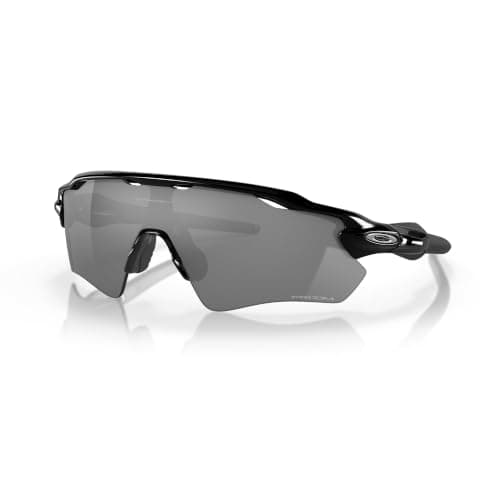
Oakley Radar EV Path (Prizm)
Best for: The premium cycling shield
A non-polarized Prizm lens in the thinnest-temple frame here, with the largest uninterrupted field of view — which is what you want when the instruments are below you and the traffic is outside. Best for the pilot who flies often enough that a headset clamp is a daily consideration.
Budget pick
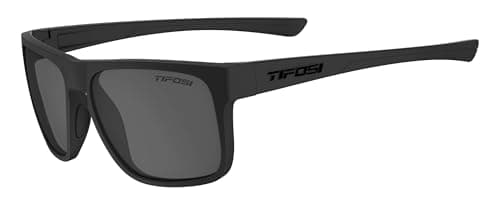
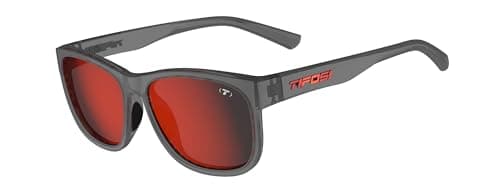
Tifosi Swick
Best for: Best value on the course
The cheapest non-polarized frame here light enough to forget under a headset, at a price that makes a cockpit pair a non-decision. Best for a spare in the flight bag, or a first pair before you know what you want.
#ad · we may earn a commission. Live prices from the Amazon Product API, as of November 23, 2026. Where we have no verified live price we show none.
Start with the thing the market gets wrong. Search for pilot sunglasses and almost everything you are shown is polarized, usually with the word used as a selling point. Two aviation regulators disagree. The FAA's own pilot brochure, Sunglasses for Pilots: Beyond the Image, does not recommend polarized lenses in the aviation environment, and the UK Civil Aviation Authority likewise does not encourage polarized use, asks for a tint no darker than 80% absorption in a neutral gray or brown, and states that fit-over sunglasses are not acceptable. So the first criterion on this page is a lens that is notpolarized — which immediately disqualifies most of what is marketed to pilots.
The reason is not bureaucratic. A polarized filter removes light with a particular orientation, and two things in a cockpit depend on exactly that light. The first is your instruments: LCD panels emit polarized light, so a polarized lens can dim a display or black it out entirely depending on how your head is tilted — All About Vision explains the mechanism, and anyone who has worn polarized lenses at a fuel pump has seen it. The second is the windshield. Laminated and tempered aircraft glazing carries internal stress patterns, and a polarized lens makes them visible as blotches and rainbow banding across your view of the traffic pattern.
The second criterion is the headset. A headset clamps directly over your temples, and a thick temple arm turns that clamp into a pressure point you feel at the ninety-minute mark and remember for a day. Thin, flat temple arms are the fix, and this is where the honest answer gets unglamorous: the thin-temple frames on the market are mostly sport frames, not aviators. Sport eyewear has spent twenty years making temples thin enough for helmet straps, and the same engineering works under a David Clark.
Third is tint. The CAA's neutral-gray-or-brown guidance and its 80% absorption ceiling point the same way: you want a lens that cuts brightness without recolouring the world, because you are reading instruments, charts and other aircraft against sky. Avoid gradients (they darken the top of your field, where the traffic is), avoid very dark category-4 glacier lenses entirely, and treat contrast-tuned sport tints as a compromise — useful, but a visible colour cast. Photochromic lenses deserve their own warning, and it is in the buyer's guide below.
What follows is six frames from our catalogue that are not polarized, have temples thin enough to live under a headset, and carry published lens claims we can point at. None of them was tested in a cockpit by us, and we are not going to pretend otherwise: the ranking is published specs, regulator guidance and frame geometry. If you want the underlying argument rather than the shopping list, it is at can pilots wear polarized sunglasses.
The short answer
Quick picks
#ad · Live prices from the Amazon Product API, as of November 23, 2026. Where we have no verified live price, we show none — we would rather leave a gap than print a number that has rotted.
In detail
The picks, in full
The premium cycling shield
Oakley Radar EV Path (Prizm)
Prizm lensPlutoniteTall shieldUnobtainium grip
The pro-peloton default. Prizm contrast, huge coverage, and a price to match.
- Glare control
- 6
- Optics
- 10
- Fit & coverage
- 10
- Durability
- 9
- Value
- 5
Pros
- +Prizm tuning boosts the specific contrasts that matter on the road — you pick out cracks and gravel earlier
- +The tall Path lens gives coverage when you're down in the drops and looking up through the top of the lens
- +Oakley's Unobtainium grips tack up with sweat and the build lasts
Cons
- −Expensive — several times the Tifosi Rail for a contrast advantage most riders won't fully exploit
- −Prizm Road is not polarized (by design for cycling), so don't expect glare-off-water behavior
Don't buy this if…
…you're a value-focused rider. The Tifosi Rail delivers the coverage and lens options that matter for a quarter of the money.
Best cycling sunglasses for the money
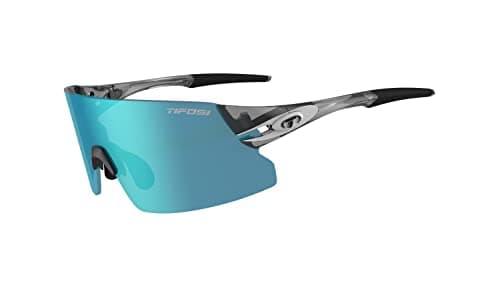
Tifosi Rail XC (Interchangeable)
Interchangeable lensesBig shieldVentedVery light
The value pick for cyclists: big coverage and three lenses for changing light.
- Glare control
- 6
- Optics
- 8
- Fit & coverage
- 10
- Durability
- 8
- Value
- 9
Pros
- +Ships with multiple lenses so you swap for bright sun, overcast and low light — the right answer for a sport where light changes mid-ride
- +Large shield gives the coverage a road or gravel cyclist actually needs at speed
- +A fraction of the price of the Italian marquee brands for comparable coverage
Cons
- −The included lenses are tinted/contrast, not polarized — deliberate, since polarized can mask road sheen and dims a bike computer
- −Big-shield look isn't for everyone off the bike
Don't buy this if…
…you want a do-everything lifestyle frame. This is a cycling tool — glorious on the bike, a lot of sunglasses at a cafe.
Road and triathlon riders who want Zeiss clarity
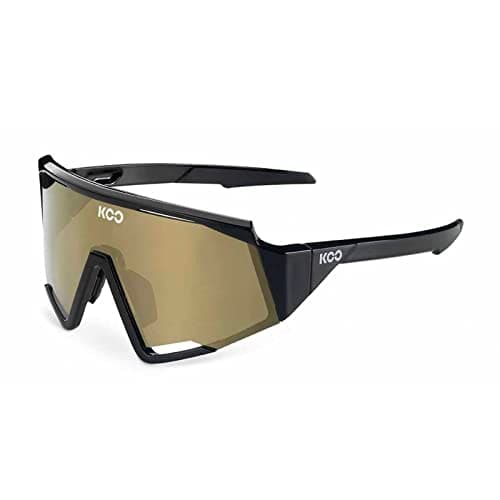
KOO Spectro (Zeiss lens)
Zeiss lensVented shieldAdjustable noseLightweight
KOO's road-and-triathlon shield — Zeiss optics in a narrower, less shouty frame than the Demos.
- Glare control
- 6
- Optics
- 9
- Fit & coverage
- 9
- Durability
- 8
- Value
- 6
Pros
- +Zeiss optics keep the edges of the lens sharp, which is where cheap lenses smear and where a rider's peripheral vision lives
- +A more restrained shape than the oversized shields, so it works off the bike too
- +Adjustable nose piece dials in fit properly instead of hoping the molded bridge suits you
Cons
- −Single lens in the box — no interchangeable set for changing light at this price
- −Premium cost in a category where the value option is genuinely excellent
Don't buy this if…
…your light changes mid-ride. A multi-lens kit or a photochromic solves that problem better than any single premium lens.
Maximum field of vision at speed
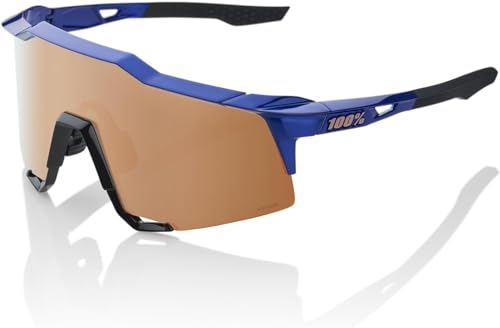
100% Speedcraft (HiPER Mirror)
HiPER mirror lensCylindrical shieldVentedRace fit
The big-field-of-vision race shield, with a mirrored contrast lens tuned for road and trail.
- Glare control
- 6
- Optics
- 9
- Fit & coverage
- 10
- Durability
- 8
- Value
- 6
Pros
- +One of the largest usable fields of view in the category — you look through lens, not over it, in a racing position
- +The HiPER mirror lens lifts contrast while shedding light before it enters, a genuine combination on a bright day
- +Race-tuned fit that stays locked on at speed
Cons
- −Single lens per pair; changing light means buying and carrying a second one
- −The mirror finish shows scuffs sooner than a plain lens and the styling is unapologetically racy
Don't buy this if…
…you want a subtle frame or a lens set in the box. This is a race shield with a race price and a race look.
Wider faces wanting a light sport-casual frame
Tifosi Swank XL
Grilamid frameXL sizingHydrophilic gripVery light
The Swank scaled up — the light lifestyle-sport crossover for faces the standard size pinches.
- Glare control
- 5
- Optics
- 7
- Fit & coverage
- 8
- Durability
- 7
- Value
- 9
Pros
- +Solves the single most common complaint about light sport-casual frames: that they are too small for a wider face
- +Barely-there weight makes it comfortable for a long session on a court or a walk
- +Grip pads hold as you heat up rather than getting slicker
Cons
- −The base lens is a tint, not polarized — no glare-off-water benefit unless you choose a polarized option
- −Lifestyle shape means less coverage than a true sport shield in low sun
Don't buy this if…
…you need polarized glare control or full wrap coverage. This is a light everyday-and-easy-sport frame, and it is honest about that.
Best value on the course
Tifosi Swick
Grilamid frameSingle lensHydrophilic gripVery light
A light, low-cost golf-friendly frame that stays put through the swing.
- Glare control
- 6
- Optics
- 7
- Fit & coverage
- 7
- Durability
- 7
- Value
- 9
Pros
- +Extremely light and low-profile, so it doesn't intrude at address or through the swing
- +Grip pads tack up with sweat and heat — it stays on when you're walking 18
- +A fraction of the Oakley price for a frame that does the core golf job
Cons
- −The base lens is a general tint, not a green-reading contrast lens like Prizm Golf
- −Less coverage than a wrap in low-angle morning sun
Don't buy this if…
…you specifically want a contrast-tuned green-reading lens — that's the one thing the premium golf lenses do that this doesn't.
Who each pick is for, and what is wrong with it
- Oakley Radar EV Path (Prizm) — Best for:the pilot who flies regularly, and the default here. Not polarized, with the thinnest temple arms on this page and a single tall lens that gives the largest uninterrupted field of view — no frame rail cutting across the panel or the horizon. Oakley publishes a warranty and the frame takes replacement lenses, so a tint you dislike is fixable. Honest cons: it is the most expensive pick here; Prizm is a contrast-tuned tint rather than the neutral gray the CAA asks for, which is a real deviation you should make knowingly; and the shield shape looks like sport equipment because it is.
- Tifosi Rail XC (Interchangeable) — Best for:pilots who fly into dusk. It ships as a set, so one frame covers bright cruise and a low-light approach without a second pair in the bag — Tifosi publishes the lens set and backs the frame against manufacturer's defects for the life of the product. None of the lenses is polarized. Honest cons: swapping a lens in a cockpit is not realistic, so the set works between legs rather than during one; the frame is a sport wrap; and it fogs on the ground with no airflow.
- KOO Spectro (Zeiss lens) — Best for: pilots who want the cleanest optic and will pay for it. A Zeiss lens is the best piece of glass in this group and it is not polarized, which makes it unusually well matched to a cockpit. Honest cons:premium price for one lens; replacement lens availability is thinner than Oakley's; the styling is explicitly road-race; and KOO publishes less about light transmission than the regulator guidance would like you to know.
- 100% Speedcraft (HiPER Mirror) — Best for:maximum field of view at the lowest premium price. The widest single lens here, non-polarized, with a mirror finish that sheds a portion of the light before it enters the lens — useful at altitude where there is more of it. Honest cons: a mirror coating scuffs sooner than a plain lens; the HiPER tint is a contrast tint, not neutral; and the frame is large enough to interfere with some headset ear cups.
- Tifosi Swank XL — Best for: wider heads, where a headset clamp and a sport frame fight each other. A light, non-polarized frame in XL sizing, so the temples sit outside the pressure point rather than inside it. Honest cons: flat lifestyle-sport shape, so side light gets in; no adjustment anywhere; and on a standard head it is simply too big.
- Tifosi Swick — Best for:the budget pick, and the flight-bag spare. The lightest frame here and the cheapest non-polarized one, which makes it the easy answer for a pair you will sit on eventually. Tifosi's own lens guide is clear about which of its lenses are polarized and which are not, which is more than most brands offer at this price. Honest cons: minimal coverage; a thin frame flexes under a tight headset; and there is no warranty claim worth making on a twenty-five-dollar pair.
Why not polarized — the short version
Two reasons, both about information you need. Instrument displays emit polarized light, so a polarized lens can darken or blank an LCD panel at some head angles. And aircraft windshields carry internal stress patterns that a polarized lens renders as visible blotching across your scan. The FAA does not recommend polarized lenses in the aviation environment and the UK CAA does not encourage their use. None of that makes polarization bad — on a road or on water it is the single most useful thing a lens can do, which is why the rest of this site recommends it constantly. It is wrong here.
The photochromic trap
A photochromic lens darkens in response to UV, and a certified windshield blocks most of the UV. So the lens that darkens beautifully on the ramp can sit stubbornly pale in the cruise, then take its time clearing when you taxi in at dusk. That is a genuinely poor fit for a cockpit and it is why no photochromic pick appears on this page, even though we rank several of them elsewhere. If you want one lens for changing light in the air, a fixed neutral tint plus a clear spare beats a self-darkening lens. The wider argument is at polarized vs photochromic.
Fit, tint and the things to avoid
Temples: thin and flat, so the headset clamps over them without a pressure point. Tint:neutral gray or brown, and not very dark — the CAA names an 80% absorption ceiling, and a category-4 glacier lens is far past it and unsuitable. Gradients: avoid; a lens that is darkest at the top darkens the part of your field that contains the traffic. Fit-overs:the CAA states they are not acceptable, so if you wear glasses in the cockpit the answer is prescription sunglasses rather than a shell — which is the one place our usual fit-over advice does not apply. UV: still non-negotiable; the AOA recommends 99-100% UVA and UVB blocking, and there is more UV up there than at ground level.
| If this is you | Buy | What you give up |
|---|
| You fly often and wear a headset for hours | Oakley Radar EV Path (Prizm) | Price; Prizm is a contrast tint, not neutral gray |
| Legs that end after sunset | Tifosi Rail XC (Interchangeable) | You swap between legs, not during one |
| Optical quality above everything | KOO Spectro (Zeiss lens) | One lens; thin published transmission data |
| Widest field of view at a sane price | 100% Speedcraft (HiPER Mirror) | Mirror scuffs; may foul some ear cups |
| A wider head under a tight clamp | Tifosi Swank XL | Flat shape; side light gets in |
| A spare for the flight bag | Tifosi Swick (budget pick) | Minimal coverage; flexes under pressure |
The cheap stuff that matters
Essentials under $40
The add-ons this page already told you to get. None of these is scored — our rubric measures glare control, optics, fit, durability and value, and four of those mean nothing for a cleaning cloth. So you get a reason and a live price instead of a number we'd have had to invent.
MagicFiber
MagicFiber Microfiber Cleaning Cloths (6-pack)
Buy a multipack for one reason: a dirty microfiber cloth is sandpaper. Six means you can retire the gritty one instead of rubbing it across a lens.
Koala
Koala Eyeglass Lens Cleaner Spray Kit (4-piece)
A lens-safe spray for when there is no tap. Sold specifically for coated lenses, which is the point — it is the household glass cleaners that attack coatings.
MyEyeglassCase
MyEyeglassCase Extra Large EVA Zip Hard Case
Sized for large and wrap frames, which is the catch with most cheap cases — a sport frame will not close in a case cut for slim readers.
#ad · Live prices as of November 23, 2026, hidden when our data goes stale. We may earn a commission, at no cost to you. How this works.
How we picked
We don't run a testing lab
We compile each pair's published specifications — lens material, polarization, coating, frame material, coverage, UV rating and price — normalize them, and score each against a published rubric. The scores are judgments from documented research; they are notmeasurements we took, because we don't own a lab and we're not going to pretend we do. Pairs we claim to have lab-tested: 0.
Questions
Frequently asked
Can pilots wear polarized sunglasses?+
You can, but both the FAA and the UK CAA advise against it, and the reasons are practical: polarized lenses can dim or black out LCD instrument displays depending on head angle, and they make the internal stress patterns in a windshield visible as blotching across your scan. Many pilots wear them anyway on VFR day trips in older aircraft with analogue gauges. In a glass cockpit it is a genuinely bad idea. Full argument:
can pilots wear polarized sunglasses.
What lens colour do pilots need?+
Neutral gray or brown, and not very dark. The UK CAA's guidance names neutral gray or brown and a tint no darker than 80% absorption — the point being that you have to read instruments and spot aircraft against sky, and a lens that shifts colour or kills light makes both harder. Contrast-tuned sport tints work, with the caveat that they are a visible colour cast; gradients and category-4 glacier lenses do not.
Do aviator sunglasses matter, or is that just the look?+
Mostly the look. The teardrop shape is genuinely practical — it covers the lower field where the panel is, and the thin metal temples slide under a headset — but the shape is not what makes a pair suitable. The lens being non-polarized and the temples being thin are what matter, and a modern sport frame does both better than most metal aviators, which is why this page is full of them. Note also that the best-known aviator listings are usually sold in polarized versions.
Can I use fit-over sunglasses if I wear glasses in the cockpit?+
The UK CAA states that fit-overs are not acceptable, so no — which is unusual advice from this site, because elsewhere a fit-over is often the smart answer. In a cockpit the objection is bulk and peripheral obstruction near a headset and a scan you cannot afford to interrupt. Prescription sunglasses in a thin-temple frame are the route; the trade-offs are at
prescription polarized sunglasses — just order them non-polarized.
Receipts
Sources
We do not run a testing lab, and we do not pretend to. Where a spec or measurement came from a manufacturer or a third party, we name and link it. Where we could not verify something, we say so on the page rather than quietly leaving it out. Read our full method.