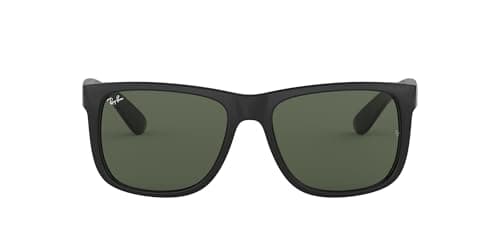
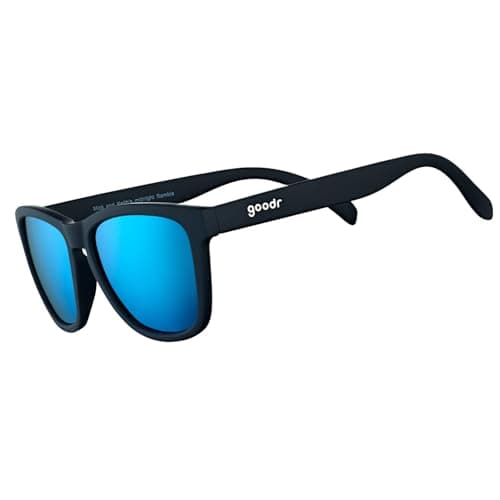
Buy goodr if the pair has a job — running, riding, the boat, the dog walk, the pair that lives in the car — because the goodr OG is polarized, grips a sweating face and costs little enough that losing it is an inconvenience rather than an event. Buy Ray-Ban if you want one everyday pair you will still be wearing in five years, and buy it polarized: the Ray-Ban New Wayfarer is the pick there. Almost nobody should choose between these two in the abstract — plenty of people should own one of each.
These two get compared constantly and the comparison is usually unfair in both directions. goodr gets dismissed as a novelty because the marketing is jokes and the price is low. Ray-Ban gets dismissed as a logo tax because a licensed fashion frame sells for many times what a polarized budget pair costs. Both dismissals miss what the money actually buys, so here is the honest version.
What each brand publishes about its lenses
Start with the part you can check rather than feel. goodr's own product claims are consistent across the line: every pair is polarized, every pair is UV400, and every pair carries the no-slip grip coating. That matters more than it sounds, because it means you cannot buy the wrong goodr by accident — there is no non-polarized version of the same frame waiting to catch you out.
Ray-Ban is the opposite: a range, not a standard. Per SportRx's Ray-Ban lens guide, the classic G-15 lens is published at 15% visible light transmission non-polarized and 11% polarized, it is sold in both crystal glass and polycarbonate, and most colors exist in polarized and non-polarized versions. Chromance, the high-contrast lens, is always polarized but only available in Chromance frames. All Ray-Ban lenses provide 100% UV protection. The practical consequence: a Ray-Ban is only polarized if the listing says so, and the identical-looking frame beside it may not be.
| | goodr | Ray-Ban |
|---|
| Polarized | Every pair, per the brand | An option on most lens colors; always on Chromance |
| UV | UV400 across the line | 100% UV on all lenses |
| Lens material | Polycarbonate | Crystal glass or polycarbonate, by lens |
| Published VLT | Not published per model | G-15 at 15% plain, 11% polarized |
| Grip | No-slip coating on arms and bridge | Acetate or metal, no grip treatment |
| Fit | One size per model, no adjustment | Several sizes; metal models have adjustable nose pads |
| If it breaks | Replace the pair | Authorized service and replacement lenses exist |
One correction before the picks, because it decides more purchases than brand does: polarization and UV protection are separate features. The American Optometric Association recommends 99–100% UVA and UVB blocking at any price, and the Cleveland Clinic describes polarization as a filter that removes reflected glare rather than as eye protection. A dark lens with no UV rating is worse than no sunglasses at all. Both brands here clear that bar; a great deal of what sits between them on a marketplace shelf does not.
Who each pick is for
- goodr OG— the reader who wants one pair for everything active. Polarized, UV400, grip-coated and light enough to forget. The default recommendation on this page.
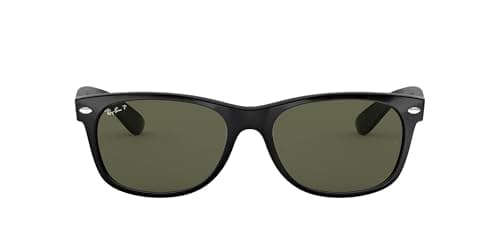
- Ray-Ban New Wayfarer (Polarized)— the reader who wants one everyday pair to keep. Acetate frame, the icon shape, and a genuine polarized lens if you buy the polarized listing. Our Ray-Ban brand review walks the rest of the range.
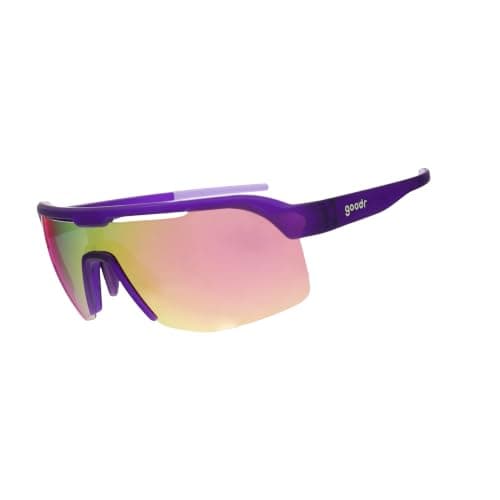
- goodr Bolt G— for anyone who found the OG let low side-on sun past the frame. Same lens and grip in a vented wrap, with the adjustable nose piece the OG does not have.
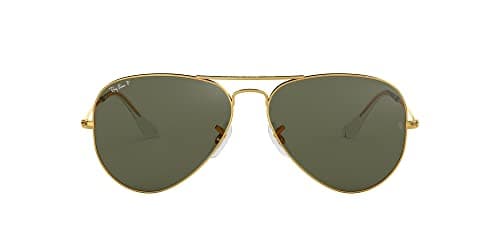
- Ray-Ban Aviator Classic (RB3025, Polarized)— for the reader who wants the metal original. Teardrop lens, adjustable nose pads, and the one shape a plastic copy never quite reproduces.
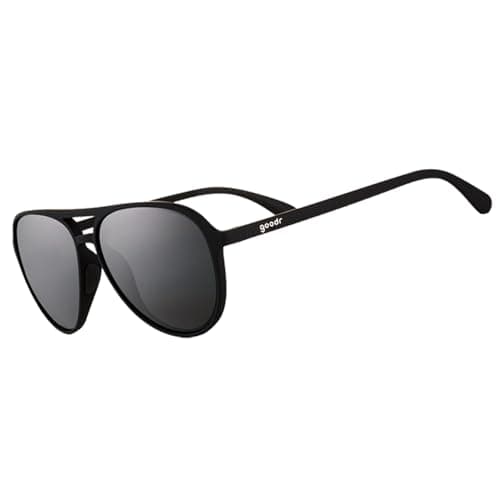
- goodr Polarized Aviator— the aviator shape for a face that sweats. Flattering on square and angular faces, and cheap enough to take running, which the metal version is not.
- Ray-Ban Justin (RB4165)— the larger, more casual Ray-Ban, in rubberized nylon rather than acetate. Note the lens here is G-15 rather than a polarized lens; check the listing if polarization is the point.
Where goodr genuinely wins
Anything involving sweat or movement.This is not close. The grip coating is goodr's actual engineering contribution, and an acetate Wayfarer slides down a wet nose in a way no amount of heritage fixes. If the pair is for running, cycling, hiking or a hot day on the water, Ray-Ban is the wrong tool and price is not the reason.
Anything losable.The boat, the festival, the beach bag, the pair in the glovebox. The best sunglasses for a situation where loss is likely are the ones whose loss you can absorb — an argument about replacement cost rather than optics, and the same one we make in best cheap polarized sunglasses.
Guaranteed polarization. Because goodr does not sell a non-polarized version, you cannot get this wrong. A reader buying their first polarized pair off a marketplace listing gets a better hit rate from goodr than from any brand that sells both.
Where Ray-Ban genuinely wins
Optics at the top of the range.A crystal glass G-15 lens resolves better than a budget polycarbonate lens, and published VLT figures let you choose a darkness level on purpose rather than by guess. If you want to compare lenses on stated mechanisms, Ray-Ban gives you something to read; goodr gives you "polarized, UV400" and stops there.
Fit range and adjustability. goodr is one size per model with no adjustment. The metal Ray-Ban shapes have adjustable nose pads and the range runs across several sizes, which is the whole ballgame if you have a narrow bridge, a wide face or a high nose. Measure first with how to choose sunglasses size.
Longevity as an object. An acetate frame with metal hinges, a service path and a shape that has not dated in sixty years is a different purchase from a seasonal colorway. If you want to buy once, this is the side of the page to buy from.
It reads as sunglasses, not as sports equipment. Worth saying plainly, because it is most of why people pay: a Wayfarer works with a jacket in a way a vented wrap never will.
The comparison nobody makes, and should
For roughly what one polarized Ray-Ban costs you could own a goodr OG, a goodr wrap for sport and a budget polarized metal frame for driving — three pairs, three jobs, no anxiety about any of them. That is a genuinely strong argument and we make it often.
The counter-argument is equally fair: three cheap pairs are three cheap pairs. None of them is the one you reach for when it matters, none will survive five years, and "own more things" is not everyone's idea of a solution. If what you want is one good pair, buy one good pair. The full ladder is in are expensive sunglasses worth it.
If the real question is the budget end
Then this is not your matchup. goodr's true rival is Knockaround, and we put them head to head in goodr vs Knockaround— grip coating against colorway range, with Knockaround's published warranty (45-day returns, then lifetime cover for manufacturing defects, one claim per paid pair, settled in store credit) as the tiebreaker. If the question is the premium end, Ray-Ban vs Maui Jimis the page, because that is where Ray-Ban's lens range stops being the best thing in the room.
Decide in four questions
Will you sweat in them?
Yes → goodr, and it is not close. No → keep reading.
How likely are you to lose them?
Boats, beaches, festivals, small children → goodr. A pair that lives in a case on your desk → Ray-Ban.
Do you need polarized?
Driving, water and snow → yes, and if you are buying Ray-Ban you have to check that the listing says polarized. Start with polarized vs non-polarized if you are not sure you want it at all.
Does the frame have to suit your face?
goodr is one size, take it or leave it. Ray-Ban runs sizes and has adjustable nose pads on the metal shapes. If frames have never fit you properly, that is the whole answer.