Skip to content
PolarizedClub

Ray-Ban · Brand review

Ray-Ban Sunglasses Review

Ray-Ban sells the two most recognizable shapes in eyewear. The lens is good rather than exceptional — and whether yours is polarized is not a given.

By Stephen V.Updated Published How we rate
#ad

We earn a commission when you buy through our Amazon links, at no extra cost to you. It never affects our rankings, and we say so when the cheaper pair is the better buy. How this works.

The short answer

Quick picks

#ProductBest forScorePrice
01
Ray-Ban Ray-Ban New Wayfarer (Polarized)
Ray-Ban New Wayfarer (Polarized)

The default answer for everyday and driving — an icon shape with a genuinely polarized option.

Everyday and driving
7.4
Check price →
02
Ray-Ban Ray-Ban Aviator Classic (RB3025, Polarized)
Ray-Ban Aviator Classic (RB3025, Polarized)

The most recognizable sunglass ever made, in the version that actually cuts glare.

The icon, with a real polarized lens
7.0
Check price →
03
Ray-Ban Ray-Ban Justin (RB4165)
Ray-Ban Justin (RB4165)

The oversized rubberized Wayfarer variant — a style buy, and this listing is not polarized.

A larger, more casual Ray-Ban shape
6.2
$160.00Amazon

#ad · Live prices from the Amazon Product API, as of Sep 5, 2026. Where we have no verified live price, we show none — we would rather leave a gap than print a number that has rotted.

In detail

The review

01
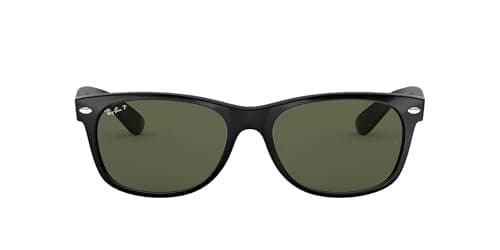
Ray-Ban Ray-Ban New Wayfarer (Polarized)

Everyday and driving

Ray-Ban New Wayfarer (Polarized)

Acetate framePolarized optionCrystal lensIcon shape
7.4/10

The default answer for everyday and driving — an icon shape with a genuinely polarized option.

Glare control
8
Optics
9
Fit & coverage
6
Durability
8
Value
6

Pros

  • The New Wayfarer's slightly smaller, softer profile suits more faces than the original Wayfarer
  • The polarized version cuts glare off wet roads and car hoods, which is exactly what you want driving
  • Crystal (glass) lens options are scratch-resistant in a way the budget acetates here are not

Cons

  • You pay a real brand premium — the same glare control exists for a quarter of the price if the icon status doesn't matter to you
  • Flat lens and modest coverage mean light leaks in from the sides in bright sport settings

Don't buy this if…

you want a wrap for running, cycling or the flats. This is a lifestyle frame — it will slide down your nose the first time you sweat, and it lets side light straight in.

Check price on Amazon →

We don't have a verified live price for this right now, so we aren't showing one.

#ad · we may earn a commission from this link to Ray-Ban New Wayfarer (Polarized)

02
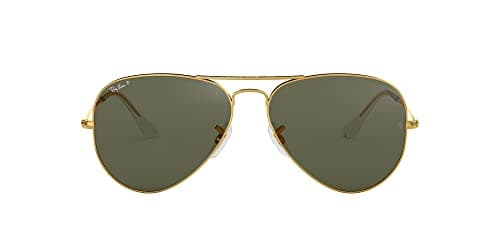
Ray-Ban Ray-Ban Aviator Classic (RB3025, Polarized)

The icon, with a real polarized lens

Ray-Ban Aviator Classic (RB3025, Polarized)

Metal framePolarized optionTeardrop lensAdjustable nose pads
7.0/10

The most recognizable sunglass ever made, in the version that actually cuts glare.

Glare control
8
Optics
9
Fit & coverage
6
Durability
7
Value
5

Pros

  • The teardrop shape has softened faces for seventy years, and it flatters square and angular faces particularly well
  • Adjustable nose pads are rare at this level and let you dial in fit in a way molded bridges cannot
  • The polarized version does the real glare job on wet roads and water, not just the look

Cons

  • You pay a substantial brand premium — the glare control alone is available for a tenth of the price
  • Thin metal arms and a large lens mean modest side coverage and no grip when you sweat

Don't buy this if…

you want a sport pair. Metal arms and a flat teardrop lens are the wrong tool for a run, a ride or a bright flat.

Check price on Amazon →

We don't have a verified live price for this right now, so we aren't showing one.

#ad · we may earn a commission from this link to Ray-Ban Aviator Classic (RB3025, Polarized)

03
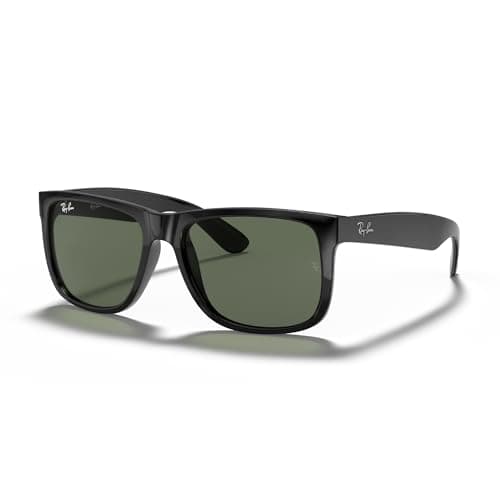
Ray-Ban Ray-Ban Justin (RB4165)

A larger, more casual Ray-Ban shape

Ray-Ban Justin (RB4165)

Rubberized nylon frameOversized squareGreen G-15 lensFull UV protection
6.2/10

The oversized rubberized Wayfarer variant — a style buy, and this listing is not polarized.

Glare control
4
Optics
8
Fit & coverage
7
Durability
7
Value
5

Pros

  • The larger, slightly squarer shape suits wider faces that the standard Wayfarer pinches
  • A rubberized nylon frame is lighter and less fragile than acetate
  • The classic green lens is a genuinely good neutral tint for everyday wear

Cons

  • This colorway is NOT polarized — it is a tinted lens, so it dims glare rather than canceling it
  • Oversized styling overwhelms a smaller face, and there is no size option within the model

Don't buy this if…

glare control is why you are buying. Take the polarized Wayfarer or Aviator instead — a tint alone will not remove the mirror off a wet road.

$160.00View on Amazon

Price as of Sep 5, 2026. Prices change — Amazon's is the one that counts.

#ad · we may earn a commission from this link to Ray-Ban Justin (RB4165)

What you are actually buying

Ray-Ban is the only brand on this site where the honest headline is about design rather than optics. The Wayfarer and the Aviator are not merely popular shapes; they are cultural objects with eighty years of continuous desirability behind them, and there is no substitute for that if it is what you want. The frames are properly made, the lenses are good, and the whole package is expensive in a way that the lens alone does not justify.

We say that as a compliment as much as a criticism. Buying an object because it is beautiful and has history is a perfectly rational use of money, and we would rather name it accurately than pretend you are buying optical performance you are not. What Ray-Ban should not be is a default purchase made on the assumption that a famous brand implies the best lens — that is where people end up disappointed.

What Ray-Ban genuinely gets right

The shapes flatter an enormous range of faces.This is underrated as an engineering achievement. The New Wayfarer's slightly smaller, softer profile suits more faces than the original; the Aviator's teardrop is one of the most reliably flattering shapes there is, particularly on square and angular faces, as we cover in the square face guide.

The metal frames adjust.Aviators and the other metal models have adjustable nose pads, which is genuinely rare at this level and lets you dial in fit in a way a molded acetate bridge simply cannot. It is the clearest illustration of a split that runs through the whole line — acetate vs metal frames differ in weight, adjustability and how they age, and the Wayfarer and the Aviator sit on opposite sides of it. If sunglasses have always slid down your nose, that adjustability is worth real money — the wider fix list is in how to stop sunglasses slipping.

The crystal glass lenses are excellent.Ray-Ban's glass options are optically clean and far more scratch-resistant than the budget acetates elsewhere on this site. They are heavier, which matters over a long day, but the clarity is real.

The G-15 tint is a genuinely good neutral. The classic green lens is well-balanced, keeps colors close to accurate, and is a sensible everyday and driving tint.

  • Build quality that supports a decade of ownership if you look after the pair.
  • Enormous range of shapes, sizes and colorways, with real fit variation between models.
  • Full UV protection across the line, which is the specification that actually matters.

The polarization trap

This is the single most useful practical warning we can give about the brand, so it gets its own section. Not every Ray-Ban is polarized.Polarization is an option that varies by model and by colorway, and many of the most popular listings are a plain tint. The Justin above, in the classic green, is one of them — a good lens, but a tint rather than a filter.

The practical difference is large. A polarized lens cancels the reflected, horizontally aligned light coming off wet roads, car hoods and water; a tint only makes all of it dimmer. If glare control is part of why you are spending this much, read the specific listing rather than assuming the brand implies it. And confirm on arrival: look at a phone screen through one lens and rotate the glasses 90 degrees. A polarized lens darkens the screen sharply. The full set of checks is in how to tell if sunglasses are polarized.

Where the lens falls short of the price

Ray-Ban has no documented contrast technology in the sense that Costa's 580, Oakley's Prizm and Maui Jim's PolarizedPlus2 do. Those lenses filter specific wavelengths to lift a fish out of water or separate a green from a fairway, and they publish the mechanism. Ray-Ban's lenses reduce brightness competently and, in the polarized versions, cancel glare. That is the job done, not the job elevated.

At Ray-Ban prices you are within reach of Maui Jim, which is a genuinely better everyday lens. We compare them directly in Ray-Ban vs Maui Jim, and the short version is: buy the Ray-Ban for the shape, buy the Maui Jim for the lens.

Who should skip Ray-Ban

Anyone buying for sport.These are lifestyle frames. Smooth arms slide the moment your face heats up, the flat lenses let side light straight in, and there is no grip material anywhere. A sport wrap costing a tenth as much genuinely outperforms them for running, riding and fishing — see the running roundup.

Anyone who loses sunglasses. The cost of ownership for this category is losing them, and at this price that is a painful event. Our cheap polarized guide makes the two-pairs case.

Anyone buying purely on lens performance. The money is better spent elsewhere, and we would say so even though the expensive pairs pay us more.

Are Ray-Ban sunglasses worth it?

If you want the shape and will keep the pair, yes — with two conditions. Buy the polarized version so the lens is doing real work, and use the fit options (adjustable nose pads on metal frames, the size variants across the range) so it is comfortable enough to actually wear. As an everyday and driving pair for someone who values the object, it is a defensible purchase. As a performance lens, or as a pair that goes in a gym bag, it is the wrong tool at the wrong price.
How we picked

We don't run a testing lab

We compile each pair's published specifications — lens material, polarization, coating, frame material, coverage, UV rating and price — normalize them, and score each against a published rubric. The scores are judgments from documented research; they are notmeasurements we took, because we don't own a lab and we're not going to pretend we do. Pairs we claim to have lab-tested: 0.

Questions

Frequently asked

Are all Ray-Ban sunglasses polarized?
No. Polarization varies by model and colorway, and many popular listings are a plain tint rather than a polarizing filter. Read the specific listing before buying, and confirm on arrival with the LCD-screen test — a polarized lens darkens a phone screen sharply when you rotate the glasses 90 degrees. Method in this guide.
Are Ray-Bans worth the money?
For the shape, the build and an everyday pair you intend to keep, yes — provided you buy the polarized version. For lens performance specifically, no: at this price Maui Jim, Costa and Oakley all offer documented contrast technologies that Ray-Ban does not. We compare directly in Ray-Ban vs Maui Jim.
Which Ray-Ban is best for driving?
A polarized version of either the New Wayfarer or the Aviator. Polarization is the feature that cancels glare off wet roads and hoods, and the Aviator's adjustable nose pads help on a long drive. Our driving roundup also makes the case for keeping a cheaper pair in the car, since dashboards destroy lenses.
Can you wear Ray-Bans for running or sport?
Not well. They are lifestyle frames with smooth arms, flat lenses and no grip material, so they slide as soon as your face heats up and they let side light in. A budget sport wrap with grip pads outperforms them for any sweaty activity, which is a rare case of a $25 product genuinely beating a premium one at a specific job.
Wayfarer or Aviator — which should I buy?
Aviator if your face is square or angular, since the teardrop softens strong lines and the metal frame has adjustable nose pads. Wayfarer if your face is rounder or softer, since the angular shape provides contrast. Both are broadly flattering — the geometry is in our round face and square face guides.

Keep reading

Receipts

Sources

We do not run a testing lab, and we do not pretend to. Where a spec or measurement came from a manufacturer or a third party, we name and link it. Where we could not verify something, we say so on the page rather than quietly leaving it out. Read our full method.