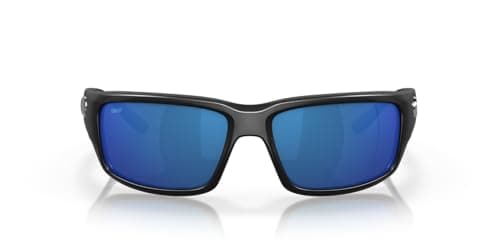
Buy the Costa Fantail 580P if you spend real time outdoors near water — it is the pick of this page, and the polarized lens is doing a job a Ray-Ban will not do. Buy a Ray-Ban (New Wayfarer, or the Aviator in its polarized version) if the pair is mostly a style decision for town, driving and travel, and you want a shape that still looks right in a decade. If the whole point is glare control on a budget, skip both: the $27 ATTCL at the bottom of this page does 90% of the optical work for a tenth of the money.
The reason "Costa or Ray-Ban" is confusing is that the two brands cost about the same and are sold in the same shops, but they are solving different problems. Costa is a fishing brand that happens to be fashionable. Ray-Ban is a fashion brand that happens to make a good lens. Both are legitimate purchases; they are just not substitutes.
What separates them, concretely
Costa polarizes everything.Every lens Costa sells is polarized — it is not an upgrade you pick, it is the premise of the product. The 580 lens line splits into 580P (polycarbonate, lighter and impact-resistant) and 580G (glass, the clearest and heaviest), and the tints are tuned to filter specific wavelengths to lift contrast in and on water. Costa documents this on its own lens technology page, and SportRx's breakdown of the same range confirms the every-lens-polarized point and the P-versus-G material split. Frames add Hydrolite grip and vents, because the design assumption is sweat and spray.
Ray-Ban polarizes on request.Ray-Ban's range is built around shapes — Wayfarer, Aviator, Clubmaster — with a wide lens menu underneath: the classic green G-15, crystal (glass) options, gradient tints, and polarized versions of selected models. That means two things for a buyer. One, you have to choose the polarized SKU deliberately or you will get a tinted-but-unpolarized lens. Two, the frames are acetate and metal lifestyle designs with smooth temples and no grip material, so they slide as soon as your face warms up.
| Factor | Costa Del Mar | Ray-Ban |
|---|
| Polarized by default? | Yes — every lens in the range | No — a specific SKU choice on selected models |
| Lens line | 580P polycarbonate and 580G glass, contrast-tuned tints | G-15, crystal glass, gradients, polarized options |
| Design brief | Fishing performance first; the look follows | Icon shapes first; the lens serves the look |
| Grip when you sweat | Hydrolite nose and temple pads that tack up when damp | Smooth acetate or metal — slides |
| Coverage | Vented wrap shapes; side light largely blocked | Flat-ish lifestyle lenses; side light gets in |
| On the water | What it was designed for | Fine, in the polarized version, but no grip and less coverage |
| In town, in photographs | Reads as sporting kit | What it was designed for |
The short answer
Quick picks
#ad · Live prices from the Amazon Product API, as of October 19, 2026. Where we have no verified live price, we show none — we would rather leave a gap than print a number that has rotted.
In detail
The picks, in full
Sight-fishing and time on the water
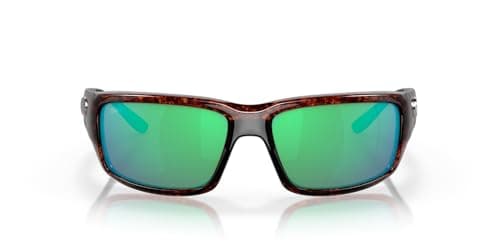
Costa Fantail 580P
580P polarizedPolycarbonateHydrolite gripVented
The fishing default. The 580 lens is built to pull fish out of glare, and it does.
- Glare control
- 10
- Optics
- 9
- Fit & coverage
- 9
- Durability
- 8
- Value
- 6
Pros
- +Costa's 580 lens filters yellow light to lift contrast — copper/green tints make fish and structure pop against surface glare
- +Hydrolite nose and temple pads grip harder the wetter they get, which is the whole game on a boat
- +580P (polycarbonate) is the lighter, more impact-resistant option versus the pricier 580G glass
Cons
- −Polycarbonate scratches more easily than Costa's 580G glass — the glass is clearer but heavier and dearer
- −A real premium over budget fishing wraps that also filter glare competently
Don't buy this if…
…you fish twice a year off a dock. The 580 lens earns its keep for people who sight-fish; occasional users get most of the benefit from a $30 polarized wrap.
Everyday and driving
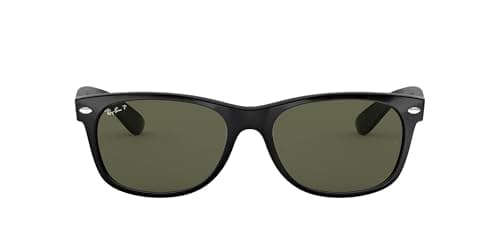
Ray-Ban New Wayfarer (Polarized)
Acetate framePolarized optionCrystal lensIcon shape
The default answer for everyday and driving — an icon shape with a genuinely polarized option.
- Glare control
- 8
- Optics
- 9
- Fit & coverage
- 6
- Durability
- 8
- Value
- 6
Pros
- +The New Wayfarer's slightly smaller, softer profile suits more faces than the original Wayfarer
- +The polarized version cuts glare off wet roads and car hoods, which is exactly what you want driving
- +Crystal (glass) lens options are scratch-resistant in a way the budget acetates here are not
Cons
- −You pay a real brand premium — the same glare control exists for a quarter of the price if the icon status doesn't matter to you
- −Flat lens and modest coverage mean light leaks in from the sides in bright sport settings
Don't buy this if…
…you want a wrap for running, cycling or the flats. This is a lifestyle frame — it will slide down your nose the first time you sweat, and it lets side light straight in.
The icon, with a real polarized lens
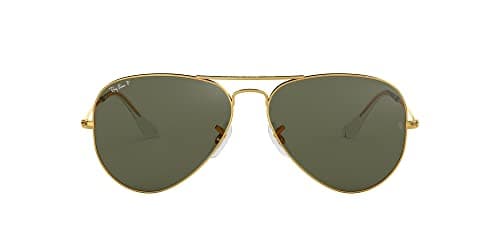
Ray-Ban Aviator Classic (RB3025, Polarized)
Metal framePolarized optionTeardrop lensAdjustable nose pads
The most recognizable sunglass ever made, in the version that actually cuts glare.
- Glare control
- 8
- Optics
- 9
- Fit & coverage
- 6
- Durability
- 7
- Value
- 5
Pros
- +The teardrop shape has softened faces for seventy years, and it flatters square and angular faces particularly well
- +Adjustable nose pads are rare at this level and let you dial in fit in a way molded bridges cannot
- +The polarized version does the real glare job on wet roads and water, not just the look
Cons
- −You pay a substantial brand premium — the glare control alone is available for a tenth of the price
- −Thin metal arms and a large lens mean modest side coverage and no grip when you sweat
Don't buy this if…
…you want a sport pair. Metal arms and a flat teardrop lens are the wrong tool for a run, a ride or a bright flat.
Glass optics in a fishing frame
Costa Fantail 580G (Glass)
580G glass lensPolarizedHydrolite gripVented frame
The same Fantail frame with the glass lens — the clearest, most scratch-resistant thing Costa sells.
- Glare control
- 10
- Optics
- 10
- Fit & coverage
- 9
- Durability
- 7
- Value
- 5
Pros
- +Glass resolves detail more cleanly than polycarbonate and is far harder to scratch — the two reasons anyone pays for glass
- +Costa's 580 filter cuts yellow light to lift contrast, which is what separates a fish from surface glare
- +Identical frame to the 580P Fantail, so the fit and the Hydrolite grip are known quantities
Cons
- −Noticeably heavier on the nose than the 580P version over a full day
- −Glass shatters where polycarbonate flexes — the wrong lens for anywhere a hook or a fall is likely
Don't buy this if…
…you fish from a moving boat in chop or keep your sunglasses loose in a bag. Glass buys you clarity and scratch resistance, and it charges you weight and fragility for both.
Best budget driving pair
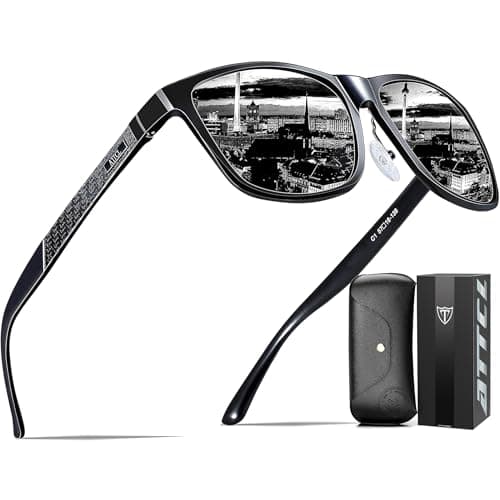
ATTCL Polarized Al-Mg (Driving)
Al-Mg alloy framePolarizedUV400Ultralight
A metal-framed polarized driver at a price that embarrasses the fashion houses.
- Glare control
- 8
- Optics
- 7
- Fit & coverage
- 6
- Durability
- 7
- Value
- 9
Pros
- +Polarized glare control is the single most useful sunglasses feature behind the wheel, and this delivers it cheaply
- +The aluminum-magnesium frame feels far more solid than the plastic competition at this price
- +Genuinely light, which matters on a long drive
Cons
- −Metal frames do not flex — sit on these and they stay bent
- −Optics are competent rather than crisp; the edges soften compared with a premium lens
Don't buy this if…
…you want one pair for driving and sport. Metal arms and a flat lens are the wrong tools for a sweaty run or a bright flat.
Who each pick is for
- Costa Fantail 580P— for the angler, boater or beach regular who wants one pair that works hard and still looks good off the water.
- Ray-Ban New Wayfarer (polarized)— for everyday and driving, where the shape matters as much as the lens.
- Ray-Ban Aviator Classic (polarized)— for a taller lens that fills more of your field of view; the better Ray-Ban for low sun.
- Costa Fantail 580G— for the buyer who wants the clearest glass Costa makes and accepts the weight.
- ATTCL polarized Al-Mg— for the reader whose honest answer is "I just want the glare gone".
The grip question decides more purchases than the lens
If you are outdoors and moving, the difference you will actually notice first is not optical. It is that the Costa stays where you put it and the Ray-Ban walks down your nose. Costa builds Hydrolite into the nose pads and temple tips specifically so the frame grips harder as it gets damp; Ray-Ban's acetate does the opposite. On a boat, on a dock, on a hot walk, that is the whole experience of wearing the pair. Our how to stop sunglasses slipping page covers the aftermarket fixes if you already own the wrong pair.
Where Ray-Ban genuinely wins
Three places, and they are not small. Shape range:Ray-Ban has more frame geometries that suit more faces, which matters more to how a pair looks than any lens spec — see round face and square face if that is your constraint. Durability of the design: a Wayfarer bought today will not look dated, which is a real form of value on a $230 object. Availability of non-polarized:that sounds like a weakness and is sometimes an advantage — if you read LCD screens all day, or fly, a non-polarized lens is the correct choice, and Costa does not offer one.
Where Costa genuinely wins
Everything that happens in bright light near a reflective surface. The polarized lens strips the sheet of white glare off water and wet ground, which is the one thing sunglasses do that feels like a superpower the first time; the Cleveland Clinic describes the mechanism plainly. Add the vented wrap, the grip and the fact that Costa expects the frame to get wet, and for any outdoor-water use it is simply the better-engineered object. If that is your use case, read fishing sunglasses and do polarized sunglasses help you see fish.
Neither one buys you better UV protection
Worth repeating because the price tags imply otherwise. The American Academy of Ophthalmology recommends sunglasses labeled "100 percent UV protection" or "UV400" and notes that less expensive pairs carrying that label can be just as effective as pricier ones, and the American Optometric Association treats UV blocking as the health function of a sunglass independent of price. Buy either of these brands for the lens behavior, the fit or the look. Do not buy either believing it protects your eyes better than a well-labeled $20 pair.
How to decide in 30 seconds
Will the pair be near water or wet ground?
Yes → Costa. The grip, the vents and the always-polarized lens all exist for that.
Is this mostly a town, travel and driving pair?
Then Ray-Ban, in the polarized version of whichever shape fits your face.
Do you read screens or fly for a living?
Buy the non-polarized Ray-Ban. Costa does not make one, and a polarized lens dims LCD panels.
Glass or polycarbonate?
Glass (580G, or Ray-Ban crystal) for clarity if the pair is treated well. Polycarbonate (580P) if it gets dropped or used in sport.
Is $230 actually the right budget?
Only if you want the brand, the build or the shape. For glare alone, a $27 polarized pair is a defensible purchase and we rank one on this page.
How we picked
We don't run a testing lab
We compile each pair's published specifications — lens material, polarization, coating, frame material, coverage, UV rating and price — normalize them, and score each against a published rubric. The scores are judgments from documented research; they are notmeasurements we took, because we don't own a lab and we're not going to pretend we do. Pairs we claim to have lab-tested: 0.
Questions
Frequently asked
Are Costa sunglasses better than Ray-Ban?+
For outdoor and on-water use, yes — every Costa lens is polarized, the frames grip when wet and the shapes block side light. For everyday wear, travel and how the pair looks, Ray-Ban is the stronger brand and has far more shapes that suit more faces. They are better at different jobs rather than one being better overall.
Are all Ray-Ban sunglasses polarized?+
No. Polarization is an option on selected Ray-Ban models and you have to choose that SKU deliberately; many Ray-Bans are tinted but not polarized. Costa is the opposite — see
are all Costa sunglasses polarized. If polarization is the reason you are buying, read the lens line on the listing.
Which is better for driving, Costa or Ray-Ban?+
Either works; the polarized version matters more than the brand. Ray-Ban's Aviator has the taller lens, which handles low sun coming over the top rim better. If your dashboard is one big LCD screen, a non-polarized Ray-Ban is the only one of the two that can solve that. See
best sunglasses for driving.
Does Costa make a non-polarized lens?+
Not as a mainstream option — polarization is the premise of the 580 range rather than an upgrade. If you specifically need a non-polarized lens for screens, flying or spotting ice, Costa is the wrong brand to shop and Ray-Ban's standard tints are the straightforward answer.
Is 580G glass worth it over 580P?+
If the pair will be looked after, yes: glass resists scratch haze and distorts less at the edges. If the pair gets dropped on a deck or used in sport, no — 580P is lighter and impact-resistant, which is the whole reason Costa offers both. See
best glass lens sunglasses.
Receipts
Sources
We do not run a testing lab, and we do not pretend to. Where a spec or measurement came from a manufacturer or a third party, we name and link it. Where we could not verify something, we say so on the page rather than quietly leaving it out. Read our full method.