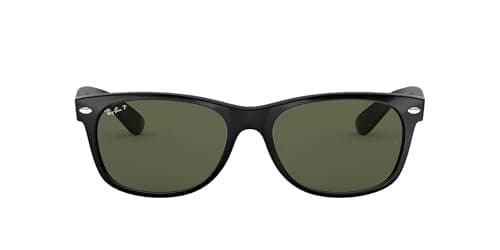
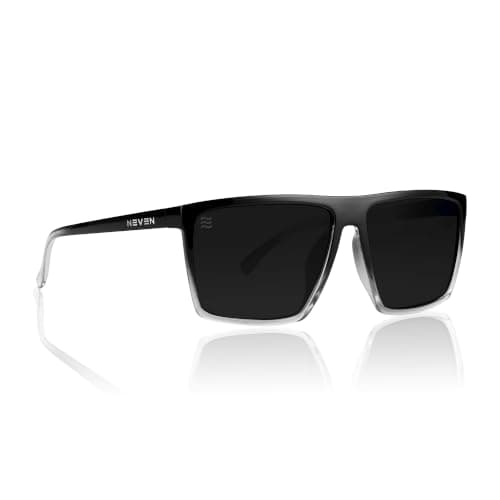
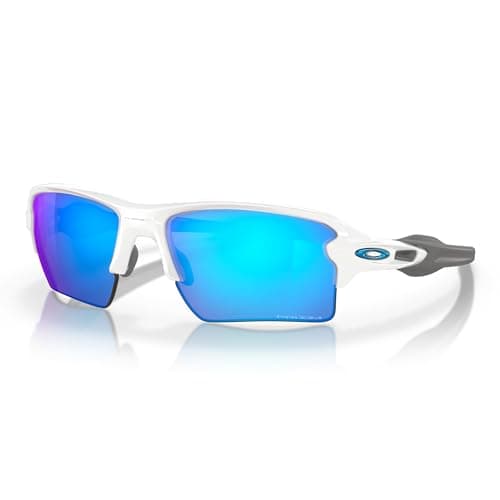
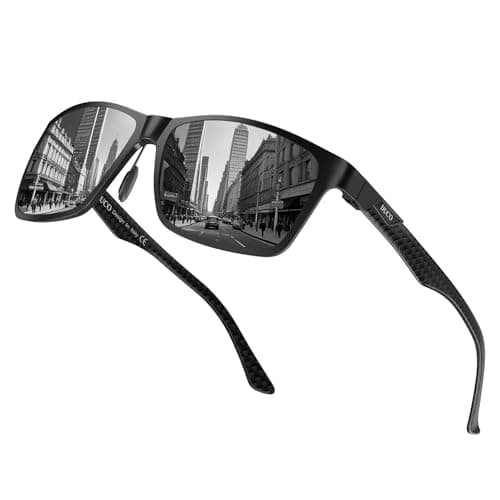
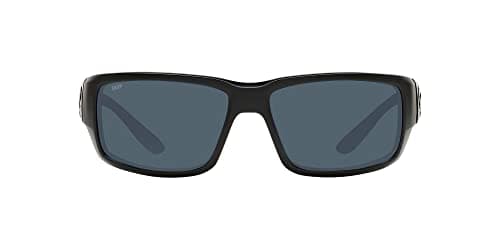
Buy for where you will wear them. The Costa Fantail is the answer if any of your time is spent near water; the Ray-Ban New Wayfarer is the everyday and driving default; the NEVEN Rectangular is the mid-price pair that does not look like sport equipment; the Oakley Flak 2.0 XL is the sport shield; the DUCO Al-Mg is the car pair that costs almost nothing. All five are genuinely polarized, and the polarization in the cheapest is identical to the polarization in the dearest.
"Best polarized sunglasses for men" is a shape-and-fit question wearing a brand-shopping costume. Polarization is binary, so the interesting decisions are what the frame is for, how wide your face is, and how much you are willing to spend on coatings and optics. This page sorts the field on that basis.
1. What polarization does, precisely
Light reflecting off a flat surface — water, a wet road, a car bonnet, a snowfield — becomes horizontally aligned. A polarizing filter blocks light on that axis, which removes the reflected glare while leaving the rest of the scene intact. The Cleveland Clinic explains the mechanism plainly.
The consequence is that polarization matters most where flat reflective surfaces dominate: on the water, on the road, on snow. It matters least in a forest or a city street. And it is the one lens property that does not scale with price — a $20 polarized lens and a $250 one remove the same glare. The full comparison is in polarized vs non-polarized.
2. Where polarization is actively wrong
A guide that only lists benefits is selling. Polarized lenses have three real drawbacks and men buying one pair for everything run into all of them.
LCD screens dim. Car dashboards, phones in windscreen cradles, bike computers, petrol pumps and ATMs can darken or show rainbow patterning through a polarized lens. The full explanation is in do polarized sunglasses block screens.
Cycling loses useful information.The sheen that tells you a corner is wet is reflected light, and polarization removes it. That is why most cycling lenses are deliberately not polarized — see are polarized lenses good for cycling.
Ice and icy patches can vanish.On snow, polarization removes the glint that distinguishes ice from packed snow. Skiers frequently choose non-polarized for that reason — the argument is in best sunglasses for snow and skiing.
3. Shapes, and what they are actually for
The wrap or sport shield. Curved to seal out side light, with grip material. Correct for anything with a heart rate, on water, or in wind. Wrong as an everyday frame for most people, because it reads as equipment.
The classic square or rectangle. Wayfarer-family shapes. The default everyday and driving frame, and the one that suits the widest range of faces. Flat lenses let some side light in, which is the trade.
The aviator.Metal, adjustable nose pads, tapering lens. Flatters angular and heart-shaped faces — see this fit guide. Slides in sweat, so not a sport frame.
The fishing frame.A wrap with a contrast-tuned lens and hydrophilic grip. Specialized and genuinely better on the water than anything general-purpose — the field is in the fishing roundup.
4. Fit decides more than brand does
A frame that is too narrow pinches and gives you a headache; one that is too wide slides down your nose all day. Total frame width against your own face width is the measurement that predicts this, and it is the single most useful thing you can know before shopping. It is explained in how to choose sunglasses size, and if you already know you are at one end of the range, start from best sunglasses for big heads.
5. How much to spend
Under $35 buys real polarization and UV400 and little else — a good spare or car pair, and a fine main pair if you are hard on sunglasses. Under $100 is the value sweet spot, where coatings, optics, grip and frame durability all step up; that band is ranked in best sunglasses under $100. Above that you are buying contrast-tuned or glass lenses, which earn their money for sight-fishing and long driving and rather less for everything else.
How we ranked these
Suitability for a clearly stated use first, then lens quality, then fit range, then price. Every pick is UV400 — the American Optometric Association recommends blocking 100% of UVA and UVB, and that protection is identical at every price. Scores come from the rubric on how we rate: judgments compiled from published specifications, not lab measurements. We do not run a lab.
Buying polarized, for men
1. Choose by where you will wear them
Water, road and snow are where polarization pays. A forest trail or a city street barely notices it.
2. Get the width right before the shape
Too narrow pinches, too wide slides. It is one measurement and it beats every style rule.
3. Expect screens to dim
Dashboards, phones and bike computers all darken through a polarized lens. It is the filter working.
4. Do not buy polarized for cycling
You want the reflection that tells you a corner is wet. Most cycling lenses leave polarization out on purpose.
5. Spend in the $100 band if you own one pair
Coatings, optics and grip all improve there. Above it, you are paying for lens technology you may not use.