Ray-Bans are worth it if what you want is the shape, the crystal glass lens option and a frame that will still be made and serviceable in five years — and if you buy the polarized version, because the standard one is a tint. They are not worth it if you are buying them for optical performance per dollar, for sport, or for water: at Ray-Ban money you can buy a Maui Jim, which spends the same budget almost entirely on the lens. And if you lose or sit on sunglasses more than once every few years, no icon is worth it — buy the goodr and keep the difference.
Are Ray-Bans good? The short answer
Yes, they are genuinely good sunglasses, and the reasons are more concrete than the brand. The lens chart is the interesting part. Per SportRx's Ray-Ban lens guide, the classic G-15 and B-15 tints and the solid Blue are offered in crystal— actual mineral glass — as well as polycarbonate, with published polarized light transmission of 11% for G-15, 12% for B-15 and 16% for solid Blue, and 9% for Silver Mirror. Mineral glass resists scratching in a way no polycarbonate lens does and sits high on the Abbe scale — glass around 58 against polycarbonate at 30 — which is a measure of how little the lens disperses light into color fringing. Buying the crystal version of a Wayfarer or an Aviator is the single best-value decision available inside the Ray-Ban range.
The frames are the other real part. Ray-Ban's shapes have been in continuous production for decades, which means temples, nose pads and lenses stay available, and Luxottica warrants the product free from manufacturing defects for 24 months — measured from delivery on orders placed from 1 July 2023 — with lens scratches treated as normal wear and excluded, as is damage from accident, misuse or neglect. Two years is mid-table: Tifosi, Smith and Knockaround all publish defect cover for the life of the product. It is honest cover rather than generous cover.
Where the money goes wrong
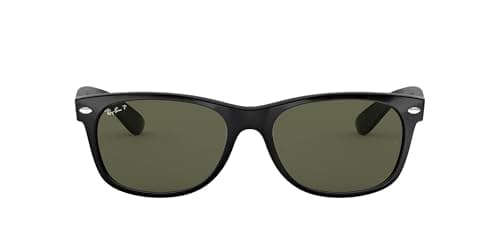
Here is the single most expensive misunderstanding in this category, and it costs Ray-Ban buyers more than anyone else: a Ray-Ban is not polarized unless the listing says so. Polarization is a per-lens option across most of the range, it carries a surcharge, and the tell is physical — SportRx states it plainly: “All Ray-Ban Polarized lenses feature a distinctive ‘P’ after the Ray-Ban logo on the right lens.” If there is no P, you have bought a dark lens. We gave that its own page because the question is asked so often: are Ray-Bans polarized.
Compare that with how the premium polarized brands behave. Maui Jim publishes that every pair in its sunglass line is polarized, so you cannot buy the wrong one. Costa does the same. Ray-Ban puts that decision — and the surcharge — back on you, which is a real downgrade in the buying experience at a price where you should not have to think about it.
Are Ray-Bans worth the money? The arithmetic
The useful version of this question is not “are they good” but “is this the best thing I can buy for this money”, and the answer depends entirely on what you are optimizing for.
If you are optimizing for optics, no. At Ray-Ban prices you are shopping in the same bracket as Maui Jim, and Maui Jim's published lens claims are in a different register: PolarizedPlus2 cutting 99.9% of glare, 100% UV and HEV protection, contrast from a patented blend of three rare earth elements, and SuperThin Glass published at Abbe 58 while being 20% thinner and 32% lighter than standard laminated glass. Ray-Ban publishes a lens chart; Maui Jim publishes a lens argument. If the pair is going to live on your face and you care what you see through it, the premium polarized brands win this comparison on paper and in the hand.
If you are optimizing for mineral glass per dollar, also no.Serengeti builds its whole identity on glass — Corning borosilicate described as 20% thinner and lighter than standard glass, with Spectral Control, photochromic behavior and 99.9% glare elimination — and the Susan sits well below Ray-Ban money. That is the cheapest live route into a mineral polarized lens we can find, and it is the pick we would push a value-focused reader toward.
If you are optimizing for the shape, yes, and unapologetically. There is no substitute for a Wayfarer or an Aviator, because the thing you want is the Wayfarer or the Aviator. Design is a legitimate thing to buy. What we would insist on is that you buy the version with the lens in it: the crystal glass polarized Aviator or New Wayfarer is a genuinely good pair of sunglasses, and the cheapest non-polarized plastic model in the range is a fashion accessory with a dark lens. The two are not the same purchase, and the gap between them is smaller than the gap between the cheap Ray-Ban and a thirty-dollar polarized pair.
If you lose them, no — and this is the question most people skip. One premium pair every eight years is a good buy. One premium pair every eighteen months is an expensive habit with a brand name on it. The are expensive sunglasses worth it page does that arithmetic in detail, and the honest conclusion for a lot of readers is the bottom pick on this page.
Who each pick is for, and what is wrong with it
- Ray-Ban New Wayfarer (Polarized)— the Ray-Ban we would actually buy. The New Wayfarer's slightly smaller, softer profile suits more faces than the original, the polarized lens does the job on wet roads and car hoods, and the crystal option exists if you want the scratch resistance. Honest cons: you are paying a real brand premium for glare control that a cheap polarized lens also delivers, the flat lens and modest coverage let side light in, and it is the wrong frame for anything sweaty.
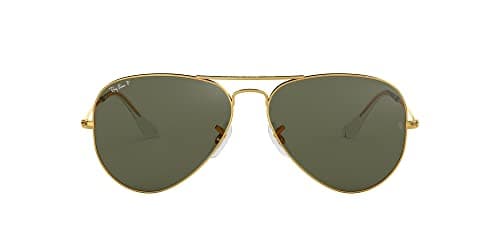
- Ray-Ban Aviator Classic (RB3025, Polarized)— the other icon, and the better choice of the two if you want the glass lens, since the Aviator is where the G-15 crystal tradition lives. Honest cons: the teardrop shape is unforgiving on round faces, thin metal temples bend, and the pad-and-nose-bridge arrangement slides on a warm day. Check the P on the right lens before you pay the polarized price.
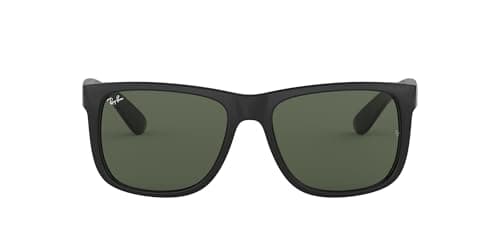
- Ray-Ban Justin (RB4165)— carried here deliberately as the counter-example rather than a recommendation. It is the large, matte, cheaper-entry Ray-Ban most people meet first, and the common listings are not polarized. If you want to understand the trap in one product, this is it: the logo is identical and the lens is not. Honest cons: no polarization on the standard version, a plastic build that does not read premium, and a big flat lens that is noticeably more reflective in a car than the glass options above.
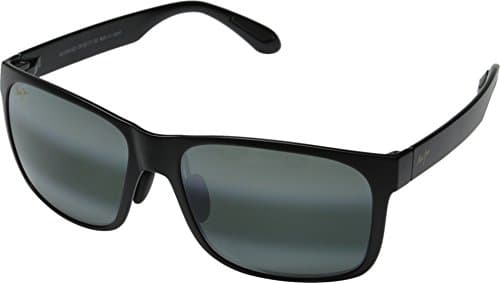
- Maui Jim Red Sands (PolarizedPlus2)— what the same money buys if you move the budget from the shape to the lens. Every lens in the line is polarized, the contrast tuning is the best documented in the category, and the frame is an everyday shape rather than a fishing tool. Honest cons:it costs at least as much as the Ray-Bans above, the warranty runs two years and excludes scratching, and nobody will recognize it across a room — which, for a share of Ray-Ban buyers, is the entire point of the purchase.
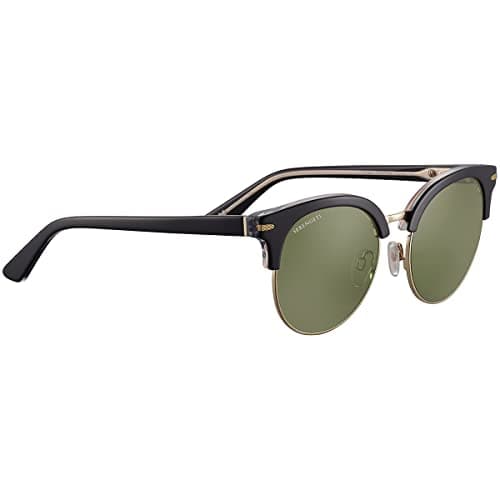
- Serengeti Susan (Mineral Polarized 555nm)— the value answer, and the pick for a reader who wanted the crystal Ray-Ban and balked at the price. Mineral glass, polarized, with a contrast tint, from the other brand whose argument is glass. Honest cons: glass is heavy over a long day and it breaks where polycarbonate deforms, the frame range is narrow, and the photochromic behavior means the lens is not always as dark as you expect behind a windshield.
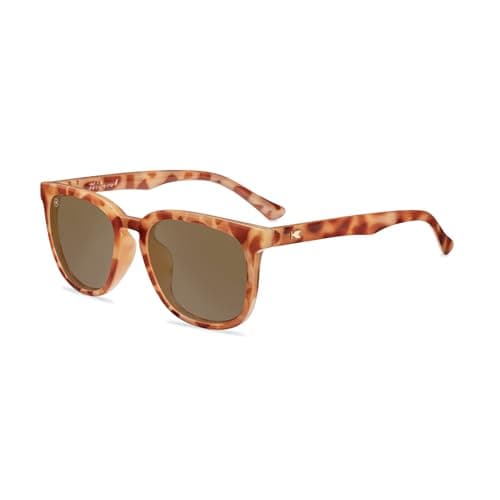
- Knockaround Rounded Square Polarized— the icon-shape-adjacent pair at a tenth of the money, polarized and UV400, with lifetime cover for manufacturing defects after the 45-day return window. Honest cons: the optics are ordinary, the acetate-look frame is plastic, the fit range is coarse, and the warranty will not help with a lost or dropped pair.
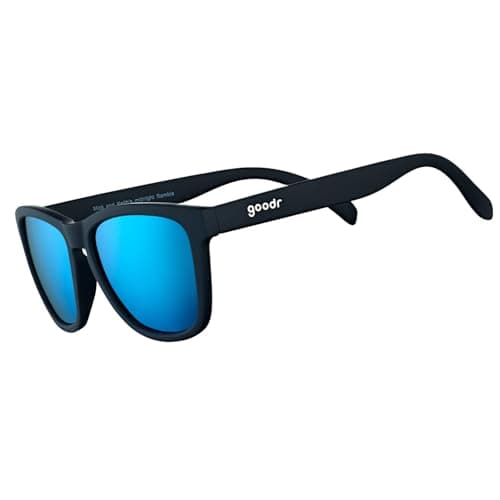
- goodr OG (Polarized)— the honest answer for anyone who has lost two pairs in two years. Polarized, UV400, grippy, and cheap enough that the loss is an inconvenience. Honest cons: it will not match the materials, the clarity or the fit range of anything above it, and it looks like what it is.
How to buy a Ray-Ban without overpaying
Four checks, in order of how much money they save. First, look for the P.If you want polarization, the right lens carries a P after the logo — no P, no filter, and the price difference is not small. Second, decide on glass before you shop. The crystal G-15 and B-15 options are the most durable lens Ray-Ban sells and the reason to buy the brand at all; the polycarbonate versions of the same frame cost less and scratch sooner. Third, buy from a seller with a real returns path, because a 24-month defect warranty is only worth what the proof of purchase is worth, and the counterfeit market for this particular brand is the largest in the category. Fourth, ignore the model year. Ray-Ban's core frames barely change; an older RB number in a current lens spec is the same pair for less.
One more thing worth knowing: polarization is close to a binary feature, not a quality scale. The Cleveland Clinic describes it as a filter that blocks the horizontally reflected light coming off water, roads and glass, and that filter behaves the same way in a cheap lens as in an expensive one. And UV protection is not a premium feature either — the American Optometric Association recommends 99-100% UVA and UVB blocking at any price, and every pick on this page claims it. Anyone selling you a Ray-Ban on eye-health grounds is selling you something available for a tenth of the money.
When Ray-Ban is the wrong brand entirely
Three cases, and they cover a lot of the people who ask this question. For fishing or any real time on water, a Ray-Ban is the wrong tool — you want a contrast tint and a wrap, which is what the fishing roundup ranks, and the Bajío lens color guide explains what a water-specific lens actually does differently. For running, cycling or anything sweaty, a flat lifestyle lens with no grip is the wrong frame at any price; start at the running hub. And for sport performance eyewear generally, the comparison you want is not Ray-Ban at all — see the Oakley alternatives page for that side of the market.
If what you want is specifically the icon for less, the two matchups on this site that answer it directly are Knockaround vs Ray-Ban and goodr vs Ray-Ban. If what you want is the premium lens instead, read Ray-Ban vs Maui Jim.
Deciding in four questions
Do you want this shape specifically?
Yes → buy the Ray-Ban, in the crystal polarized version, and stop reading comparisons. No → you are shopping on optics and value, and Ray-Ban is not the best answer in its own price bracket.
Does it need to be polarized?
Driving, water, snow and wet roads → yes, and check for the P on the right lens. Everyday wear in a city → genuinely optional, and the non-polarized crystal lens is a fine buy. More in polarized vs non-polarized.
Glass or polycarbonate?
Glass if the pair lives in a case and you keep things for years — it is the most scratch-resistant lens Ray-Ban sells. Polycarbonate if they live in a pocket or a bag, or if impact resistance matters, because glass breaks where poly deforms.
How many pairs have you lost in three years?
None → the premium pays back. One → buy the mid-price option and insure yourself with a case. Two or more → buy the cheap polarized pick, and treat that as the correct answer rather than a compromise. Our cheap polarized roundup is where to start.