If you are replacing a Radar EV or a Sutro and you want the money back, buy the Tifosi Rail XC: a full shield with three interchangeable lenses and a warranty that runs for the life of the product rather than two years. If this is for race day and the fit matters more than the saving, buy the 100% Speedcraft, which is the frame that actually competes with Oakley in the peloton. If what you loved was the lens rather than the logo, the Smith Wildcat is the like-for-like swap — and it is honestly priced close to an Oakley, so it is a sideways move, not a saving. And if you are here because you keep losing or sitting on them, the goodr Bolt G ends the problem for a fraction.
People search for Oakley alternatives for three different reasons, and they do not have the same answer. Some want the same sport frame for less money. Some want something Oakley is not best at — a polarized lens as standard, a lifetime warranty, a shape that fits a narrow face, a pair they can leave in a boat. And a lot of people have just broken a pair, discovered what the replacement costs, and want to know whether the premium was ever real. This page ranks for the first group and is explicit about the other two.
What you are actually replacing
Be precise about what Oakley sells, because it is narrower and more specific than the price suggests. Per Oakley's own Prizm documentation, Prizm is a contrast-tuning platform: tints engineered to emphasize particular wavelengths for a particular environment, rather than simply darkening everything evenly. That is a real engineering idea and it is the core of what you pay for. The second thing you pay for is the frame — a shield or semi-rimless wrap with genuine side coverage, grip inserts that hold when you sweat, and enough lens height that the top of your field of view is not a frame edge. The third is breadth: Oakley sells more shapes, more fits, more lens options and more prescription paths than any brand here.
Two things are not what you are paying for, and both get assumed. The first is polarization. Prizm and polarization are separate features, and Rx Safety's explainer is the clearest statement of why that matters: a Prizm lens is not automatically polarized, so a Prizm listing without the word Polarized in it is a tint, not a glare filter. On this site that has its own page — are Oakley polarized lenses worth it — because the polarized versions carry a real surcharge. The second is UV protection. The American Optometric Association recommends 99-100% UVA and UVB blocking whatever you spend, and every pick on this page meets it. Nobody needs to spend Oakley money to protect their eyes.
The last thing worth knowing before you shop is the warranty, because it is the one place Oakley is beaten outright rather than narrowly. Oakley publishes a two-year warranty against breakage due to material or workmanship defect, with scratches, accidental damage, loss and theft excluded. Tifosi, Smith and Knockaround all publish defect coverage for the life of the product instead. None of the three covers a dropped pair either — but on a frame you intend to keep for a decade, two years versus a lifetime is a genuine difference in what you own.
How we ranked these
- Coverage and retention at speed first. The single thing a sport Oakley does that a cheap pair usually cannot is stay still on a sweaty face while giving you lens above your eyeline. A frame that slides or shows you its own edge is not an alternative to a Radar EV at any price, so this criterion comes before lens talk.
- Whether the lens platform is documented.A brand that publishes what its tint does — and ideally a light-transmission figure per lens, as Smith does — is making a claim you can check. A listing that says only “HD polarized” is not.
- Interchangeable or adaptive lenses. Oakley sells one tint per pair and sells you the next one separately. A frame that ships with three lenses, or with one photochromic lens that covers the range, is doing something Oakley makes you pay again for.
- Warranty and parts. Published lifetime defect cover, buyable replacement lenses and buyable nose pieces, in that order. A frame you can re-nose in year four is a different purchase from one you cannot.
- Price, honestly bracketed.Every number on this page is live and date-stamped — we do not type prices into prose, because they move. What we will say is that the picks here run from roughly a third of a sport Oakley down to a small fraction of one, with two picks that cost about the same as the Oakley and are here on merit rather than on price.
- Whether it suits a face as well as a sport.Oakley's fit range is its quiet advantage. A single-size shield that only works on a wide face is a narrower replacement, and we say so where it applies.
| If you are replacing Oakley because… | Buy | What you give up |
|---|
| You want the sport shield for a third of the money | Tifosi Rail XC (three-lens interchange) | Prestige, and a photochromic lens that reacts slowly |
| It is for racing and the fit comes first | 100% Speedcraft (HiPER) | A narrow fit range, and no polarized option in the HiPER line |
| You want the premium lens and the lifetime warranty | Smith Wildcat (ChromaPop) | Barely any money — this is a sideways move, not a saving |
| You want the design object and Zeiss optics | KOO Demos | Polarized options, and lens-swap flexibility |
| You want a Holbrook-ish everyday pair that is genuinely polarized | Tifosi Swank XL (Brown Polarized) | Interchangeable lenses, and any sense of occasion |
| You want the icon shape at a tenth | Knockaround Rounded Square Polarized | Optical clarity, coverage and fit precision |
| You keep losing them or sitting on them | goodr Bolt G | Lens quality, and a frame anyone would call serious |
The short answer
Quick picks
#ad · Live prices from the Amazon Product API, as of November 3, 2026. Where we have no verified live price, we show none — we would rather leave a gap than print a number that has rotted.
In detail
The picks, in full
Best cycling sunglasses for the money
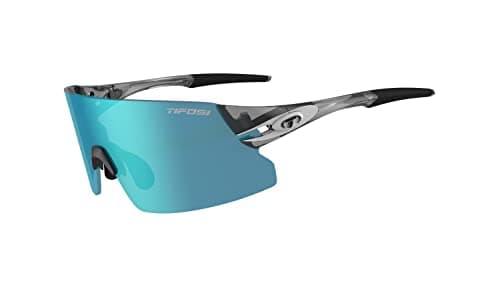
Tifosi Rail XC (Interchangeable)
Interchangeable lensesBig shieldVentedVery light
The value pick for cyclists: big coverage and three lenses for changing light.
- Glare control
- 6
- Optics
- 8
- Fit & coverage
- 10
- Durability
- 8
- Value
- 9
Pros
- +Ships with multiple lenses so you swap for bright sun, overcast and low light — the right answer for a sport where light changes mid-ride
- +Large shield gives the coverage a road or gravel cyclist actually needs at speed
- +A fraction of the price of the Italian marquee brands for comparable coverage
Cons
- −The included lenses are tinted/contrast, not polarized — deliberate, since polarized can mask road sheen and dims a bike computer
- −Big-shield look isn't for everyone off the bike
Don't buy this if…
…you want a do-everything lifestyle frame. This is a cycling tool — glorious on the bike, a lot of sunglasses at a cafe.
Maximum field of vision at speed
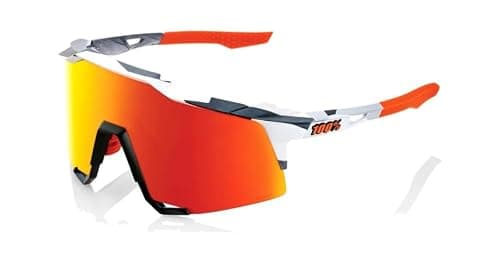
100% Speedcraft (HiPER Mirror)
HiPER mirror lensCylindrical shieldVentedRace fit
The big-field-of-vision race shield, with a mirrored contrast lens tuned for road and trail.
- Glare control
- 6
- Optics
- 9
- Fit & coverage
- 10
- Durability
- 8
- Value
- 6
Pros
- +One of the largest usable fields of view in the category — you look through lens, not over it, in a racing position
- +The HiPER mirror lens lifts contrast while shedding light before it enters, a genuine combination on a bright day
- +Race-tuned fit that stays locked on at speed
Cons
- −Single lens per pair; changing light means buying and carrying a second one
- −The mirror finish shows scuffs sooner than a plain lens and the styling is unapologetically racy
Don't buy this if…
…you want a subtle frame or a lens set in the box. This is a race shield with a race price and a race look.
Mountain biking and high-speed trail coverage
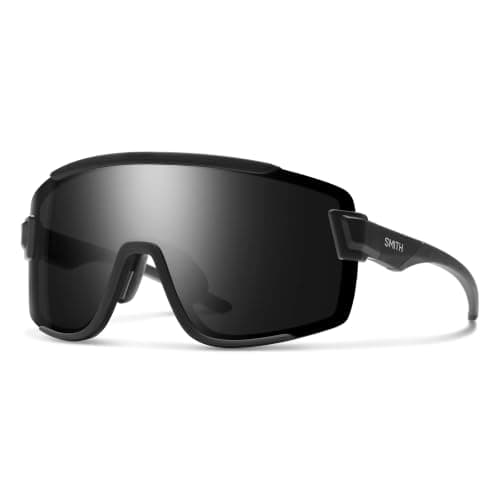
Smith Wildcat (ChromaPop)
ChromaPop lensGoggle-scale shieldRemovable frameVented
The mountain-bike shield reviewers keep landing on — goggle-scale coverage with contrast-tuned optics.
- Glare control
- 6
- Optics
- 9
- Fit & coverage
- 10
- Durability
- 8
- Value
- 6
Pros
- +Coverage closer to a goggle than a sunglass, which is what you want against trail debris and roost at speed
- +ChromaPop contrast tuning genuinely helps root and rock definition register earlier in dappled light
- +The frame detaches from the lens, so it converts between a framed and rimless look
Cons
- −Premium price, and the sheer size is a lot of eyewear anywhere other than a trail
- −Large lens area fogs more readily than a smaller frame on slow technical climbs
Don't buy this if…
…you ride mostly road or want one pair for everyday. This is a purpose-built trail tool and it looks like one.
Design-led cyclists who want Zeiss optics
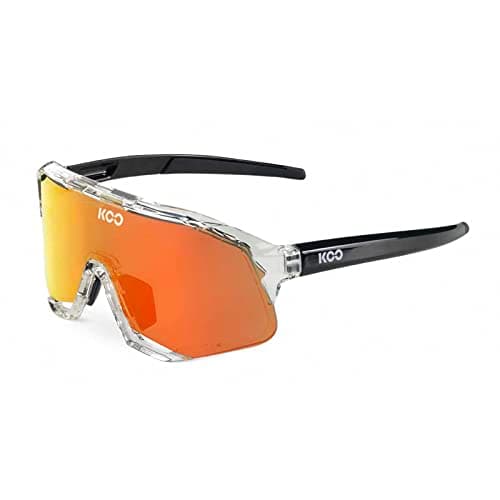
KOO Demos (Zeiss lens)
Zeiss lensAdjustable noseVented shieldLightweight
Italian cycling eyewear with Zeiss glass optics — style and clarity, premium price.
- Glare control
- 6
- Optics
- 9
- Fit & coverage
- 9
- Durability
- 8
- Value
- 6
Pros
- +Zeiss lenses give reference-grade optical clarity — the edges stay sharp where budget lenses smear
- +The Demos shield is a genuine design object, which matters to a lot of cyclists
- +Adjustable nose piece dials in the fit better than fixed-nose budget frames
Cons
- −Premium price for a single lens; no interchangeable set in the box like the Tifosi
- −The bold styling is polarizing (the frame, not the lens)
Don't buy this if…
…you want lens options for changing conditions out of the box — the Tifosi Rail's multi-lens kit is the more practical buy.
Wider faces on a budget
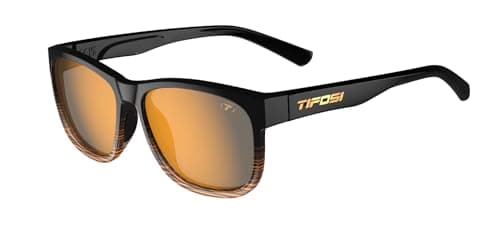
Tifosi Swank XL (Brown Polarized)
Injected polarized lensXL sizingBrown contrast tintUV400 polycarbonate
A genuinely polarized Tifosi in the frame built for wider faces — the answer when the standard Swank pinches and you still want glare control.
- Glare control
- 8
- Optics
- 7
- Fit & coverage
- 8
- Durability
- 7
- Value
- 9
Pros
- +Solves two problems at once: the standard Swank is too narrow for a lot of faces, and the standard lens is not polarized
- +The brown polarized tint lifts contrast on grass and water more than a neutral smoke lens does
- +Tifosi builds the polarization in as an injected layer rather than a surface coating, so it is the same lens construction as the rest of its polarized range and cannot rub off
Cons
- −Only a handful of XL colorways carry the polarized lens and the in-stock set moves around — check the colorway line says polarized rather than assuming the frame color you want has it
- −A brown tint shifts colors warm, which some people dislike for driving at dusk
- −Still a lifestyle shape: side light gets in, and it is not a substitute for a wrap
Don't buy this if…
…the standard Swank already fits you. The XL is a width fix, and buying up a size you do not need just makes the frame slide.
Softening a square or angular face on a budget
Knockaround Rounded Square Polarized
Rounded square shapePolarizedUV400Impact-resistant
The softened-corner Knockaround — the budget answer for a face that hard squares are too harsh on.
- Glare control
- 8
- Optics
- 7
- Fit & coverage
- 7
- Durability
- 7
- Value
- 9
Pros
- +Rounded corners take the hard edge off a square frame, which is the standard counterweight to a strong jawline
- +Polarized and UV400 at a price where owning two shapes is reasonable
- +Knockaround's impact-resistant build survives the life a cheap pair actually gets
Cons
- −Budget coatings will scratch before a premium lens does
- −One size within the shape, with no adjustment
Don't buy this if…
…your face is already round or soft. A rounded frame on a round face echoes the curve instead of balancing it.
Coverage without giving up the grip
goodr Bolt G (Polarized Wrap)
PolarizedUV400Vented wrap lensAdjustable nose piece
The OG's grip coating in a vented wrap — goodr for runners who want coverage rather than a lifestyle shape.
- Glare control
- 8
- Optics
- 7
- Fit & coverage
- 9
- Durability
- 7
- Value
- 8
Pros
- +A wrap lens seals out the low, side-on sun that gets straight past goodr's flat OG frame
- +The adjustable nose piece is the thing the OG does not have — it is how you stop a wrap sitting wrong on a narrow or a high bridge
- +Same polarized UV400 lens and no-slip grip coating as the rest of the goodr line, so nothing is traded for the extra coverage
Cons
- −Half again the price of the OG, which is a lot for goodr money
- −More lens close to your face means more to fog at a slow, humid pace than the open OG frame, vents or not
- −goodr colorways rotate constantly and each listing is one color in one size — the exact pair here may sell through
Don't buy this if…
…you want one pair that works on the run and at dinner. The wrap reads as sports equipment in a way the OG does not, and that is the entire point of it.
Who each pick is for, and what is wrong with it
- Tifosi Rail XC (Interchangeable)— the pick of this page, and the only one that beats Oakley on two criteria at once. You get a full shield with three lenses in the box, so the tint you need in July and the one you need at 6pm in October are both already yours, and Tifosi publishes a lifetime warranty against manufacturer defects to the original owner, with buyable replacement lenses and nose pieces for everything it does not cover. Tifosi's own lens guide is unusually frank about which of its lens families does what. Honest cons:the Fototec photochromic version reacts noticeably more slowly than rivals — Bike Perfect found exactly that — the interchange lenses are not polarized, the frame feels like the plastic it is next to an Oakley, and the warranty specifically excludes scratched lenses and impacts with the ground. Our full write-up is the Tifosi Rail XC review.
- 100% Speedcraft (HiPER Mirror)— the alternative for anyone whose Oakleys were race equipment. 100% is the brand that genuinely contests Oakley's ground at the front of a bike race rather than underneath it: a huge single lens, a tall field of view, and HiPER, its own contrast lens platform, with interchangeable lenses in the box on most listings. Honest cons:the fit is narrow and race-specific, so it suits a slim face and punishes a wide one; HiPER is a contrast tint and not a polarized lens, so it is the wrong buy for driving or water; and it costs real money — this is a saving against a Radar EV, not against a budget wrap. We cover the range in the 100% sunglasses review.
- Smith Wildcat (ChromaPop)— the honest like-for-like, and the pick we would make if the lens was the reason you bought Oakley in the first place. Smith publishes a visible-light-transmission figure for every ChromaPop tint — Black at 10%, Green Mirror and Gray Green at 12%, Ignitor at 32%, Low Light Amber at 65% — which is more than Oakley publishes per Prizm tint, and the frame is goggle-scale coverage with a removable nose and brow. Smith also covers sunglasses for the lifetime of the product against manufacturer defects. Honest cons: it is priced within sight of the Oakley it replaces, so this is a lens-and-warranty upgrade rather than a saving; ChromaPop is a contrast lens and only some versions are polarized; and the Wildcat is a big frame that looks like equipment off the bike. More in the Smith sunglasses review and best mountain bike sunglasses.
- KOO Demos (Zeiss lens)— for the rider who bought Oakley partly because it looked like something. KOO is the eyewear arm of the Italian helmet maker KASK, and per BikeRadar's review the Demos is a single-lens shield built around a Zeiss polycarbonate lens with an anti-reflective coating and an adjustable nose piece — about as strong an optical pedigree as this category offers. Honest cons:it is a premium purchase that saves you less than the picks above; there is no polarized option in the lens families we see on the listings; the lens-swap story is weaker than Tifosi's or 100%'s; and the shield shape is not for everyone. See the KOO sunglasses review.
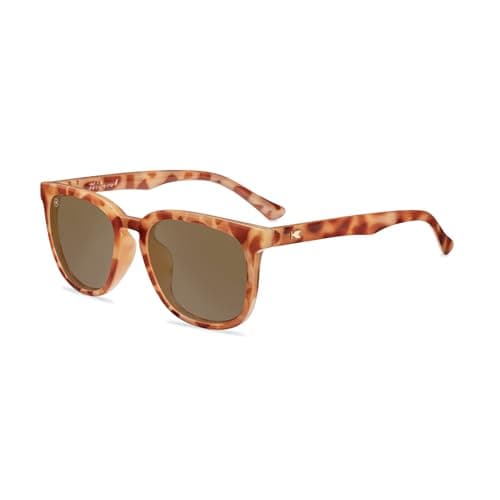
- Tifosi Swank XL (Brown Polarized)— the answer to the half of this query that is really about a Holbrook or a Frogskins rather than a Radar. It is a wide lifestyle-shaped frame with a genuinely polarized lens as the listed spec, at a small fraction of a polarized Oakley, carrying the same lifetime defect warranty as the Rail XC. Honest cons:no interchangeable lenses, no contrast-lens story, a frame that reads sporty rather than smart, and the XL fit is wrong on a narrow face — the standard Swank is the pair to look at then. If the lifestyle shape is the whole point, read Knockaround vs Oakley next.
- Knockaround Rounded Square Polarized— for the reader whose Oakleys never went near a bike. Polarized, UV400, in an everyday shape, at a tenth of Oakley money, and Knockaround publishes lifetime cover for manufacturing defects after a 45-day return window — one claim per paid pair, as store credit. Honest cons: the optics are ordinary, the coverage is nothing like a sport wrap, the fit range is coarse, and the warranty explicitly will not help you with a dropped or lost pair. Our full take is the Knockaround sunglasses review.
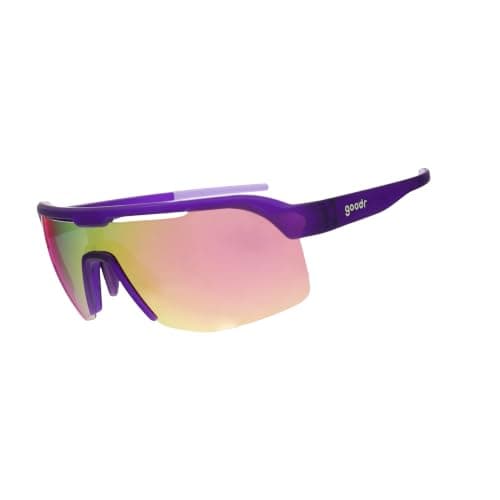
- goodr Bolt G (Polarized Wrap)— the pick for the person whose real problem is attrition, and it is not a consolation prize. goodr publishes polarization, UV400 and a no-slip grip coating across the range, the Bolt G adds wrap coverage that the flat goodr shapes do not have, and the price means losing a pair is an inconvenience rather than an event. Honest cons: the lens is a decent polarized lens and nothing more, there is no interchange, the frame will not take a crash the way O Matter does, and it does not look like a serious piece of equipment. See the goodr review and goodr vs Oakley.
Model by model: what to buy instead of the Oakley you had
Instead of a Radar EV Path or a Sutro
Tifosi Rail XC if you want the money back, 100% Speedcraft if you want the race fit, Smith Wildcat if you want the biggest lens and the best-documented tint. All three give you the thing a Radar EV is for — lens above the eyeline, nothing in the way when you look up out of the drops. The Rail XC is the only one of the three that also hands you the other two tints you will want, which is why it leads this page and why it also tops our cycling picks.
Instead of a Flak 2.0 XL
The Flak is the semi-rimless, golf-and-baseball Oakley, and the closest honest swap is a Tifosi — the Vero and the Rail cover the open-sightline job the Flak does for a fraction, which is why they carry the baseball guide and the golf roundup. The one thing to carry over from Oakley: on a course or a diamond, think hard before you buy polarized at all. Start at polarized vs non-polarized.
Instead of a Holbrook or a Frogskins
This is the lifestyle half of the query, and it is the half where the saving is biggest, because you are no longer buying coverage or grip — you are buying a shape and a lens. The Tifosi Swank XL Polarized and the Knockaround Rounded Square both give you a polarized everyday lens at a small fraction. If the Holbrook shape itself is the thing you want, the honest answer may be to stay with Oakley and buy the polarized Holbrook: see our Oakley review for which version is which.
Instead of Prizm Trail or a photochromic Oakley
An adaptive lens is the one case where the cheap end of this market competes properly, because photochromic chemistry is not where premium brands put their advantage. The Rail XC's Fototec version and the Julbo REACTIV range both cover a wide tint band on one lens; our photochromic roundup ranks the field, and polarized vs photochromic is the page to read first if you are trying to have both.
Where the Oakley premium is real
We would be selling you something if we pretended the whole premium was branding. Three parts of it are real. The first is fit range: Oakley sells more frame sizes, more nose-bridge options and more Asian-fit variants than any brand on this page, and a frame that fits is worth more than a lens that measures well. The second is the prescription path — Oakley's authorized Rx program is wider than anything Tifosi or 100% offers, and if you need a strong correction in a wrap, that narrows your choices fast. Our prescription polarized guide covers the realistic routes.
The third is the one nobody mentions: parts and continuity. Oakley has sold the same handful of frames for long enough that lenses, nose pieces and ear socks are still buyable years later, and the model you liked is probably still made. That is the quiet reason a ten-year-old Oakley is still in service and a ten-year-old budget wrap is in a drawer. What the premium is not is better glare removal — the Cleveland Clinic describes polarization as a filter that removes reflected light, and that filter works the same way in a thirty-dollar lens as in a three-hundred-dollar one.
The buying mistake this query usually hides
A large share of people searching for an Oakley alternative are not really shopping — they are reacting to a scratched lens. On a frame at this price that is often a repair rather than a write-off: Oakley sells replacement lenses for most current models, and the two-year defect warranty is irrelevant to a scratch because every brand here excludes scratches. If the frame is intact, price a lens before you price a pair. And if the lenses are merely filthy rather than damaged — which is more common than people think — how to clean sunglasses covers doing it without taking the coating off, which is the usual way a good lens actually dies. When to replace sunglasses has the rest of that decision.
Choosing in four questions
What was the Oakley actually for?
Riding, running or anything at speed → Rail XC, Speedcraft or Wildcat. Driving, water or everyday → a polarized lifestyle pair, and spend the difference on nothing. Golf or baseball → a Tifosi, and check whether you want polarization at all.
Do you need one lens or three?
One tint, always bright → buy a fixed lens and put the money into optics. Dawn rides, tree cover, winter → buy the interchange set or a photochromic, because Oakley will sell you the second tint separately and that is where its real cost lives.
How many pairs have you lost or broken in three years?
More than one → the answer is the goodr or the Knockaround, and it is the most useful question on this page. None → you are the buyer for whom a lifetime-warranty Tifosi or a Smith genuinely pays back.
Does the lens need to be polarized?
Water, wet roads and snow → yes, and check the listing says Polarized rather than just Prizm or HiPER. Cycling with a head unit, golf greens, anything with a screen in your sightline → possibly not. Our polarized lenses for cycling page is the short version of that argument.
How we picked
We don't run a testing lab
We compile each pair's published specifications — lens material, polarization, coating, frame material, coverage, UV rating and price — normalize them, and score each against a published rubric. The scores are judgments from documented research; they are notmeasurements we took, because we don't own a lab and we're not going to pretend we do. Pairs we claim to have lab-tested: 0.
Questions
Frequently asked
What brand is similar to Oakley but cheaper?+
Tifosi, by a distance, for sport frames: a full shield with three interchangeable lenses for roughly a third of a Radar EV, plus published lifetime cover against manufacturer defects. 100% is the closest on race fit at a middling price, and Smith is the closest on lens documentation without being much cheaper. The full matchup is
Oakley vs Tifosi.
Are Oakley sunglasses worth the money?+
For a rider or runner who wears them most days, the fit range, the parts supply and the frame's survival rate defend the price. For everyday wear, you are paying for engineering you are not using. The number that decides it is hours per year on your face, and
are expensive sunglasses worth it does that arithmetic properly.
Is Prizm the same as polarized?+
No, and this is the most expensive misunderstanding in the category. Prizm is a contrast tint; polarization is a glare filter. A Prizm lens is only polarized if the listing says Prizm Polarized, and that version costs more. We explain the difference in
Oakley Prizm explained.
What is the best Oakley alternative for running?+
The goodr Bolt G if grip and attrition are the problem, the Tifosi Rail XC if you want coverage and a second tint for early starts. Both are in
our running picks, and the
running sunglasses hub ranks the wider field.
Can I get prescription lenses in these alternatives?+
Sometimes, and less often than with Oakley — that is one of the real advantages you give up. Tifosi runs its own prescription program but excludes prescription sunglasses from its lifetime warranty, and most budget wraps offer no Rx path at all. The realistic options, including clip-ons and fit-overs, are in
prescription polarized sunglasses.
How long is the Oakley warranty compared with the alternatives?+
Oakley publishes two years against breakage from material or workmanship defect, with scratches, accidental damage, loss and theft excluded. Tifosi, Smith and Knockaround all publish defect cover for the life of the product, with similar exclusions. None of them covers a dropped pair, so the difference matters most to someone who keeps a frame for many years.
Are cheap sport sunglasses as good at blocking glare?+
For the reflected glare off water, wet roads and snow, effectively yes, as long as the listing genuinely says polarized - the filter is close to a binary feature. What more money buys is optical clarity, contrast tuning, coating life, coverage and a frame that stays put. Anyone selling a premium sport lens purely on glare is overselling it.
Receipts
Sources
- Oakley — Prizm lens technology (official)
- Oakley — warranty policy (published US terms: Oakley eyewear is warranted against breakage due to material or workmanship defect for two years from the date of purchase with valid proof of purchase; scratches, accidental and other damage, loss and theft are not covered, and altering the product voids the warranty)
- Rx Safety — Oakley Prizm vs Polarized: what the two technologies each do
- Tifosi Optics — warranty information (official, verbatim: Tifosi will “warranty any sunglass against manufacturer’s defects to the original owner for the life of the product”; excludes product that is “normal wear and tear, lost, stolen, dropped, shattered, scratched, sat on, chewed by your pet”, excludes damage from impacts with the ground or hard surfaces, excludes scratched lenses, applies to the original purchaser and US residents only, does not cover prescription sunglasses, and carries a shipping and handling fee per claim)
- Tifosi Optics — Fototec vs Enliven vs Clarion vs Polarized: the honest Tifosi lens guide (official)
- Bike Perfect — Tifosi Rail XC Clarion Fototec review (independent: very light frame, adaptive tinting, and a Fototec lens that reacts more slowly than rival photochromics)
- Smith Optics — sunglass technology (ChromaPop verbatim: “Normally the eye has trouble distinguishing colors where the blue/green and the green/red wavelengths cross over” and ChromaPop “filters these specific crossovers for greater definition, natural color, and clarity”; published VLT by tint — ChromaPop Black 10%, Green Mirror 12%, Gray Green 12%, Platinum 12%, Red Mirror 15%, Bronze Mirror 15%, Ignitor 32%, Contrast Rose 50%, Low Light Amber 65%)
- Smith Optics — warranty policy (sunglasses and goggles “covered for the lifetime of the product against manufacturer’s defects”; excludes product “lost, stolen, dropped, sat on, stepped on” and “damage caused by accident, improper care, negligence, normal wear and tear”)
- Knockaround — warranty policy (official: 45-day returns, then lifetime cover for manufacturing defects, one claim per paid pair, store credit at original purchase price, no cover for loss, theft, accidental damage or ordinary wear)
- goodr — published product claims (polarized, UV400, no-slip grip coating across the range)
- 100% — eyewear range and the HiPER lens platform (published as 100%'s own high-definition lens technology, described as filtering the crossover between blue, green and red wavelengths to raise contrast and color definition; Speedcraft lenses are interchangeable and HiPER mirror lenses are listed with light transmission in roughly the 11-23% band, with the lighter Coral tint around 50-57%)
- BikeRadar — KOO Demos review (independent; the Demos is a single-lens shield from KOO, the eyewear arm of Italian helmet maker KASK, built around a Zeiss polycarbonate lens with an anti-reflective coating and an adjustable nose piece)
- American Optometric Association — UV protection and sunglasses guidance
- Cleveland Clinic — Polarized vs non-polarized sunglasses
We do not run a testing lab, and we do not pretend to. Where a spec or measurement came from a manufacturer or a third party, we name and link it. Where we could not verify something, we say so on the page rather than quietly leaving it out. Read our full method.