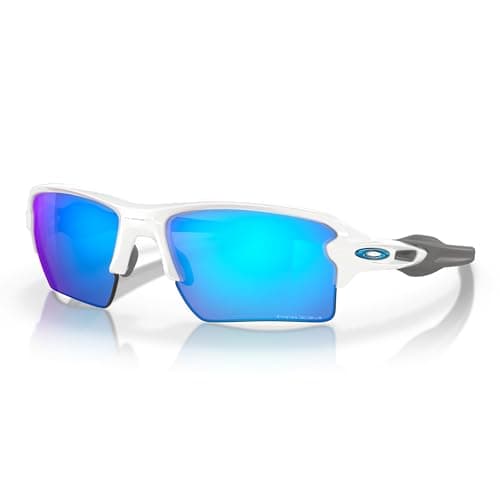
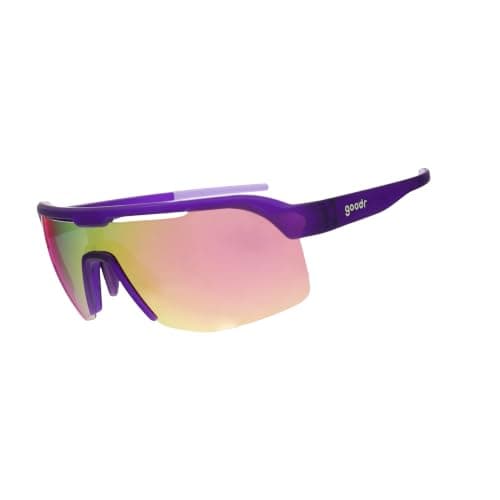
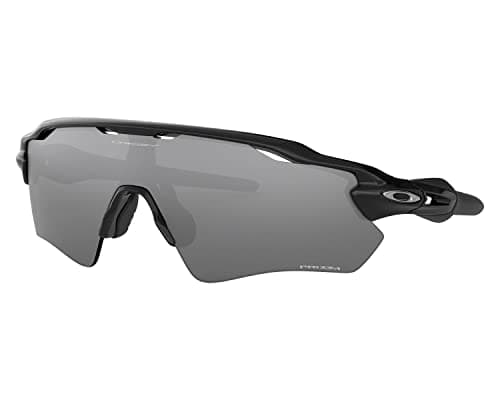
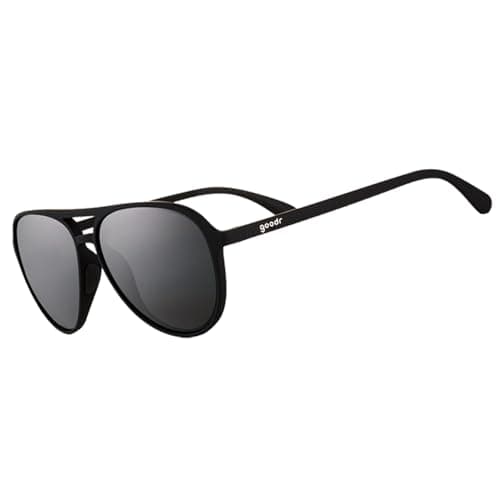
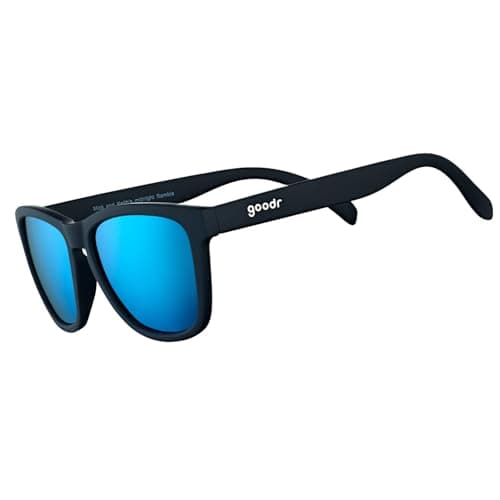
For most runners, buy the goodr OG and spend the difference on shoes. It is polarized, UV400, it grips a sweaty face, and at road-running speeds you will not perceive what Oakley adds. Buy Oakley — Flak 2.0 XL for all-round sport, Radar EV Path for maximum coverage — if you are moving fast enough that peripheral coverage and lens clarity at the edge of your vision start to matter: riding at speed, technical trail, or long days in high glare. That is a real threshold, not a marketing one.
This is the price comparison people actually want and rarely get an honest answer to, because the honest answer is awkward for both sides. goodr is not a budget knock-off of a sport brand; it solved one specific problem — a frame that does not slide on a wet face — and sold it for $25-$45. Oakley is not selling you air; its lens geometry, coverage and optical edge quality are genuinely better, and on a bike at 30mph that difference turns into information. The useful question is whether your activity crosses the line where that matters.
| Factor | goodr | Oakley |
|---|
| Price band | Around $30-$45 | Around $200-$300 |
| Grip when you sweat | No-slip coating on arms and bridge — the brand's whole idea | Unobtainium nosepads and earsocks that tack up when damp |
| Lens | Polarized, UV400, no contrast tuning | Prizm contrast tuning on Plutonite; polarized as an option |
| Coverage | Lifestyle-to-light-wrap; the Bolt G is the vented wrap option | Tall shields up to Radar EV scale |
| Optical edge quality | Fine centrally, softer at the lens edge | Held to a tighter standard across the whole lens |
| Replaceable lenses | No | Yes on the sport frames |
| Losing them costs | A takeaway | A weekend |
Both brands solved retention; only one of them charges for it
The thing that makes cheap sunglasses useless in sport is slip, and both of these brands fixed it by different means. goodr coats the temple arms and nose bridge with a layer that gets tackier as it warms and dampens — the opposite of what untreated plastic does. Oakley uses rubber nosepads and earsocks that behave the same way. In practice, on a run, they both stay put. This is the single most important feature in the category and it costs goodr a rounding error to deliver, which should tell you something about where the other $200 goes.
Where Oakley genuinely wins: coverage and the edge of the lens
Two differences survive honest scrutiny. The first is coverage. A goodr OG is a lifestyle shape; light arrives from the sides and underneath, which on a bike means wind and grit as well as glare. The Radar EV Path and Flak 2.0 XL are tall, wrapped shields that close that gap, and the goodr Bolt G in the picks above is the brand's own answer to it — a vented wrap that gets most of the way there for $45.
The second is optical quality away from the lens centre. Budget lenses are usually fine where you look most and get progressively less precise toward the edge; a premium lens holds its standard across the whole surface. At walking pace nobody notices. At speed, where your peripheral vision is doing real work and your eyes are tracking across the lens rather than through its centre, it becomes the difference between information and mush. That is why Oakley appears at the top of our cycling roundup while a $30 pair tops the running one.
Where the extra money buys nothing
UV protection, first: both are UV400-class, as is a $15 pair, and the American Optometric Association treats that spec as the protective job of a sunglass. Glare filtering, second: a polarized goodr and a polarized Oakley remove the same reflected glare by the same mechanism, which the Cleveland Clinic describes plainly. Comfort, third — a light frame that grips is comfortable regardless of price, and goodr's frames are light.
One genuine advantage runs the other way: cost of loss. Sunglasses get sat on, left on roofs and dropped off chairlifts. A $30 pair makes that a shrug. For a lot of people, that single fact is worth more than every optical improvement on this page, and we think that is a rational preference rather than a cheap one. The argument in full is in are expensive sunglasses worth it.
A note on polarization, because it cuts against Oakley here
goodr's standard lenses are polarized. A large part of Oakley's Prizm sport range is deliberately not, because surface reflections tell a rider about wet tarmac and let a head unit stay readable. So if you want a polarizedsport lens, goodr gives you one by default and Oakley charges a premium for a specific SKU — see are Oakley polarized lenses worth it. And if you are riding, read are polarized lenses good for cycling before you decide you want the filter at all.
The verdict, stated plainly
Road running, gym, walking, everyday, anything where you lose sunglasses → goodr, OG as the default, Bolt G if you want coverage, Aviator if you want the shape. Riding at speed, technical trail, long high-glare days, or any situation where you are reading ground detail at the edge of your vision → Oakley, Flak 2.0 XL for all-round use and Radar EV Path for maximum coverage. If you are weighing Oakley against the other sport-value brands rather than against goodr, read Oakley vs Tifosi; the whole budget field is in best cheap polarized sunglasses.
How to decide in 30 seconds
How fast are you moving?
Running pace → goodr is enough. Riding pace, or technical trail → the coverage and edge clarity of an Oakley start to earn their money.
Do you lose sunglasses?
Then buy the $30 pair, keep a spare, and stop thinking about it.
Do you want polarized?
goodr gives you polarized as standard. With Oakley you must choose a polarized Prizm SKU, and much of the sport range is deliberately unpolarized.
Do you ride with a head unit?
Then lean Oakley non-polarized, or accept that a polarized goodr will dim the screen. This is the one place the cheap answer has a real functional cost.
Do you need one pair for sport and dinner?
goodr's lifestyle shapes cross over more easily than a Radar EV does. Oakley's Holbrook is the crossover answer at the premium end — see Ray-Ban vs Oakley.