Top pick
Top pick
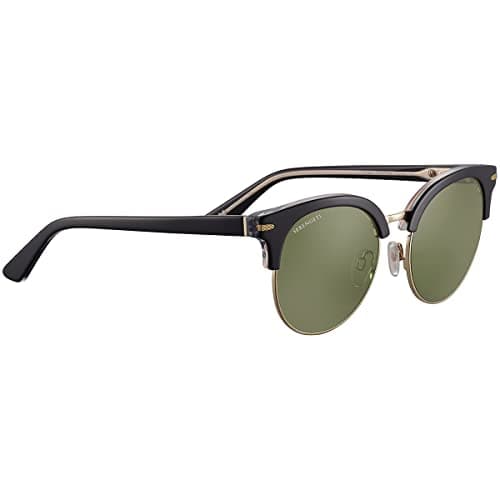
Serengeti Susan (Mineral Polarized 555nm)
Best for: The cheapest live route into mineral glass
The best polarized pair under this ceiling, because it is the only one that buys the genuine optical step: polarized Corning borosilicate mineral glass with the 555nm contrast tint and published 99.9% glare elimination. Published Abbe values put mineral glass at 58-59 against polycarbonate at 30. Best for everyday wear and driving.
Budget pick
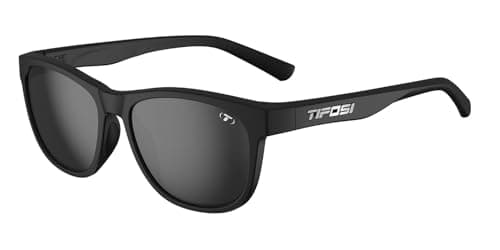
Tifosi Swank (Smoke Polarized)
Best for: The everyday polarized Tifosi
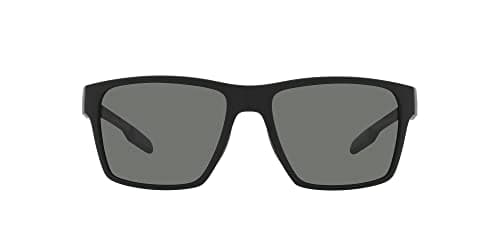
The budget pick, and the value floor of this page: a genuinely polarized everyday lens plus a published warranty against manufacturer defects for the life of the product, at a small fraction of the ceiling. Buy it if the premium lens is not the reason you are here.
#ad · we may earn a commission. Live prices from the Amazon Product API, as of November 23, 2026. Where we have no verified live price we show none.
The best polarized sunglasses under $200 are the Serengeti Susan: polarized Corning borosilicate mineral glass with a 555nm contrast tint, which is the only genuine optical step available under this ceiling. Best for everyday wear and driving. If you need one lens for changing light, the Tifosi Crit Fototec is the rare pair that is both polarized and photochromic. For a golf-and-everyday crossover, the Under Armour Assist 2. And the budget pick is the Tifosi Swank Polarized, which pairs a real polarized lens with a published lifetime defect warranty for a small fraction of this ceiling. Live prices below, with the date they were checked.
Two hundred dollars is where this category gets genuinely interesting, because it is the first ceiling under which real lens technology is buyable. Below $100 almost everything is polycarbonate with an undocumented tint. Above this ceiling you are choosing between Costa, Bajío, Maui Jim, Oakley and Smith on preference rather than on capability — and at the last price check, the cheapest Maui Jim in our catalog sat just above $200, which is exactly why this band is a question people ask. Under it sit two genuinely premium propositions: the entry point to mineral glass, and a lens that is both polarized and photochromic.
What $200 buys that $100 does not
- Material clarity. The genuine optical step, and the one a cheap lens cannot imitate. Published Abbe values put mineral glass and CR-39 at 58-59 against polycarbonate at 30 — Abbe being the standard measure of how little a lens disperses light into color fringing. You notice it at the edges of your field of view and in high-contrast light.
- A documented contrast platform.A tint engineered around a named target rather than simply darkened. Serengeti's 555nm lens aims at roughly the wavelength the eye resolves most efficiently. Just above this ceiling, per SportRx's Maui Jim lens guide, PolarizedPlus2 cuts 99.9% of glare with 100% UV and HEV protection from a patented blend of three rare earth elements and SuperThin Glass is published at Abbe 58. Those are specific claims rather than adjectives, and the nearest one you can buy under $200 is Serengeti's.
- Adaptive behavior. A photochromic lens that is also polarized is rare and genuinely useful for anyone whose light changes through a ride, a round or a commute. Serengeti publishes photochromic behavior alongside Spectral Control and 99.9% glare elimination in Corning borosilicate mineral glass.
- Coating life and serviceability. At this price a scratched lens is often a repair rather than a write-off, which changes the arithmetic of owning the pair for a decade.
What it still does not buy is better glare removal or better UV protection. The Cleveland Clinic describes polarization as a filter that removes reflected light, and that filter is close to binary; the American Optometric Association recommends 99-100% UVA and UVB blocking at any price. Both are fully covered at a tenth of this budget.
| What you want from the premium band | Buy | What you give up |
|---|
| Mineral glass clarity, as cheaply as it exists | Serengeti Susan (Mineral Polarized 555nm) | Glass weight, a narrow frame range, lighter behind glass |
| One polarized lens for changing light | Tifosi Crit (Polarized Fototec) | Reacts more slowly than rival photochromics |
| Golf and everyday crossover | Under Armour Assist 2 (Polarized) | No published lens platform; polarized is not ideal on greens |
| Something between budget and premium, in a safe shape | NEVEN Polarized Rectangular | No published lens documentation at all |
| Hiking and outdoor wear that still looks normal | Native Breck (Polarized) | No contrast-tuning claim; modest coverage |
| The value floor of this band | Tifosi Swank (Smoke Polarized) — budget pick | No glass, no contrast platform, narrow fit |
The short answer
Quick picks
#ad · Live prices from the Amazon Product API, as of November 23, 2026. Where we have no verified live price, we show none — we would rather leave a gap than print a number that has rotted.
In detail
The picks, in full
The cheapest live route into mineral glass
Serengeti Susan (Mineral Polarized 555nm)
Mineral glass lensPolarized555nm contrast tintAcetate and metal frame
Serengeti's mineral glass at the lowest price the brand actually sells it for — in a feminine cat-eye rather than a driving frame.
- Glare control
- 9
- Optics
- 9
- Fit & coverage
- 5
- Durability
- 8
- Value
- 8
Pros
- +Real mineral glass for well under half what the fishing-glass brands charge — the cheapest glass lens on this site by a wide margin
- +The 555nm Spectral Control tint targets the wavelength the eye resolves best, which reads as a lift in contrast rather than a color cast
- +Polarized as well as photochromic — Serengeti splits its range into photochromic-only and polarized models, and this SKU carries both
Cons
- −Category 3 to 3: the published 18%-12% transmission range means it deepens within an already-dark tint and never clears to a light lens
- −A 53mm feminine cat-eye in acetate and metal — a styling frame with modest coverage and no grip material, not a unisex driving wrap
- −Serengeti's Amazon stock is thin and moves between models, so the colorway you see today may not be the one in stock next month
Don't buy this if…
…you want one pair that covers a dark afternoon and a dim morning, or a wrap for the water or the bike. This is a fixed-category glass lens in a lifestyle frame, and side light gets straight past it.
Polarized glare control in changing light
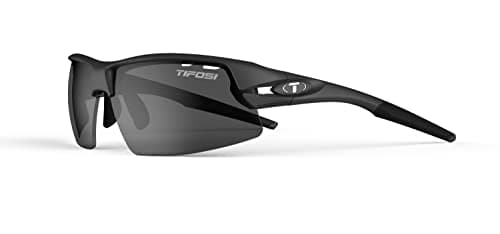
Tifosi Crit (Polarized Fototec)
Fototec photochromicPolarizedSport frameHydrophilic grip
The rare lens that is both polarized and photochromic — glare control that also tracks the light.
- Glare control
- 8
- Optics
- 8
- Fit & coverage
- 8
- Durability
- 7
- Value
- 7
Pros
- +Combines the two lens tricks most brands make you choose between: it darkens with the light AND cancels reflected glare
- +Sport shape and grip pads mean it stays put through a ride, a run or a long day outside
- +A far cheaper route to a polarized photochromic lens than the premium marques charge
Cons
- −Being polarized, it still dims a bike computer or a boat chartplotter — the photochromic half does not fix that
- −Photochromic lenses transition slower in the cold and never reach the darkness of a fixed bright-sun tint
Don't buy this if…
…you ride with a head unit. A polarized lens is the wrong tool there no matter how clever the photochromic layer is — take a non-polarized photochromic instead.
Golf-plus-everyday crossover
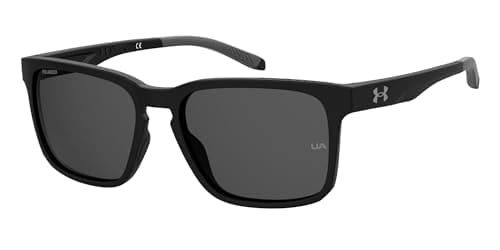
Under Armour Assist 2 (Polarized)
PolarizedUV400Sport frameGrip pads
A polarized sport frame that crosses over from golf to driving and general sport.
- Glare control
- 8
- Optics
- 7
- Fit & coverage
- 7
- Durability
- 7
- Value
- 7
Pros
- +Polarized, so unlike most dedicated golf lenses it also cuts glare off water and wet roads
- +Under Armour sport build with grip pads that hold during activity
- +Mid price for a polarized sport frame from a known brand
Cons
- −Polarized is a double-edged choice for golf — great for glare, but it can flatten the green-reading contrast cues
- −Not a contrast-tuned golf lens like Prizm Golf
Don't buy this if…
…your only use is reading greens — a non-polarized contrast lens (Prizm Golf) is the better green-reading tool. This one is the crossover pick.
A mid-price everyday polarized pair
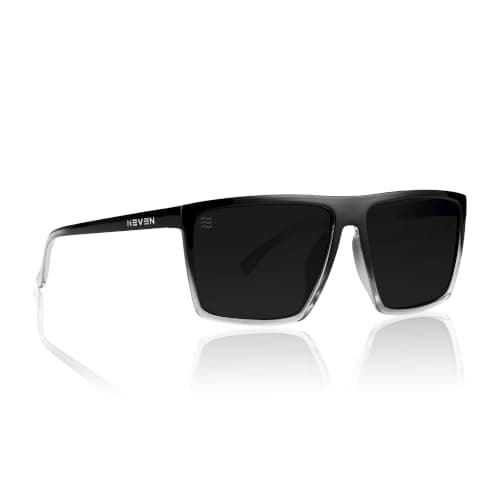
NEVEN Polarized Rectangular
PolarizedUV protectionRectangular shapeCoastal styling
A coastal-styled polarized rectangle from a smaller brand, priced between budget and premium.
- Glare control
- 8
- Optics
- 7
- Fit & coverage
- 6
- Durability
- 7
- Value
- 7
Pros
- +Sits in the gap most brands ignore — better built than the sub-$20 field, far below premium money
- +A rectangular shape is the safe, broadly flattering choice for rounder and softer faces
- +Polarized, so it does the real job on wet roads and around water
Cons
- −A smaller brand means less published lens documentation than the big names offer
- −No contrast tuning — this is a general-purpose glare lens, not a fishing or course lens
Don't buy this if…
…you want a documented lens technology to compare. The established brands publish far more about what their lenses actually do.
Hiking that ends in a bar
Native Breck (Polarized)
PolarizedMid-size frameRubber grip pointsReplaceable lenses
A trail-and-town polarized frame from a brand built around mountain use — mid price, real fit engineering.
- Glare control
- 8
- Optics
- 8
- Fit & coverage
- 8
- Durability
- 8
- Value
- 7
Pros
- +Sits between the sport shields and the lifestyle frames — enough grip and coverage for a trail, restrained enough for anywhere else
- +Native builds around mountain use, so the nose and temple grip are tuned for sweat rather than for a photo
- +Lens replacement is offered, which meaningfully extends the life of a mid-price pair
Cons
- −Less coverage than a true wrap in strong low-angle sun on an exposed ridge
- −Mid-price means you are past the point where value is obvious and short of documented premium lens technology
Don't buy this if…
…you want maximum coverage at altitude. A wrap or a glacier lens is the right tool above the treeline; this is a treeline-and-below frame.
The everyday polarized Tifosi
Tifosi Swank (Smoke Polarized)
Injected polarized lensGrilamid frameHydrophilic gripUV400 polycarbonate
The polarized version of Tifosi's featherweight everyday frame — the one to buy if glare, not sport, is the problem.
- Glare control
- 8
- Optics
- 7
- Fit & coverage
- 7
- Durability
- 7
- Value
- 8
Pros
- +Tifosi builds polarization into the lens as an injected layer rather than a surface coating, so it cannot rub off the way a coated budget lens can
- +Same barely-there Grilamid frame and sweat-activated grip pads as the standard Swank — the lens is the only thing that changes
- +A genuinely polarized pair from a sport brand, at a price well under the polarized lifestyle marques
Cons
- −Costs roughly double the standard tinted Swank, and the two listings look nearly identical — easy to buy the wrong one by accident
- −Being polarized, it dims phone, bike-computer and dashboard screens, which is exactly why Tifosi leaves its cycling lenses unpolarized
- −Lifestyle shape, so less coverage than a true sport shield in low, side-on sun
Don't buy this if…
…the pair is for riding or for anything with a screen you need to read. Buy the standard tinted Swank or a Rail instead — polarization is the wrong tool there, not a better one.
Who each pick is for, and what is wrong with it
- Serengeti Susan (Mineral Polarized 555nm) — Best for: the cheapest live route into mineral glass. The pick of this page, because it is the only entry here that buys the one thing a cheaper lens genuinely cannot imitate. Serengeti publishes Corning borosilicate mineral glass described as 20% thinner and lighter than standard glass, with Spectral Control, photochromic behavior and 99.9% glare elimination — and the 555nm tint targets the wavelength the eye resolves best, which reads as a lift in contrast rather than a color cast. This is the pick if what you actually want is the optical step rather than a brand. Honest cons: glass is heavy on a long day and breaks where polycarbonate deforms; the photochromic behavior means it sits lighter behind a windshield than you expect, because laminated glass blocks much of the UV that triggers it; and the frame range is small. Full detail in the Serengeti sunglasses review.
- Tifosi Crit (Polarized Fototec) — Best for: polarized glare control in changing light. The rare combination: a lens that is both polarized and photochromic, which covers a dawn start and a noon finish on one pair. Tifosi's own lens guide is unusually frank about which of its lens families does what, and the whole range carries lifetime cover against manufacturer defects. Honest cons: Fototec reacts noticeably more slowly than rival photochromics, which matters going into and out of tree cover at speed; a polarized lens is a questionable choice if you ride with a head unit or play golf; and this is a sport frame, so it looks like equipment off the bike. Polarized vs photochromic is the page to read first.
- Under Armour Assist 2 (Polarized) — Best for: a golf-plus-everyday crossover. The pick if you want one pair that works on a course and in a car: a polarized lens in a semi-sport frame that does not shout. Honest cons: no published lens platform or VLT figures, so you are buying on brand and build; and polarization is a genuinely debatable choice on greens, because it can flatten the read on a putting surface. Think about it before you buy, starting with polarized sunglasses for golf and our golf roundup.
- NEVEN Polarized Rectangular — Best for: a mid-price everyday polarized pair. The pick that fills the gap this market usually leaves empty. Between the budget wraps and the premium glass there is very little, and a rectangular shape is the broadly flattering safe choice if you are replacing a lifestyle pair. Honest cons:a smaller brand means almost no published lens documentation — no VLT figure, no Abbe value, no named contrast platform, which is precisely what the rest of this page is built from; no contrast tuning; and no published warranty. Our write-up is the NEVEN sunglasses review.
- Native Breck (Polarized) — Best for: hiking that ends in a bar. The outdoor pick in this band: a polarized lens in a frame that works on a trail and does not look like sport equipment afterwards. Honest cons: no named contrast platform and no published light-transmission figures; coverage is modest for a frame marketed outdoors, so high-altitude or snow glare wants something bigger. For that, see best sunglasses for hiking and best sunglasses for snow and skiing.
- Tifosi Swank (Smoke Polarized) — Best for:the budget pick, and the value floor of this band. Here to make an honest point: if the premium lens is not the reason you are shopping, a genuinely polarized everyday lens plus a published lifetime defect warranty costs a small fraction of this page's ceiling. Honest cons:polycarbonate rather than glass, no documented contrast platform, no interchange, and the standard Swank is narrow — wider faces want the XL. The full value argument is best polarized sunglasses for the money.
Why this band is the real answer to “alternatives to Maui Jim”
The most-searched question this site ranks for is a price objection in disguise: people who liked Maui Jim lenses and did not like Maui Jim prices. This band is the honest answer to it. At the last price check, every Maui Jim in our catalog sat above this ceiling — so under $200 the answer is not a cheaper Maui Jim, it is the thing Maui Jim is actually good at, bought from somebody else. That is mineral glass with a published contrast tint, which is Serengeti's entire proposition at well under Maui Jim money, and it is why the Susan leads this page. The full field, including Costa, Bajío, Smith and the budget end, is in the best alternatives to Maui Jim.
Glass or polycarbonate at this price?
This is the real decision in the $150-200 band, and it is not a close call once you know what you are doing with the pair. Glass resolves better and scratches far less — the Abbe figures put mineral glass near 58-59 against polycarbonate at 30 — and if the pair lives in a case and goes on your face for a commute, glass is the better buy. Polycarbonate is lighter, survives impact and costs less: if the pair is going on a bike, a boat, a trail or anywhere it might be dropped, buy polycarbonate and spend the difference on a second tint. Best glass lens sunglasses ranks the glass field specifically.
What you would get for another hundred dollars
Worth knowing, so the ceiling is a choice rather than an accident. Above $200 the things that appear are frame range and fit options, prescription paths, water-specific contrast platforms (Costa's 580 filter at 580nm and 99.9% polarization efficiency, Bajío's 95% blue-light block to 445nm), true sport coverage with grip material, and longer parts availability. Those are real, and for an angler or a cyclist they may be decisive — the fishing roundup and the cycling roundup are where those picks live. For everyday wear and driving, this band is where the value stops rising steeply.
Choosing in four questions
Is it the lens or the brand you want?
The brand → you will have to go above this ceiling; start at alternatives to Maui Jim, which prices the premium field. The lens → the Serengeti, which is mineral glass under the ceiling.
Does the light change while you are wearing them?
A lot — dawn rides, tree cover, winter commutes → the Tifosi Crit Fototec, the only polarized photochromic here. Not really → buy a fixed tint and better glass.
Will they get dropped?
Possibly → polycarbonate, every time; glass breaks where polycarbonate deforms. Unlikely → glass, for the clarity and the scratch resistance.
Is polarization definitely right for the job?
Driving, water, snow → yes. Golf greens, cycling with a head unit, anything with a screen in your sightline → think again; start at polarized vs non-polarized.
Drop the polarization requirement at this same ceiling and the field changes almost entirely, because the brands charging for optics in this band spend the money on clarity instead. That ranking is at best sunglasses under $200.
How we picked
We don't run a testing lab
We compile each pair's published specifications — lens material, polarization, coating, frame material, coverage, UV rating and price — normalize them, and score each against a published rubric. The scores are judgments from documented research; they are notmeasurements we took, because we don't own a lab and we're not going to pretend we do. Pairs we claim to have lab-tested: 0.
Questions
Frequently asked
What are the best polarized sunglasses under $200?+
The Serengeti Susan, because it is the only pick under this ceiling that buys polarized mineral glass — published Abbe values put mineral glass at 58-59 against polycarbonate at 30, which is the one optical step a cheaper lens cannot imitate. The Tifosi Crit Fototec is the pick if you need one polarized lens for changing light, and the Under Armour Assist 2 is the golf-and-everyday crossover.
Can you buy a Maui Jim for under $200?+
Not from the listings we track, as of the last price check. The cheapest Maui Jim in our catalog is the Hookipa, and it sat just above $200 when prices were last refreshed — you can see the live number on
our alternatives to Maui Jim page, which is the one that counts rather than any figure typed into prose. Maui Jim prices do move, so it is worth checking. If what you want is the lens rather than the badge, the Serengeti Susan is polarized mineral glass with a contrast tint, comfortably under this ceiling.
Is mineral glass worth it at this price?+
If the pair is for driving or everyday wear and you look after it, yes: published Abbe values put mineral glass near 58-59 against polycarbonate at 30, which is the difference you see at the edge of your field of view. If the pair is going on a bike, a boat or a trail, no — glass breaks where polycarbonate deforms, and that trade is not worth the clarity.
Best glass lens sunglasses covers it in full.
What do you get for more than $200?+
Frame and fit range, prescription availability, water-specific contrast platforms like Costa's 580 and Bajío's LAPIS, true sport coverage with grip material, and longer parts availability. All real, and decisive for some anglers and cyclists — but not better glare removal or better UV protection, both of which are fully covered well below this band.
Are polarized photochromic lenses any good?+
They are genuinely useful when your light changes mid-wear, and there are not many of them, because combining the two is hard. The honest caveats: photochromics are UV-triggered, so they sit lighter behind a windshield than you expect, and Tifosi's Fototec reacts more slowly than some rivals. Our comparison is
polarized vs photochromic.
Receipts
Sources
- SportRx - Maui Jim lens guide (PolarizedPlus2 cuts 99.9% of glare with 100% UV and HEV protection from a patented blend of three rare earth elements; SuperThin Glass published at Abbe 58, 20% thinner and 32% lighter than standard laminated glass, against polycarbonate at Abbe 30)
- Serengeti - published lens technology (Corning borosilicate mineral glass described as 20% thinner and lighter than standard glass, Spectral Control, photochromic behavior, 99.9% glare elimination)
- Tifosi Optics - warranty information (official, verbatim: Tifosi will “warranty any sunglass against manufacturer’s defects to the original owner for the life of the product”; excludes normal wear and tear, lost, stolen, dropped, shattered, scratched or sat-on product, excludes scratched lenses, US residents and original purchaser only, does not cover prescription sunglasses, and carries a shipping and handling fee per claim)
- Tifosi Optics - Fototec vs Enliven vs Clarion vs Polarized: the honest Tifosi lens guide (official)
- OptoGrid - Abbe value by lens material (CR-39 58, mineral glass 58-59, polycarbonate 30)
- American Optometric Association - UV protection and sunglasses guidance (99-100% UVA and UVB blocking recommended at any price; lens darkness is not a measure of UV protection)
- Cleveland Clinic - polarized vs non-polarized sunglasses (polarization described as a filter that removes reflected, horizontally oriented light)
We do not run a testing lab, and we do not pretend to. Where a spec or measurement came from a manufacturer or a third party, we name and link it. Where we could not verify something, we say so on the page rather than quietly leaving it out. Read our full method.