Top pick
Top pick
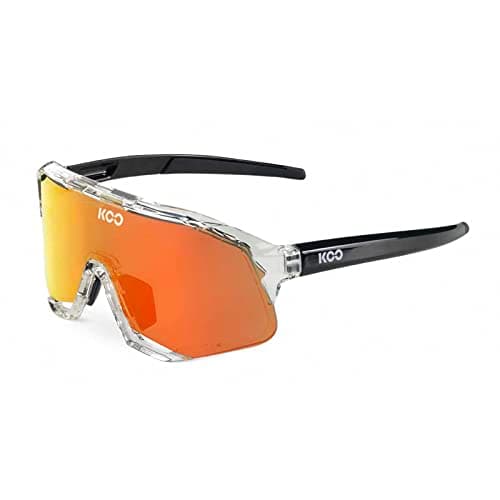
KOO Spectro (Zeiss lens)
Best for: Road and triathlon riders who want Zeiss clarity
The best piece of glass you can buy under this ceiling: a Zeiss lens in a light road frame, which is a genuinely different optical class from the polycarbonate everything below $100 uses. Best for the rider or driver who has decided the lens is the product and does not need it polarized.
Budget pick
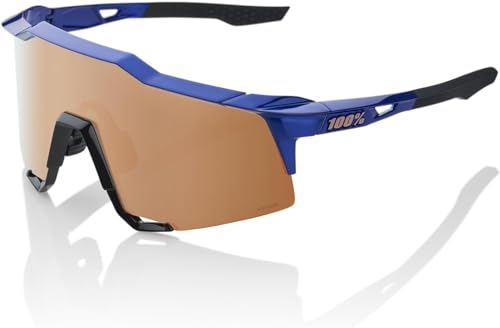
100% Speedcraft (HiPER Mirror)
Best for: Maximum field of vision at speed
A third of the band's ceiling for the widest single lens here and a mirror coating that sheds light before it enters the lens. Best for anyone who wants this tier's field of view without this tier's price.
#ad · we may earn a commission. Live prices from the Amazon Product API, as of November 23, 2026. Where we have no verified live price we show none.
Two hundred dollars is the band where the thing you are buying changes. Below a hundred, you are buying a frame: coatings get harder, grip material appears, the hinges stop feeling like a toy, but the lens itself is polycarbonate from the same handful of suppliers. Between a hundred and two hundred, the lens becomes the product. Zeiss optics, mineral glass, Julbo's Spectron categories and Serengeti's 555nm contrast tint all start here, and none of them exists at any price below it.
The reason that matters is dispersion. Cheap polycarbonate sits around Abbe 30, against 58-59 for mineral glass, and the lower the figure the more colour fringing you get as you look away from the centre of the lens. On a twenty-dollar pair you notice it at the edges; in this band you do not notice it at all. That is the single biggest perceptual upgrade available in sunglasses, and it is invisible in a product photograph, which is why most pages at this price talk about brands instead.
There is a catch, and it runs through almost every pick here: at this price, the best lenses are mostly not polarized. Polarization is cheap and mature — the Cleveland Clinic describes it as a filter on reflected, horizontally oriented light — so the brands charging for optics in this band tend to spend their money on clarity, contrast and coatings instead. If glare off water or wet tarmac is your actual problem, a polarized pair at half this price serves you better, and we rank that field at best polarized sunglasses under $200. Five of the seven picks below appear on no other price page on this site, precisely because they are the non-polarized half of the band that the polarized ranking cannot carry.
One row exists to make a point rather than to win. The brand-name pick here is a well-known lifestyle frame on a tinted-but-not-polarized lens, and it sits in the middle of the band at roughly the same price as a Zeiss optic. That is what a badge costs. We have left it in because plenty of readers want it anyway and deserve to see the comparison honestly rather than have it hidden.
What this band does not buy you is more UV protection. The AOA's 99-100% UVA and UVB recommendation is met by a fifteen-dollar pair, and the AAO is clear that lens darkness is not a measure of protection. Nor was any of this tested in a lab here: the ranking is published lens claims from makers and named outlets, published materials, and live prices.
The short answer
Quick picks
#ad · Live prices from the Amazon Product API, as of November 23, 2026. Where we have no verified live price, we show none — we would rather leave a gap than print a number that has rotted.
In detail
The picks, in full
Road and triathlon riders who want Zeiss clarity
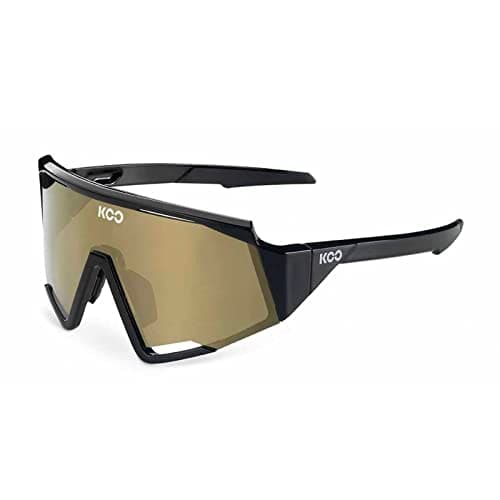
KOO Spectro (Zeiss lens)
Zeiss lensVented shieldAdjustable noseLightweight
KOO's road-and-triathlon shield — Zeiss optics in a narrower, less shouty frame than the Demos.
- Glare control
- 6
- Optics
- 9
- Fit & coverage
- 9
- Durability
- 8
- Value
- 6
Pros
- +Zeiss optics keep the edges of the lens sharp, which is where cheap lenses smear and where a rider's peripheral vision lives
- +A more restrained shape than the oversized shields, so it works off the bike too
- +Adjustable nose piece dials in fit properly instead of hoping the molded bridge suits you
Cons
- −Single lens in the box — no interchangeable set for changing light at this price
- −Premium cost in a category where the value option is genuinely excellent
Don't buy this if…
…your light changes mid-ride. A multi-lens kit or a photochromic solves that problem better than any single premium lens.
The cheapest live route into mineral glass
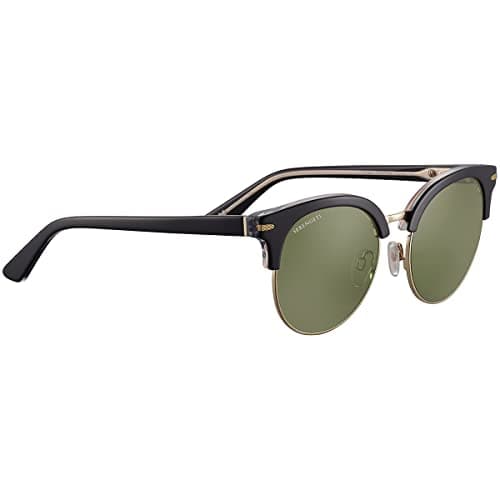
Serengeti Susan (Mineral Polarized 555nm)
Mineral glass lensPolarized555nm contrast tintAcetate and metal frame
Serengeti's mineral glass at the lowest price the brand actually sells it for — in a feminine cat-eye rather than a driving frame.
- Glare control
- 9
- Optics
- 9
- Fit & coverage
- 5
- Durability
- 8
- Value
- 8
Pros
- +Real mineral glass for well under half what the fishing-glass brands charge — the cheapest glass lens on this site by a wide margin
- +The 555nm Spectral Control tint targets the wavelength the eye resolves best, which reads as a lift in contrast rather than a color cast
- +Polarized as well as photochromic — Serengeti splits its range into photochromic-only and polarized models, and this SKU carries both
Cons
- −Category 3 to 3: the published 18%-12% transmission range means it deepens within an already-dark tint and never clears to a light lens
- −A 53mm feminine cat-eye in acetate and metal — a styling frame with modest coverage and no grip material, not a unisex driving wrap
- −Serengeti's Amazon stock is thin and moves between models, so the colorway you see today may not be the one in stock next month
Don't buy this if…
…you want one pair that covers a dark afternoon and a dim morning, or a wrap for the water or the bike. This is a fixed-category glass lens in a lifestyle frame, and side light gets straight past it.
Glacier travel, snow and high altitude
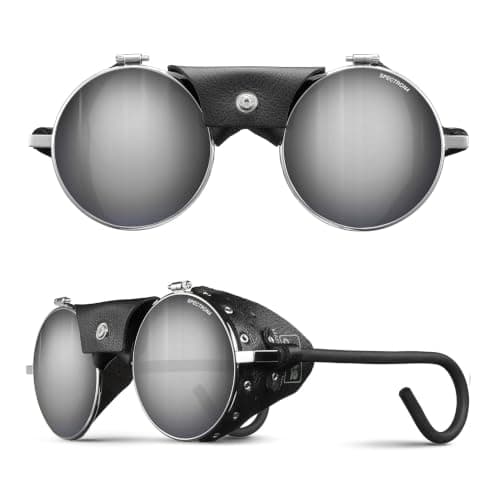
Julbo Vermont Classic (Spectron 4)
Spectron 4 lensCategory 4 tintLeather side shieldsMirror finish
The original glacier glass — a category 4 lens and side shields for snow, ice and altitude.
- Glare control
- 9
- Optics
- 9
- Fit & coverage
- 8
- Durability
- 9
- Value
- 6
Pros
- +A category 4 lens is the correct tool for the extreme brightness of snowfields and high altitude, where a normal dark tint is not enough
- +The side shields block the reflected light that comes up off snow from below and around a normal frame
- +A genuinely durable design that has been made in essentially this form for decades
Cons
- −Category 4 lenses are not permitted for driving in many places and are far too dark for general use
- −The heritage styling and the side shields are unmistakable — this is equipment, not an everyday frame
Don't buy this if…
…you want one pair for the mountain and the drive home. Category 4 is a specialist tint; keep a normal pair in the car.
Design-led cyclists who want Zeiss optics
KOO Demos (Zeiss lens)
Zeiss lensAdjustable noseVented shieldLightweight
Italian cycling eyewear with Zeiss glass optics — style and clarity, premium price.
- Glare control
- 6
- Optics
- 9
- Fit & coverage
- 9
- Durability
- 8
- Value
- 6
Pros
- +Zeiss lenses give reference-grade optical clarity — the edges stay sharp where budget lenses smear
- +The Demos shield is a genuine design object, which matters to a lot of cyclists
- +Adjustable nose piece dials in the fit better than fixed-nose budget frames
Cons
- −Premium price for a single lens; no interchangeable set in the box like the Tifosi
- −The bold styling is polarizing (the frame, not the lens)
Don't buy this if…
…you want lens options for changing conditions out of the box — the Tifosi Rail's multi-lens kit is the more practical buy.
A larger, more casual Ray-Ban shape
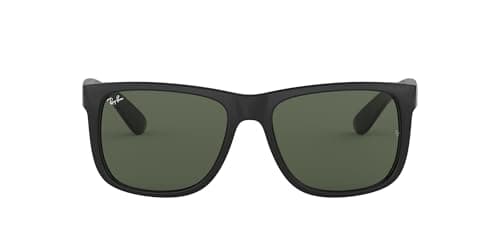
Ray-Ban Justin (RB4165)
Rubberized nylon frameOversized squareGreen G-15 lensFull UV protection
The oversized rubberized Wayfarer variant — a style buy, and this listing is not polarized.
- Glare control
- 4
- Optics
- 8
- Fit & coverage
- 7
- Durability
- 7
- Value
- 5
Pros
- +The larger, slightly squarer shape suits wider faces that the standard Wayfarer pinches
- +A rubberized nylon frame is lighter and less fragile than acetate
- +The classic green lens is a genuinely good neutral tint for everyday wear
Cons
- −This colorway is NOT polarized — it is a tinted lens, so it dims glare rather than canceling it
- −Oversized styling overwhelms a smaller face, and there is no size option within the model
Don't buy this if…
…glare control is why you are buying. Take the polarized Wayfarer or Aviator instead — a tint alone will not remove the mirror off a wet road.
Maximum coverage
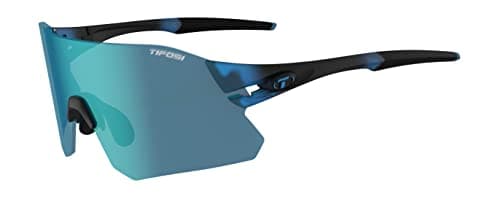
Tifosi Rail (Interchange Set)
Clarion Blue/AC Red/ClearOversized rimless shieldGrilamid TR-9032g published
The full-size Rail: the same three-lens kit behind a taller shield, for bigger faces and maximum coverage.
- Glare control
- 6
- Optics
- 8
- Fit & coverage
- 9
- Durability
- 8
- Value
- 9
Pros
- +The oversized shield is the most coverage in this price tier — wind, grit and low sun stay out at speed
- +Same three-lens interchange kit as the XC (Clarion Blue, All-Conditions Red, Clear) and the same hardshell case
- +Grilamid TR-90 frame with a metal core through the arms and nose piece, so the adjustable fit holds its shape
Cons
- −Bike Perfect found the tall lens can knock against the brow of some helmets on chunky terrain — the XC exists precisely to fix that
- −The long arms suit a larger head; on a smaller one they interfere with helmet straps until you adjust them
- −Not polarized — deliberate on a bike, but wrong if you wanted glare control off water
Don't buy this if…
…your face is average or small, or you ride in a helmet with a low brow. The Rail XC gives you the same lens kit in a frame that clears the helmet and weighs a gram less.
Maximum field of vision at speed
100% Speedcraft (HiPER Mirror)
HiPER mirror lensCylindrical shieldVentedRace fit
The big-field-of-vision race shield, with a mirrored contrast lens tuned for road and trail.
- Glare control
- 6
- Optics
- 9
- Fit & coverage
- 10
- Durability
- 8
- Value
- 6
Pros
- +One of the largest usable fields of view in the category — you look through lens, not over it, in a racing position
- +The HiPER mirror lens lifts contrast while shedding light before it enters, a genuine combination on a bright day
- +Race-tuned fit that stays locked on at speed
Cons
- −Single lens per pair; changing light means buying and carrying a second one
- −The mirror finish shows scuffs sooner than a plain lens and the styling is unapologetically racy
Don't buy this if…
…you want a subtle frame or a lens set in the box. This is a race shield with a race price and a race look.
Who each pick is for, and what is wrong with it
- KOO Spectro (Zeiss lens) — Best for: the cleanest optic in the band, and the default here. A Zeiss lens is made by an optics company rather than an eyewear company, and in a light road frame it gives you edge-to-edge clarity nothing below this band matches. Honest cons:it is not polarized, so reflected water and road glare is untouched; replacement lens availability is thinner than Oakley's; the styling is explicitly road-race and reads as kit off the bike; and KOO publishes less about light transmission than you would like at this price.
- Serengeti Susan (Mineral Polarized 555nm) — Best for: the cheapest genuine mineral glass on the market, and the one pick here that is both glass and polarized. Serengeti publishes its mineral glass, 555nm contrast tint and photochromic claims, and that combination — glass clarity plus a contrast tint plus polarization — does not exist anywhere cheaper. Honest cons: glass is heavier and it breaks where polycarbonate flexes; this is a feminine frame shape and will not suit everyone; and it is the top of the band in price. It is also the winner on our polarized under $200 ranking, where it has less competition.
- Julbo Vermont Classic (Spectron 4) — Best for: genuinely extreme light — glacier, high-altitude snow, open water at altitude. The Spectron 4 category is darker than anything else here by a wide margin and the frame has leather side shields that physically block reflected light. Honest cons: a category-4 lens is too dark to drive in and in many places not legal for it; the mountaineering styling is a commitment; and it is not polarized. Ranked in context at best sunglasses for snow and skiing.
- KOO Demos (Zeiss lens) — Best for:the same Zeiss optic in a frame people will wear off the bike — reviewed in detail by BikeRadar. If the Spectro is too racy for you, this is the design-led version. Honest cons: the most expensive pick in the band; not polarized; a flatter frame means less side coverage than the Spectro; and the lens catalogue is small.
- Ray-Ban Justin (RB4165) — Best for: the reader who wants the badge, and the row that shows what it costs. It is an oversized rubberised Wayfarer variant on a G-15 tinted lens, not a polarized one, backed by Ray-Ban's published warranty. Honest cons:at this price you are buying styling, not optics — the Zeiss and mineral-glass picks above cost the same or less; it is not polarized; the oversized shape suits few faces; and the rubberised finish wears visibly. If you want Ray-Ban with a real polarized lens, see our Ray-Ban review or the alternatives.
- Tifosi Rail (Interchange Set) — Best for:the most usable hardware per dollar in the band, by a distance. Three interchangeable lenses in a big-coverage frame — BikePerfect calls it huge coverage with three interchangeable lenses — backed by lifetime cover against manufacturer's defects, for well under half the band's ceiling. Honest cons: the lens is polycarbonate, which is the whole thing this band is supposed to move past; it is a large sport shield; and none of the three lenses is polarized. Ranked properly at best sunglasses with interchangeable lenses.
- 100% Speedcraft (HiPER Mirror) — Best for: the budget pick, and the widest field of view here. A mirror coating sheds a portion of the light before it reaches the lens, which is the right trick in open bright terrain, and 100% publishes its HiPER lens claims. Honest cons: a mirror finish scuffs sooner than a plain lens; the HiPER tint is a contrast tint with a visible colour cast; the frame is large; and it is polycarbonate, not glass.
What the $100-$200 band actually buys
Three things, in this order. Lens material and optics:mineral glass or a Zeiss-grade polycarbonate, which means less colour fringing away from the lens centre — the Abbe figures above are the shorthand. Tint engineering:contrast tints like Serengeti's 555nm or 100%'s HiPER are designed to lift separation between specific colours rather than just dim everything. Frame engineering:real venting, hydrophilic grip, and in some cases a replaceable-lens system. What it does not buy is UV protection or polarization — both are available for a tenth of the money.
Glass or polycarbonate?
Glass if you are standing still and care about absolute clarity: better optics, far better scratch resistance, and a weight you feel on the bridge of your nose after two hours. Polycarbonate if you are moving: it is lighter and it does not shatter, which is why every sport frame on this page uses it. There is no third answer, and the band is wide enough that you can have either — which is the main practical reason to shop here rather than at $300.
Should you spend the whole band?
Often not. The budget pick here costs a third of the ceiling and gives up only the lens material; the interchangeable set costs under half and gives you three lenses instead of one. The case for spending the full amount is specific: you want glass, or you want a Zeiss optic, or you need a category-4 lens for snow. If none of those is true, the band below is the better value and we rank it at best sunglasses under $100.
| If this is you | Buy | What you give up |
|---|
| The cleanest optic, moving fast | KOO Spectro (Zeiss lens) | Not polarized; race styling |
| Glass and polarization, cheapest route | Serengeti Susan (Mineral Polarized) | Weight; fragility; a feminine frame |
| Glacier, high-altitude snow | Julbo Vermont Classic (Spectron 4) | Too dark to drive in; mountaineering looks |
| Zeiss optics you can wear to lunch | KOO Demos (Zeiss lens) | Top of the band; less side coverage |
| You want the badge, knowingly | Ray-Ban Justin (RB4165) | Styling instead of optics; not polarized |
| Most hardware per dollar | Tifosi Rail (Interchange Set) | Polycarbonate; big shield |
| This tier's field of view, a third of the price | 100% Speedcraft (budget pick) | Mirror scuffs; contrast cast |
The cheap stuff that matters
Essentials under $40
The add-ons this page already told you to get. None of these is scored — our rubric measures glare control, optics, fit, durability and value, and four of those mean nothing for a cleaning cloth. So you get a reason and a live price instead of a number we'd have had to invent.
MagicFiber
MagicFiber Microfiber Cleaning Cloths (6-pack)
Buy a multipack for one reason: a dirty microfiber cloth is sandpaper. Six means you can retire the gritty one instead of rubbing it across a lens.
Koala
Koala Eyeglass Lens Cleaner Spray Kit (4-piece)
A lens-safe spray for when there is no tap. Sold specifically for coated lenses, which is the point — it is the household glass cleaners that attack coatings.
MyEyeglassCase
MyEyeglassCase Extra Large EVA Zip Hard Case
Sized for large and wrap frames, which is the catch with most cheap cases — a sport frame will not close in a case cut for slim readers.
#ad · Live prices as of November 23, 2026, hidden when our data goes stale. We may earn a commission, at no cost to you. How this works.
How we picked
We don't run a testing lab
We compile each pair's published specifications — lens material, polarization, coating, frame material, coverage, UV rating and price — normalize them, and score each against a published rubric. The scores are judgments from documented research; they are notmeasurements we took, because we don't own a lab and we're not going to pretend we do. Pairs we claim to have lab-tested: 0.
Questions
Frequently asked
Are $200 sunglasses worth it over $50 ones?+
For optics, yes, and for nothing else. The glare filter, the UV block and the basic frame durability are all solved well under $50. What $200 adds is lens material — mineral glass or Zeiss-grade polycarbonate, which means far less colour fringing away from the lens centre — plus engineered contrast tints and better venting. If you wear sunglasses for hours at a time, or you are reading water or a road for a living, that is worth paying for. If you wear them on a terrace twice a month, it is not. See
are expensive sunglasses worth it.
Why are most of these not polarized?+
Because polarization is cheap and the brands in this band spend their money elsewhere. A polarized filter is mature technology available on a $15 pair; Zeiss optics and mineral glass are not. There is also a sport reason: a polarized lens removes the reflected sheen that tells you tarmac is wet or a snow patch is ice, which is why race frames usually skip it. If polarization is what you are shopping for, the right page is
best polarized sunglasses under $200.
Can you get glass lenses under $200?+
Yes, and this is the band where it becomes possible — two picks here use mineral glass and both sit in the upper half. Below $100 it does not exist at all in this catalogue. What glass gives you is edge clarity (near
Abbe 58-59 against about 30 for polycarbonate) and scratch resistance; what it costs you is weight and the fact that it breaks. More at
best glass lens sunglasses.
Is there any point going above $200?+
A narrower one than the brands would like you to think. Above this band you are mostly paying for a specific house lens — Maui Jim's PolarizedPlus2, Costa's 580, Bajío's LAPIS, Oakley's polarized Prizm — and for the brand's service network. Those lenses are genuinely excellent and genuinely incremental. The honest answer is that the clarity jump from $50 to $200 is far larger than the one from $200 to $300.
Receipts
Sources
- Serengeti Eyewear — lens technologies (official; mineral glass, 555nm contrast tint and photochromic claims)
- Julbo — official product and lens range (Spectron category claims)
- BikeRadar — KOO Demos review (named-outlet review of the Zeiss lens and frame)
- SportRx — Ray-Ban lens guide (G-15, polarized options and lens naming)
- Ray-Ban — warranty (official)
- BikePerfect — Tifosi Rail review (named-outlet review noting huge coverage and three interchangeable lenses)
- Tifosi Optics — warranty information (manufacturer's defects for the life of the product, original US purchaser only, excluding normal wear, loss, theft and damage; stated shipping and handling fee per claim)
- 100% — official product range and HiPER lens claims
- Cleveland Clinic — polarized vs non-polarized sunglasses (polarization described as a filter that removes reflected, horizontally oriented light)
- American Academy of Ophthalmology — “Seven Myths About Sunglasses That Could Damage Your Vision” (official EyeSmart release; verbatim: “Polarized lenses do not block more radiation”, “The darkness of the lens isn’t indicative of protection”, and that wraparound styles “can help cut down on UV light entering the eye from the side”)
- American Optometric Association — UV protection and sunglasses guidance (99-100% UVA and UVB blocking recommended; lens darkness is not a measure of UV protection)
- OptoGrid — Abbe value by lens material (CR-39 58, mineral glass 58-59, polycarbonate 30)
We do not run a testing lab, and we do not pretend to. Where a spec or measurement came from a manufacturer or a third party, we name and link it. Where we could not verify something, we say so on the page rather than quietly leaving it out. Read our full method.