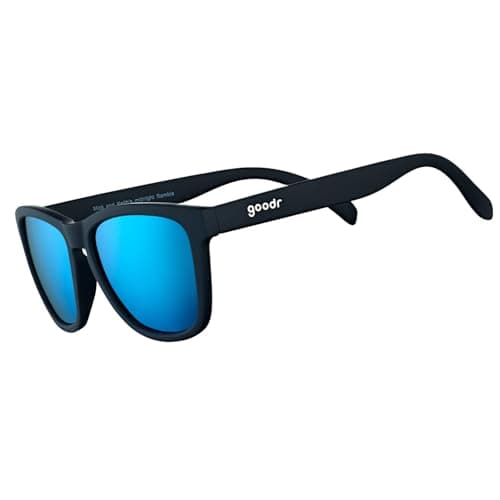
Buy the goodr OG. It is polarized, UV400, it grips a face that is wet with sea water and sunscreen, and it costs about as much as lunch for two — which is the correct amount to spend on something you will leave on a towel. If you want the cheapest pair that still does the job, the SOJOS square is under $20. If the beach is actually a boat, or you fish from the shore, the Costa Fantail is the pick and the reasoning is different.
A beach is a uniquely hostile environment for sunglasses and a trivially easy one for lenses. The optical problem is simple: water and wet sand are near-horizontal reflective surfaces, so most of the glare arriving at your eyes is polarized, and almost any polarized lens removes a startling amount of it. You do not need lens engineering for this. You need polarization, UV400, and a frame that survives the day.
The hard part is everything else. Dry sand behaves like fine grit: wiping a sandy lens with a t-shirt is how most beach sunglasses die, and it kills a $250 lens exactly as fast as a $20 one. Salt spray dries into a film that needs rinsing, not buffing. And beaches are where sunglasses get lost — stood on, buried, taken into the water and dropped. That combination is why our ranking is weighted toward cheap and replaceable, with one premium pick for the people who are genuinely on the water rather than beside it.
What matters at a beach, in order
1. Polarization. The one feature with an obvious, immediate payoff. The Cleveland Clinic describes polarized lenses as reducing glare specifically on reflective surfaces like water, and a shoreline is the clearest demonstration you will ever see of it. Confirm any pair with the screen test if the label is vague.
2. UV400. Non-negotiable and free. Sand and water both reflect UV back up at you, so your eyes take more than they would in a park; the American Optometric Association treats UV blocking as the actual health function of a sunglass, and the Vision Council documents how standard the spec now is. Full detail in UV protection explained.
3. Replacement cost. Treat this as a feature. The correct beach pair is one you would be mildly annoyed to lose, not devastated.
4. Grip and a retainer. Sunscreen plus sea water is the slipperiest combination your face will encounter. A grippy frame helps; a strap is what actually saves the pair, and a floating strap is what saves it in water.
5. Coverage, if the beach is bright and open. On a white-sand or shell beach, light arrives from below as well as above. A wrap closes that, which is why the Bollé Anaconda is in the list despite being the least beach-looking pair here.
The short answer
Quick picks
#ad · Live prices from the Amazon Product API, as of October 19, 2026. Where we have no verified live price, we show none — we would rather leave a gap than print a number that has rotted.
In detail
The picks, in full
Best running sunglasses overall
goodr OG (Polarized)
PolarizedUV400No-slip grip coating~ standard fit
The runner's default: polarized, no-slip, and cheap enough to not baby.
- Glare control
- 8
- Optics
- 7
- Fit & coverage
- 8
- Durability
- 7
- Value
- 10
Pros
- +goodr's grip coating genuinely stops the bounce and slide that ruins a run in a lifestyle frame
- +Polarized and UV400 at a price where losing a pair doesn't sting
- +Light enough that you forget you're wearing them by mile two
Cons
- −One size; a very narrow or very wide face may not get a perfect seal
- −Flat-ish lens gives less side coverage than a true sport shield
Don't buy this if…
…you want maximum wraparound coverage or interchangeable lenses for changing light. goodr is fit-and-forget, not a modular system.
A cheap, on-trend everyday pair
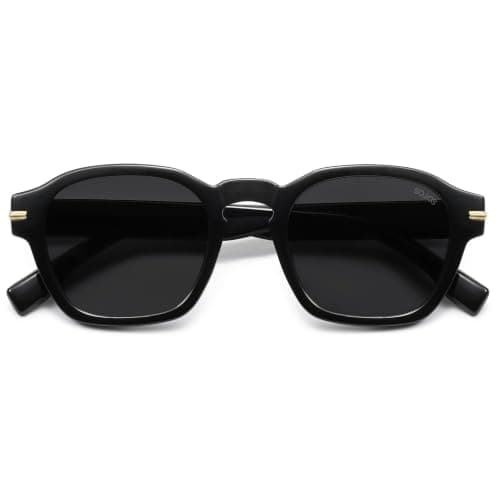
SOJOS Retro Square Polarized
PolarizedUV400Square retro shapeTAC lens
A trend-led polarized frame at a price that makes it an easy yes.
- Glare control
- 7
- Optics
- 6
- Fit & coverage
- 6
- Durability
- 5
- Value
- 10
Pros
- +Polarized and UV400 for the price of lunch — the fundamentals are covered
- +The retro square shape is a current look without a designer price
- +Light and comfortable for all-day casual wear
Cons
- −TAC (film-laminate) lens optics and coatings are budget-grade
- −Fashion-first build; not made for sport or abuse
Don't buy this if…
…you want optical precision or a pair that lasts years. This is a fun, replaceable everyday frame.
A do-anything budget pair
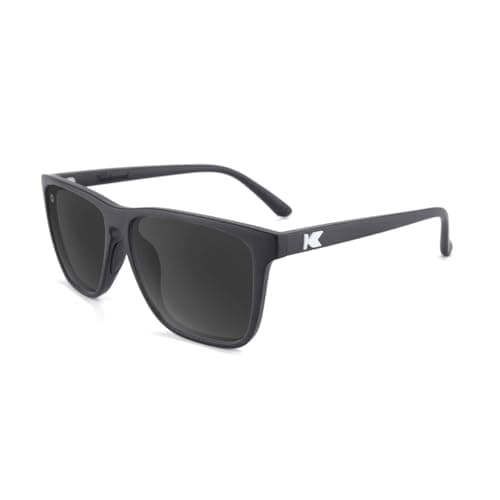
Knockaround Polarized (Sport)
PolarizedUV400Impact-resistantMany colorways
The other budget default — polarized, impact-tough, and endlessly restyled.
- Glare control
- 8
- Optics
- 7
- Fit & coverage
- 7
- Durability
- 7
- Value
- 9
Pros
- +Polarized UV400 for pocket money, from a brand that has sold millions of them
- +Impact-resistant frame and lens shrug off the drops that kill fashion frames
- +Enormous color range if the look matters
Cons
- −Grip isn't as sticky as goodr's coating for high-bounce running
- −Optical clarity is fine, not remarkable
Don't buy this if…
…you run hard and hate readjusting — goodr's no-slip coating holds better on a sweaty face than Knockaround's standard arms.
Sight-fishing and time on the water
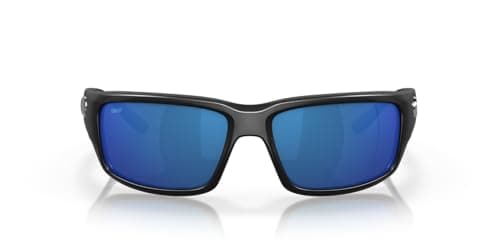
Costa Fantail 580P
580P polarizedPolycarbonateHydrolite gripVented
The fishing default. The 580 lens is built to pull fish out of glare, and it does.
- Glare control
- 10
- Optics
- 9
- Fit & coverage
- 9
- Durability
- 8
- Value
- 6
Pros
- +Costa's 580 lens filters yellow light to lift contrast — copper/green tints make fish and structure pop against surface glare
- +Hydrolite nose and temple pads grip harder the wetter they get, which is the whole game on a boat
- +580P (polycarbonate) is the lighter, more impact-resistant option versus the pricier 580G glass
Cons
- −Polycarbonate scratches more easily than Costa's 580G glass — the glass is clearer but heavier and dearer
- −A real premium over budget fishing wraps that also filter glare competently
Don't buy this if…
…you fish twice a year off a dock. The 580 lens earns its keep for people who sight-fish; occasional users get most of the benefit from a $30 polarized wrap.
Wraparound coverage on bright open terrain
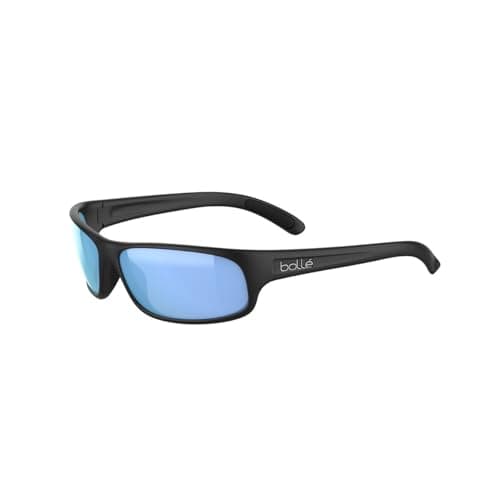
Bollé Anaconda (Polarized Wrap)
Wraparound framePolarizedLarge coverageUV protection
A big polarized wrap from a mountain-eyewear name — coverage for bright, open, reflective ground.
- Glare control
- 9
- Optics
- 7
- Fit & coverage
- 9
- Durability
- 7
- Value
- 7
Pros
- +The wrap seals out reflected light coming from the sides, which is the specific problem on open snow, water and rock
- +Polarized, so it removes rather than dims the glare bouncing off those surfaces
- +A mountain-eyewear brand with a long track record in this exact use
Cons
- −Polarized lenses can mask the sheen that distinguishes ice from snow — a real consideration if you are moving fast downhill
- −Large wrap styling does not translate to everyday wear
Don't buy this if…
…you ski or ride fast on hardpack. Standard polarization makes ice harder to pick out; a non-polarized snow-tuned lens is the safer tool there.
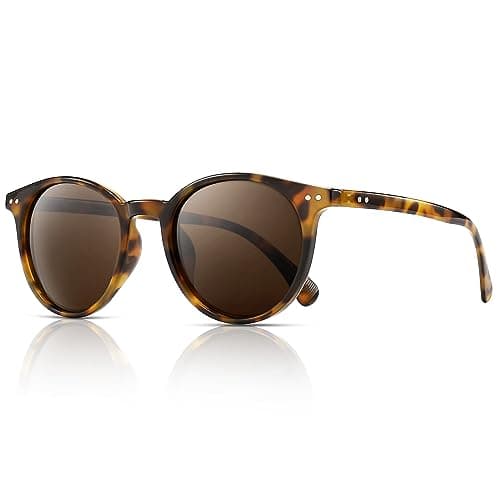
A budget round everyday pair
SUNGAIT Vintage Round Polarized
PolarizedUV400Vintage roundMetal accents
A round vintage polarized frame that punches above a very low price.
- Glare control
- 7
- Optics
- 6
- Fit & coverage
- 6
- Durability
- 5
- Value
- 10
Pros
- +Polarized UV400 with a genuinely nice vintage-round look for very little money
- +Comfortable light frame for all-day everyday wear
- +Wide color choice for the style
Cons
- −Budget optics and coatings; a two-season pair, not a keeper
- −Round lifestyle shape means minimal side coverage
Don't buy this if…
…you want sport coverage or lasting optical quality — this is a look-first budget everyday frame.
Why not just bring the expensive pair?
You can, and if you own a Costa or a Maui Jim you will see more through it. But the premium you paid buys lens tuning, coating life and frame engineering, and a beach attacks exactly those things: grit scratches coatings, salt films them, and heat on a dark towel is hard on frames. The optical advantage of a premium lens over a decent polarized one is also at its smallest here, because the glare is so strongly polarized that any competent filter removes most of it. Our are expensive sunglasses worth it page makes the general case; the beach is where it is strongest.
The exception is if you are on the water rather than next to it — swimming far out, paddling, fishing the surf, or on a boat. Then you are looking into water for long stretches, a contrast-tuned lens genuinely earns its money, and the frame needs to tolerate real spray. The Costa Fantail is the pick above for that reason; the fuller argument is in best sunglasses for boating, the fishing roundup and do polarized sunglasses help you see fish.
How to not destroy them in one week
Three rules, all of them about grit. Never wipe a sandy lens — rinse it in fresh water first, then dry it with a clean microfibre cloth. Never put sunglasses lens-down on a towel or in a beach bag without a case; the bag floor is where sand collects. And rinse the whole frame in fresh water at the end of the day, because dried salt holds moisture against hinges and coatings. Our how to clean sunglasses page has the full method, and when to replace sunglasses covers the point at which a scratched lens is genuinely finished rather than just marked.
Shapes that work on a beach
Nothing complicated: a shape you like, sized to actually cover your eye socket. Larger lenses do more work here than they do in town because light is coming off the sand at you. If you want something less sporty than a wrap, the SOJOS square and SUNGAIT round above are both cheap, polarized and shaped like normal sunglasses. If you want help choosing by face shape, we have guides for round, square and oval faces, plus polarized picks for women and polarized picks for men.
If you wear prescription glasses
The beach is one of the better arguments for a cheap fit-over or clip-on rather than prescription sunglasses: you are in and out of water, the pair is at high risk, and a $15-$28 solution removes the anxiety. Our fit-over guide ranks the field and prescription polarized sunglasses compares all four routes on cost and hassle.
The verdict, stated plainly
goodr OG for most people, SOJOS square if you want to spend less than $20, Knockaround if the pair will be dropped on rocks, Bollé Anaconda if the beach is bright and open and you want real coverage, and the Costa Fantail only if you are genuinely on the water. Then buy a floating strap and use it. For what we would take on a summer trip more broadly, see our summer 2026 picks.
The cheap stuff that matters
Essentials under $40
The add-ons this page already told you to get. None of these is scored — our rubric measures glare control, optics, fit, durability and value, and four of those mean nothing for a cleaning cloth. So you get a reason and a live price instead of a number we'd have had to invent.
Generic
Floating Sunglasses Straps for Water (4-pack)
A buoyant strap for boats, kayaks and wading. Note what this is: the STRAP provides the flotation. Do not assume any pair floats on its own.
Chums
Chums Original Cotton Retainer
The plain cotton eyewear keeper. Adjustable, washable, and the version most people mean when they say Croakies. Colorways vary on the listing.
#ad · Live prices as of October 19, 2026, hidden when our data goes stale. We may earn a commission, at no cost to you. How this works.
How we picked
We don't run a testing lab
We compile each pair's published specifications — lens material, polarization, coating, frame material, coverage, UV rating and price — normalize them, and score each against a published rubric. The scores are judgments from documented research; they are notmeasurements we took, because we don't own a lab and we're not going to pretend we do. Pairs we claim to have lab-tested: 0.
Questions
Frequently asked
Do I need polarized sunglasses for the beach?+
You want them. Glare off water and wet sand is reflected glare, which is the exact thing a polarized lens removes, so the improvement is immediate and obvious rather than subtle. UV400 is the part that protects your eyes and is separate from polarization — make sure the pair has both. See
polarized vs non-polarized.
How much should I spend on beach sunglasses?+
Between about $16 and $45 for most people. That buys a genuinely polarized UV400 lens, which is where essentially all of the benefit lives, and keeps the loss manageable when the pair gets buried, stood on or taken into the surf. Spending premium money makes sense only if you are on the water for long stretches rather than beside it.
Will sand scratch my sunglasses?+
Sand itself is survivable; wiping sand across a dry lens is what does the damage, and it damages an expensive lens just as readily as a cheap one. Rinse with fresh water before you touch the lens with anything, then dry with a clean microfibre cloth. Keep the pair in a case inside a beach bag rather than loose at the bottom of it.
Do floating straps actually work?+
Yes, for the specific failure they address: a pair that comes off in water stays at the surface long enough to grab instead of sinking. They do not stop the pair being knocked off, so a snug fit still matters. A plain cotton retainer is the better choice on dry sand, where the risk is dropping rather than sinking.
Are mirrored lenses better at the beach?+
They help in very high brightness by reflecting light away before it enters the lens, and they suit white sand and open water well. The trade-off is cosmetic durability — mirror coatings are the first thing to scuff, and a beach is full of grit. If you want one, see
best mirrored sunglasses.
Receipts
Sources
We do not run a testing lab, and we do not pretend to. Where a spec or measurement came from a manufacturer or a third party, we name and link it. Where we could not verify something, we say so on the page rather than quietly leaving it out. Read our full method.